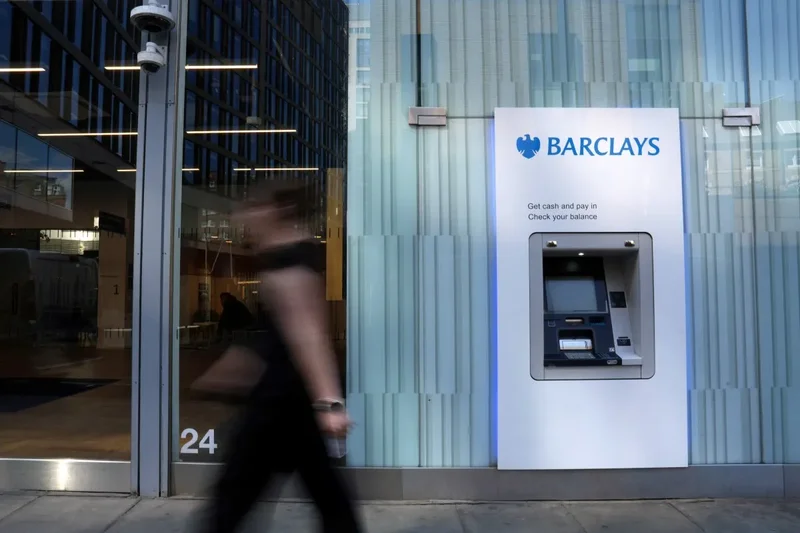
It's not uncommon for foreigners living in Spain to keep one or more bank accounts in their country of origin - often these were opened when the person was still a resident, and maintained after they moved to Spain.
They can be vital to keep up with financial affairs such as taxes in the home country, and are especially important for pensioners as some pensions cannot be paid into a bank account in another country.
But some changes are on the horizon, due to the implementation of the EU directive.
What does the directive say?
The Capital Requirements Directive (CRD6) will require non-EU banks, financial institutions and other entities who provide 'core banking services' in an EU country to establish an authorised local branch.
Core banking services are defined as taking deposits, providing loans or credit guarantees. Find the full text of the law here.
What does it mean for Spain residents who have accounts in a non-EU country?
If you have an account with a bank in a non-EU country, they will have to either set up a local branch in Spain, or enter into an agreement with a local subsidiary in order to continue providing services to Spain-based clients, unless one of the exemptions applies (more on those below).
In practical terms, this means that Spain residents who have an account with a bank outside the EU may soon be receiving letters asking them to provide an address in the country where the bank account is based.
Other banks may inform their EU-based clients that they cannot keep their account open.
How has Spain reacted to this new EU directive?
Spain missed the official January 10th 2026 EU transposition deadline, creating legal friction with Brussels over aligning domestic banking rules which the EU says are incompatible with the new regulations.
The new directive is a standardising law - aimed at ensuring that all EU countries have the same rules when it comes to dealing with non-EU banks or financial organisations.
Overall, Spanish banking regulations are fundamentally integrated with and heavily aligned with European Union regulations, as Spain is part of the Eurozone and the EU's Single Supervisory Mechanism (SSM).
It was for this reason that many Brits living in Spain found that their UK banks closed their accounts after Brexit, due to the restrictions on non-EU banks.
It's worth noting that the new EU directive does seem to have prompted many banks and financial institutions outside Spain to update or revise their policies when it comes to dealing with customers in the EU.
Beyond third-country branch mandates, Spain has also received formal EU warnings regarding domestic rules on bank mergers (namely BBVA's takeover bid on Sabadell) and acquisitions being misaligned with broader EU Single Supervisory Mechanism freedoms.
When do the new rules come into force?
The directive was passed in July 2024, and EU member states were then given an implementation period.
Countries were required to add the directive into their national laws by January 10th, 2026, with a start date of January 11th 2027 at the latest.
As mentioned earlier, Madrid missed that January deadline, leading Brussels to formally reprimand them in June 2026.
READ ALSO: Spain's best high-yield savings accounts in 2026
So the pressure is on Spain to adopt the new policies which is already leading banks to start notifying customers in other EU countries about the changes.
Keep in mind however that Spain has dozens of other EU transpositions pending, so it's hard to know when exactly this will affect those in Spain. The EU could take the matter to the European Court of Justice to instigate Spain to act.
Are there exemptions?
Yes, there are two important exemptions to the new directive.
The first is 'reverse solicitation' - the restrictions will not apply where an EU client has approached the non-EU bank/lender at their "own exclusive initiative".
The second is the grandfather clause mentioned above - that a contract entered signed before July 11th 2026 should not be covered by the new legislation.
READ ALSO: Can you pay taxes in Spain via a foreign bank account?
That should give non-EU banks ample cover to continue dealing with EU-based clients - however, it may be that some banks either take a conservative approach to interpreting the legislation, or simply decide that it is too complicated to continue to deal with clients in the EU.
That may explain why some people have already received letters stating that they cannot continue to hold their account.
There are other exemptions around inter-group contracts and dealings between banks that are aimed largely at businesses, rather than individuals.
What alternatives are available?
For those whose banks are threatening to close their accounts, there are two options: find a bank that has branches in both your home country and in France or internet banks.
Internet banks offer a practical option for people dealing with financial matters in more than one country - banks like Wise or Revolut offer accounts in multiple currencies and - crucially - provide both an EU account number and an account number in the UK/US/non-EU country.
Having an EU and a non-EU account number satisfies authorities/pension providers who require a local bank account. The disadvantage to these accounts, however, is that they do not provide all of the same services as a bank (eg a cheque book), while they don't have a bricks-and-mortar presence for those who prefer face-to-face appointments.
With additional reporting by Alex Dunham