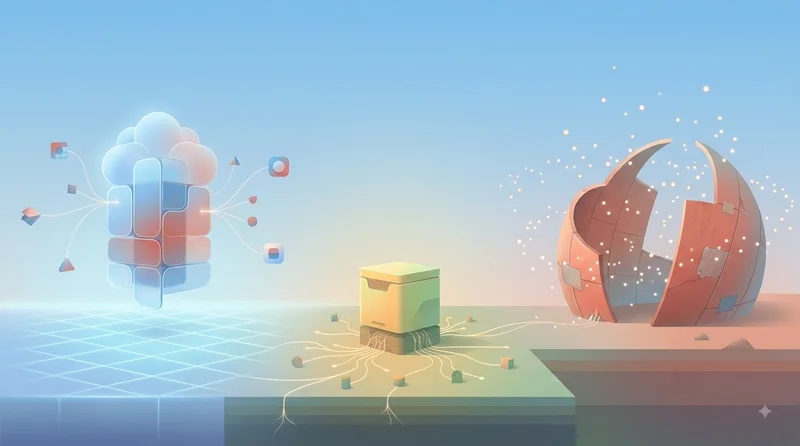
AI-generated by the author with Nano Banana Pro 2
A Comprehensive Comparison Of Agentic AI
Every enterprise architect today has heard some version of these three sentences.
"Just give the agent access—it's sandboxed, it's fine."
"Open source means someone already checked it for us."
"Google would never let something unsafe touch our inbox."
I'm writing this article to tell you that all three of those sentences deserve a second look.
So: Gemini Spark, Hermes Agent, or OpenClaw. Who actually wins?
Read this article to the end to find out why the honest answer depends entirely on what you're afraid of losing.
Meet the Three Contenders
Gemini Spark is Google's 24/7 personal AI agent, announced at I/O 2026, running on dedicated Google Cloud virtual machines that keep working after you close your laptop—wired into Gmail, Docs, Sheets, and Slides through structured APIs rather than screen-reading (agentic AI assistant).
Hermes Agent is Nous Research's open-source, self-improving agent, MIT-licensed, self-hosted anywhere from a five-dollar VPS to a serverless sandbox, with a closed learning loop that writes its own skills as it works (the self-improving AI agent).
OpenClaw is the one that started this entire category. Launched under the name Clawdbot in November 2025 by Austrian developer Peter Steinberger, renamed twice under trademark pressure before settling on OpenClaw, it is now developed in the open by the nonprofit OpenClaw Foundation with OpenAI sponsorship, after Steinberger himself left to lead personal-agent development at OpenAI (the OpenClaw security crisis). It runs locally, connects to over 30 messaging channels, and crossed 300,000-plus GitHub stars faster than any open-source project in history (355K GitHub stars).
One is a managed service.
One is infrastructure you own outright.
One is the open-source original that both of the others are, in different ways, a reaction to.
OpenClaw's Rise, Fall, and Second Act
Do vibe coders know how fast an idea can outrun its own safety net?
OpenClaw is the answer.
It crossed 60,000 GitHub stars in days, reached 247,000 stars and 47,700 forks by early March 2026 (OpenClaw Wikipedia entry), and by April had 355,000 stars, 3.2 million active users, and more than 500,000 running instances (the complete honest guide).
Nothing in open-source software history had grown that fast.
Then came the reckoning.
On January 27, 2026, security researchers disclosed CVE-2026-25253, a one-click remote code execution flaw with a CVSS score of 8.8, letting a malicious link silently exfiltrate authentication tokens and, depending on enabled tools, hand over the whole gateway (the OpenClaw security risks CISOs need to know).
Exposed public instances climbed from 679 to over 31,000 in under two weeks.
Researchers at Wiz separately uncovered a misconfigured Moltbook database exposing 1.5 million API keys and 35,000 email addresses (the enterprise wake-up call).
A supply-chain campaign planted more than a thousand malicious skills into the marketplace (agentic AI security risks).
Multiple firms restricted OpenClaw on corporate devices; China's government restricted it on state-run enterprise machines entirely (OpenClaw statistics 2026).
But OpenClaw didn't die.
It got sponsored.
Steinberger's departure to OpenAI came with continued backing for the project as independent, nonprofit, MIT-licensed software (the OpenClaw security crisis).
NVIDIA built an entire enterprise security layer called NemoClaw that bolts sandboxing, YAML-defined access policies, and a local-data privacy router onto any OpenClaw deployment in a single command, with launch partners including Box, Cisco, Atlassian, Salesforce, SAP, and CrowdStrike (OpenClaw statistics 2026).
Airia shipped an enterprise gateway that let a healthcare organization run OpenClaw under HIPAA compliance (enterprise-grade security for OpenClaw).
By August, the project had shipped extended-stable release channels with monthly backported security fixes and dependency hardening across browser, sandbox, exec, and secret-resolution paths (OpenClaw release notes August 2026)
.
The honest read: OpenClaw is the open-source project that took the hit so the rest of the category could learn from it in public, in real time, at a scale no closed lab could replicate.
Hermes Agent's Quiet Rise
Do vibe coders know that the most direct answer to OpenClaw's chaos didn't come from a security company at all?
It came from a model lab.
Nous Research traces its roots to 2022, an internet-native collective that formed informally across Discord and Twitter before formally incorporating in 2023 under co-founders Jeff Quesnelle, Karan Malhotra, Teknium, and Shivani Mitra (Hermes vs OpenClaw compared).
From the start the lab was open-source-first and decentralization-focused, building its reputation on the Hermes series of fine-tuned language models—Hermes 1 through 4—known for high steerability and reduced refusals rather than flashy consumer polish (Nous Research's self-learning runtime).
For most of 2025 and the opening weeks of 2026, the open-source agent conversation belonged entirely to OpenClaw.
Then, on February 25, 2026, Nous Research shipped a repository with a tagline that read like a direct challenge: the agent that grows with you (Nous Research's self-learning runtime).
The launch tweet got 557 likes—strong, not viral (the state of Hermes Agent).
But tech press picked it up fast.
By March 11 the repository had crossed 22,000 stars and 242 contributors, a number that would have been a strong six-month total for most projects, let alone six weeks (the state of Hermes Agent).
By mid-April it had reached 57,200 stars—growing faster than OpenClaw had at the same stage—with the skill ecosystem exploding around it, including an official agent-skills library from Vercel Labs (the state of Hermes Agent).
Seven weeks in, one independent tracker put its combined growth trajectory on par with LangChain and AutoGen's histories added together (Nous Research's self-learning runtime).
By the time this article was researched, the project had settled around 219,000 stars, 41,000 forks, and 346-plus contributors (the self-improving open-source guide).
What makes the Hermes story different from OpenClaw's isn't the growth curve—it's what the growth was built on.
OpenClaw is organized around a control-plane-first gateway and human-authored skills.
Hermes was architected from day one around a self-improving agent loop, treating every successful tool sequence as a candidate training trajectory for a lab whose actual business is models, not applications (Nous Research's self-learning runtime).
Hermes Agent is self-improving.
The longer you run it, the better it gets at understanding you and your workflow needs, using a variation of Genetic Algorithms.
That is something OpenClaw never had.
It wasn't just a patch on OpenClaw's security problems.
It was a different premise entirely, published by a team that had spent three years building open models before it ever shipped an agent to run them.
Gemini Spark's Staged Global Rollout
Does anyone actually remember how narrow Gemini Spark's first week was?
Google announced Spark at I/O on May 19, 2026, and opened it only to "trusted testers"—not a public beta, not even the full Ultra subscriber base yet (Gemini Spark tested in India).
The wider Ultra rollout followed later that same month, US-only.
On June 30, Spark reached the Gemini Mac app, alongside expanded connected-app support and custom MCP connections (Gemini Spark tested in India).
This month, it rolled out to AI Pro users as well at 20 USD a month (with reduced usage limits).
July 14 brought Chrome-native "auto browse," letting Spark control the desktop browser directly using logged-in accounts and saved passwords (Spark blocks EU and UK users).
Two days later, on July 16, Spark opened to Google AI Pro subscribers in the US for the first time—its first move outside the pricier Ultra tier (Spark no longer restricted to Ultra).
On July 29 and 30, Google extended Pro and Ultra access to more than 160 additional countries, including India, alongside Chrome-based booking and form-filling for everyday errands (Spark tested in India).
Even after that expansion, four regions stayed dark: the European Economic Area, the United Kingdom, Switzerland, and Nigeria—all still excluded as of early August, with no official reason published (Spark now runs on Chrome, Germany left out).
The timing is hard to ignore: Google signed the EU's AI code of practice in the same window that advertisers there began facing turnover-based fines, and Europe's regulatory posture toward autonomous agents remains visibly more cautious than the rest of Spark's rollout map (Spark blocks EU and UK users).
Even inside supported markets, Spark keeps guardrails active by default—it hands sensitive actions like payments or form submissions back to the user for confirmation through what Google calls "Take control" mode (Spark now runs on Chrome, Germany left out).
Where OpenClaw grew in an uncontrolled burst and Hermes grew in a fast, organic curve, Spark's story is the opposite of both: a deliberately metered expansion, tier by tier and country by country, from a company that watched what happened to the other two and chose caution as its actual product feature.
30 Viral Use Cases (Actually Unlimited): Why These Systems Actually Went Viral
None of these are chatbot tricks.
Every use case below requires an agent that keeps working after you stop looking at it—which is exactly why they're the stories that made each product go viral in the first place.
1. Wake up to a booked calendar. One growth team reported going to sleep and waking up to 20 demos already booked, follow-ups sent, and campaigns still running on schedule—overnight lead generation that a human sales team simply cannot match hour for hour (OpenClaw use cases that'll make you rethink AI).
2. The executive morning briefing that assembles itself. A daily prompt—calendar, unread email, breaking news, weather, prioritized to-do list—runs overnight and is waiting in a single document before the first coffee (7 prompts that show what it can do).
3. A meeting turns into a tracker, an email, and a reminder—unattended. One prompt pulls action items from a meeting thread, builds a Sheets tracker with owners and deadlines, drafts the kickoff email, and schedules the follow-up, all before anyone opens their laptop.
4. Continuous price and deal monitoring that never sleeps. A single agent flagged a mispriced supercar on a listing site and surfaced deal alerts around the clock—the kind of arbitrage that only exists in the seconds after a price changes (5 autonomous tasks Hermes handles better).
5. Your coding agent gets its own manager. One developer built a bridge where Hermes writes prompts for Claude Code, reviews the output, and routes corrections back—an agent supervising another agent, continuously, without a human in the loop (15 real Hermes Agent use cases).
6. Invoices file, match, and queue themselves. A supplier email arrives; by the time anyone checks, it's filed, matched to the right budget line, and sitting in the payment queue (OpenClaw use cases that'll make you rethink AI).
7. Ad campaign reports land in Slack every Monday, on their own. An agent logs into the ad account, pulls the last seven days of data, formats it, and posts it—every week, without a standing meeting to make it happen (15 proven digital marketing applications).
8. A second brain that writes its own playbooks. After solving a hard deployment once, the agent writes a reusable skill file so the next deploy—days or weeks later—doesn't require re-explaining anything (Hermes Agent use cases).
9. Credit card statements audited for hidden fees, monthly, without being asked. A recurring trigger parses every new statement and flags new or hidden subscription charges before they compound.
10. One family, one subscription, one always-on agent. A user set up a single Hermes instance inside WhatsApp for three family members, replacing what would have been three separate $200 subscriptions—proactive, not just reactive, because it lives inside the app they already check (15 real Hermes Agent use cases).
11. Lead enrichment at scale, running while the sales team sleeps. An agent pulls a list of company names, searches LinkedIn and Crunchbase, extracts firmographic data, and writes it back to the CRM—continuously, not in a weekly batch (OpenClaw marketing use cases).
12. A memory bridge between your coding agent and your messaging agent. One developer connected Hermes, Claude Code, and Cursor to a shared knowledge base with hybrid search, so insight discovered in one tool is instantly available in the others (15 real Hermes Agent use cases).
13. Multi-channel intake for organizations with no IT department. NGOs, clinics, and small family businesses fielding phone calls, emails, WhatsApp messages, and paper forms get one system that centralizes all of it without hiring anyone (OpenClaw use cases that'll make you rethink AI).
14. Weekly research briefs delivered before the meeting they're for. A scheduled task builds a business brief from approved sources and has it reviewable and ready before anyone sits down to plan (10 best Gemini Spark use cases for business).
15. A content-gap scanner that works the whole news cycle. One agent scraped a competitor's channel, identified content gaps, and surfaced a story most outlets had missed entirely—running on a CPU instance costing 24 cents an hour, all overnight (5 autonomous tasks Hermes handles better).
16. Inbox triage that clears itself before you open your email. A recurring workflow sorts, labels, and drafts replies to routine messages continuously, so the inbox is already manageable by the time anyone looks at it (10 best Gemini Spark use cases for business).
17. Recurring compliance-style reporting delivered on schedule, not requested. A structured report gets rebuilt from the same approved sources every cycle and lands wherever it's needed without a standing calendar invite to make it happen (10 best Gemini Spark use cases for business).
18. Spending audited and categorized before the next statement even closes. Recent purchases get grouped, unusual charges get flagged, and savings suggestions appear automatically—continuous financial oversight nobody has time to do by hand (7 prompts that show what it can do).
19. Multi-agent fleets that outwork a single assistant. Some operators run four to ten specialized agents coordinating through shared databases at once—each covering a different function, all active simultaneously, something one human assistant physically cannot do (every OpenClaw use case I could find).
20. Procurement that runs itself from bid to margin calculation. A bid comes in, the agent reviews specs, ranks vendors by trust score, emails them, collects costs, and calculates margins—an entire back-office workflow completed before a human is looped in for approval (every OpenClaw use case I could find).
21. Cold outreach lists built and vetted while the team sleeps. The agent pulls prospects from Sales Navigator, HunterIO, and BrightData, vets them against an ideal customer profile, and has an organized, ready-to-send list waiting by morning (every OpenClaw use case I could find).
22. Health data analyzed the moment it syncs, with code the agent writes itself. One user exported Apple Health data and the agent wrote Python on the fly to calculate a sleep average—no developer, no manual analysis step (Hermes Agent user stories).
23. Social listening that never misses a post. Drop in session cookies and the agent pulls and summarizes dozens of posts in one command—continuous monitoring instead of a scheduled weekly export (Hermes Agent user stories).
24. Zero-friction OAuth onboarding for new integrations. Gmail and Calendar connect by dragging in a JSON file instead of a manual developer-console setup, cutting integration time from hours to seconds (Hermes Agent user stories).
25. Two agents, two roles, one shared source of truth. One agent acts as the CEO, another as the senior engineer, both reading and writing the same notes vault continuously, so nothing goes stale between sessions (Hermes Agent user stories).
26. One gateway, a different persona for every channel, all day. The same underlying agent runs a distinct personality and context in a work group and a separate community simultaneously, without cross-contaminating either conversation (Hermes Agent user stories).
27. PR reviews and monitoring alerts sent automatically, around the clock. Code review and system-health checks run as standing background jobs rather than tasks someone has to remember to trigger (Hermes Agent use cases).
28. Long-running workflows that survive server restarts and outages. A multi-day research or deployment job picks back up automatically after an interruption instead of losing all progress (Hermes Agent use cases).
29. One-off prompts turned into a standing research-draft-review pipeline. What started as a single content request becomes a repeatable three-stage workflow the agent runs unattended every time similar work comes up (Hermes Agent use cases).
30. Continuous CRM enrichment instead of a weekly batch job. New leads get looked up, enriched, and written back to the CRM the moment they arrive, rather than waiting for someone to run a manual export (OpenClaw marketing use cases).
And all this is just scratching the surface.
I could have listed 50 use cases and more roles, but this article is going to be really long already.
The common thread across all thirty (or even 100 use cases - use Generative AI chatbots and input your role and your Agentic AI Assistant of choice): every single one depends on the agent still being awake when the opportunity, the deadline, or the price change actually happens—not on you remembering to open an app and ask.
10 Killer Features of Gemini Spark
1. True 24/7 persistent cloud execution. Spark runs on dedicated Google Cloud virtual machines, not on your device—close your laptop and it keeps going (an agentic AI assistant).
2. Structured API integration. Spark connects to Gmail, Docs, Slides, and Sheets through real APIs instead of navigating rendered pixels, which makes its behavior more predictable than screen-based agents (Google's always-on AI agent).
3. The Antigravity harness underneath. Spark is the consumer face of Google's Antigravity agent platform, capable of running multiple sub-agents in parallel on long-held tasks—the same infrastructure developers reach directly through the Gemini API (Google's always-on AI agent).
4. Teachable, persistent skills. Describe a behavior once—distill your last fifty sent emails into a "ghostwriter" voice—and Spark builds a reusable skill that applies automatically going forward.
5. Recurring tasks and conditional triggers. Monthly invoices, hidden-fee scans on credit card statements, deadline flags—all handled without a calendar reminder from you (the Gemini app becomes more agentic).
6. End-to-end, cross-app workflows. One prompt can pull meeting action items from Gmail, build a Sheets tracker, draft a kickoff email, and schedule a follow-up—entirely chained (Google's always-on AI agent).
7. MCP-based third-party reach. Canva, OpenTable, and Instacart at launch, with more partners added through the Model Context Protocol in the following weeks (an agentic AI assistant).
8. An ask-first permission model. Google's own product page says Spark is "designed to ask you first" before spending money or sending emails, with app access off by default (Google's always-on AI agent).
9. A fast model-upgrade cadence. Spark launched on Gemini 3.5 Flash and was already running Gemini 3.7 Flash within roughly three months (our most intelligent workhorse model).
10. A governed enterprise path on the same rails. The identical model powering consumer Spark is also available through the Gemini Enterprise Agent Platform, so the personal-agent and enterprise-agent products share real infrastructure, not just a name (our most intelligent workhorse model).
10 Killer Features of Hermes Agent
1. A closed, self-improving learning loop. Hermes writes and refines its own skills from experience—a built-in learning loop no comparably-sized agent product currently ships (Hermes unlocks self-improving AI agents).
2. Deep cross-session memory. Agent-curated memory, periodic self-nudges to persist knowledge, FTS5 full-text recall, and Honcho-based dialectic modeling of who you are, built across every session (Hermes Agent documentation).
3. Contained, isolated sub-agents. Short-lived sub-agents handle parallel workstreams, each sandboxed with its own focused context and tools rather than inheriting the parent's full authority (Hermes unlocks self-improving AI agents).
4. Runs anywhere—not just your laptop. Six terminal backends: local, Docker, SSH, Daytona, Singularity, Modal. The serverless two hibernate at near-zero cost when idle (Hermes Agent documentation).
5. Twenty-plus messaging surfaces, one gateway. Telegram, Discord, Slack, WhatsApp, Signal, Matrix, Teams, Google Chat, and more, all fronted by a single process (Hermes Agent documentation).
6. Total model- and provider-agnosticism. Nous Portal, OpenRouter, OpenAI, Anthropic, or any compatible endpoint—no single lab's pricing decisions can hold the agent hostage (Hermes Agent documentation).
7. Natural-language cron scheduling. Describe a job in plain English and Hermes runs it unattended, fanning output to every connected platform at once (user testimonials).
8. Open-standard, portable skills. Compatible with the agentskills.io standard, so skills are searchable, shareable, and not locked to Hermes alone (Hermes Agent documentation).
9. MIT-licensed, self-hosted, no telemetry. All data stays on infrastructure you control, forever free, no cloud lock-in (Hermes Agent project page).
10. A built-in OpenClaw migration path. hermes claw migrate detects an existing OpenClaw installation and offers dry-run or secrets-free imports of settings, memories, skills, and API keys (the agent that grows with you).
10 Killer Features of OpenClaw
1. Radical multi-channel reach. Native integrations across 30-plus messaging channels—WhatsApp, Telegram, Discord, Slack, iMessage, Signal, Matrix, Teams, LINE, Nostr, and more—out of the box (the complete OpenClaw guide).
2. A genuine runtime, not a library. Unlike LangChain, CrewAI, or AutoGen, which require writing code, OpenClaw installs and runs as a standing service you configure once (the complete OpenClaw guide).
3. The largest skill marketplace in the category. Over 44,000 community-built ClawHub skills at last public count, spanning browser automation, invoicing, file operations, and shell commands (OpenClaw statistics 2026).
4. Self-authoring skills on demand. Prompt OpenClaw to build a new skill it doesn't have, and it can write and register that capability itself (OpenClaw: the AI that actually does things).
5. Full local system access, sandboxed or not. File read/write, shell execution, browser control—operator's choice between full access and sandboxed mode (OpenClaw: the AI that actually does things).
6. Model-agnostic by design. Works with Anthropic, OpenAI, or fully local models, letting privacy-sensitive deployments keep everything on-device (OpenClaw: the AI that actually does things).
7. Persistent memory in plain Markdown. Agents track context in human-readable files rather than an opaque database, with proactive heartbeats checking in roughly every thirty minutes (10 powerful features).
8. A genuine nonprofit governance model. Development happens in the open under the OpenClaw Foundation, with a public SECURITY.md vulnerability-reporting process and community-reviewed pull requests (the agent that grows with you GitHub).
9. An enterprise security ecosystem grown around it. NVIDIA's NemoClaw layer adds sandboxing and access policies in one command; Airia adds a HIPAA-compliant gateway—third-party hardening at a scale no single vendor could build alone (OpenClaw statistics 2026).
10. Extended-stable releases with backported security fixes. Since mid-2026, a dedicated monthly release channel exists specifically to backport hardening without forcing operators onto bleeding-edge code (OpenClaw release notes August 2026).
Gemini Spark: Pros and Cons
Pros
- Unmatched Workspace depth, because structured API access is simply more reliable than an agent guessing at your screen (Google's always-on AI agent).
- Real persistence without a device tether, because dedicated cloud VMs keep tasks running whether or not you're near a keyboard (an agentic AI assistant).
- A conservative default permission posture, because high-stakes actions require confirmation and access starts opt-in (Google's always-on AI agent).
- A fast-moving underlying model, because Google shipped a full model-generation upgrade within roughly twelve weeks of launch (our most intelligent workhorse model).
- A credible enterprise on-ramp, because the same model scales into Gemini Enterprise Agent Platform with Google Cloud's compliance apparatus behind it.
- Chrome-native auto browse, because Spark can directly complete bookings and form-fills in the desktop browser using logged-in accounts, not just Workspace apps (Spark now runs on Chrome).
- A built-in "Take control" checkpoint, because sensitive actions like payments or submissions are handed back to the user for confirmation by default (Spark now runs on Chrome).
- No longer locked to the priciest tier, because Spark opened to Google AI Pro (20 USD) subscribers in July, well below the $200 Ultra ceiling (Spark no longer restricted to Ultra).
- A genuine native desktop presence, because Spark reached the Gemini Mac app in June rather than staying confined to a browser tab (Spark tested in India).
- Backed by a documented safety program, because the model underneath it ships with published CBRN and cyber-offense safeguards, not just capability claims (our most intelligent workhorse model).
Cons
- You don't own the infrastructure, because standing access to your inbox and calendar lives permanently on Google's servers, by design.
- Third-party reach is still thin, because three launch partners is narrow next to an open plugin ecosystem.
- Google itself calls it experimental, because its own product page tells users to check responses and supervise closely.
- No model portability, because Spark is permanently coupled to the Gemini family with no lever to pull if priorities shift.
- The rollout has visibly glitched, because at least one reported case had Spark disappear from an account entirely before returning a day later with no explanation (Spark tested in India).
- Four major regions remain fully excluded, because the EEA, UK, Switzerland, and Nigeria still have no Spark access as of early August, with no official reason published (Spark now runs on Chrome).
- Work and school accounts don't qualify, because the current consumer rollout excludes Workspace-managed accounts entirely (Spark availability countries and requirements).
- An 18-plus age floor narrows the audience, because younger power users are locked out regardless of subscription tier (Spark tested in India).
- Chrome auto browse widens the exact risk this article warns about, because letting an agent use saved passwords and logged-in sessions is precisely the standing-credential exposure enterprise security teams need to model (Spark now runs on Chrome).
Hermes Agent: Pros and Cons
Pros
- Full data sovereignty, because everything runs on infrastructure you choose, with no telemetry by default (Hermes Agent project page).
- A genuinely unique self-improvement loop, because writing and refining its own skills from experience is not a feature most competing agents ship (Hermes unlocks self-improving AI agents).
- The widest messaging reach in the category, because twenty-plus platforms from one gateway meets you wherever you already talk to people.
- No vendor lock-in on the model layer, because provider-agnostic design makes switching labs a config change, not a migration project.
- Startlingly cheap at idle, because serverless backends hibernate and cost nearly nothing while the agent isn't working (Hermes Agent documentation).
- Deep cross-session memory with dialectic modeling, because Honcho-based user modeling builds an ongoing picture of who you are, not just what you last asked (Hermes Agent documentation).
- Contained, isolated sub-agents limit blast radius, because a compromised or misbehaving sub-task can't silently inherit the parent agent's full authority (Hermes unlocks self-improving AI agents).
- Natural-language cron scheduling, because unattended jobs can be described in plain English and fanned out to every connected platform at once (user testimonials).
- Skills are portable, not walled off, because compatibility with the open agentskills.io standard means what you build isn't locked to Hermes alone (Hermes Agent documentation).
- A built-in path off OpenClaw, because the migration command imports settings, memories, skills, and API keys automatically, lowering the switching cost for anyone leaving (the agent that grows with you).
Cons
- Security becomes your job, because self-hosting shifts the entire operational burden onto whoever runs the instance, with no vendor SLA.
- The open skill ecosystem carries real supply-chain risk, because an unreviewed skill economy is exactly what turned OpenClaw's marketplace into a target (agentic AI security risks).
- Setup demands real technical literacy, because a curl install and a config file is a steeper curve than tapping a subscription toggle.
- No native deep-Workspace equivalent, because Hermes leans on MCP and tool-calling rather than first-party structured Google APIs.
- It's young, because a February 2026 release hasn't accumulated the years of adversarial pressure OpenClaw already survived.
- No centralized admin console, because each deployment is its own island, with nothing resembling Spark's Workspace-wide AI control center.
- A smaller skill ecosystem than OpenClaw's, because tens of thousands of community skills is a marketplace Hermes hasn't matched yet, whatever its quality edge (OpenClaw statistics 2026).
- The desktop app is still a public preview, because the native macOS, Windows, and Linux client only shipped as preview software in June 2026 (the self-improving open-source guide).
- Model-agnosticism cuts both ways, because reliability and output quality vary with whichever provider the operator wires up, unlike a single curated model.
- The security benefits only hold if configured correctly, because OAuth with PKCE and dependency scanning protect nothing if an operator skips the setup step.
OpenClaw: Pros and Cons
Pros
- Unmatched scale and battle-testing, because 3.2 million active users and 500,000-plus running instances is a stress test no lab could simulate (the complete honest guide).
- The broadest skill marketplace by far, because 44,000-plus community skills dwarfs anything Spark or Hermes currently offer (OpenClaw statistics 2026).
- A real enterprise-security ecosystem has grown around it, because NVIDIA, Airia, and others now ship dedicated hardening layers for it specifically (OpenClaw statistics 2026).
- Free and self-hosted, because the core software costs nothing and only model API usage adds up (what is OpenClaw guide).
- Transparent, public governance, because the nonprofit Foundation model and public vulnerability disclosure process are visible to anyone (the agent that grows with you GitHub).
- A genuine runtime, not a coding library, because you install and configure it rather than writing orchestration code from scratch (the complete OpenClaw guide).
- Human-readable persistent memory, because context lives in plain Markdown files instead of an opaque database, with proactive heartbeats checking in roughly every thirty minutes (10 powerful features).
- An extended-stable release channel, because monthly backported security and reliability fixes now exist specifically for operators who don't want bleeding-edge code (OpenClaw release notes August 2026).
- Real corporate sponsorship without losing independence, because OpenAI backs the project financially while it remains MIT-licensed and nonprofit-governed (the OpenClaw security crisis).
- The most tested failure modes in the category, because nothing else in this comparison has been attacked, patched, and hardened in public at this scale.
Cons
- A documented, severe security track record, because CVE-2026-25253 and the Claw Chain vulnerabilities are matters of public record, not speculation (OpenClaw vulnerabilities could enable full agent takeover).
- Enterprise use requires bolting on third-party governance, because native controls historically lagged the pace of adoption (securing OpenClaw for enterprise).
- Shadow AI risk is real, because roughly a fifth of organizations reportedly have employees running it without IT approval (securing OpenClaw for enterprise).
- Some governments and firms restrict it outright, because China's state enterprises and multiple Western companies have banned or limited it on corporate devices (OpenClaw statistics 2026).
- The marketplace's scale is also its weakness, because 44,000 skills from thousands of unvetted contributors is a supply chain nobody can fully audit (agentic AI security risks).
- A history of identity confusion, because the project was renamed twice under trademark pressure before settling on OpenClaw, an early sign of organizational turbulence (OpenClaw Wikipedia entry).
- Its creator now works for a rival lab, because Peter Steinberger left to lead personal-agent development at OpenAI, leaving governance resting on a foundation rather than a founder (the OpenClaw security crisis).
- A separate breach exposed user data beyond the core CVEs, because a misconfigured Moltbook database leaked 1.5 million API keys and 35,000 email addresses (the enterprise wake-up call).
- A release cadence that outpaces manual review, because shipping multiple times a week is hard for any risk-averse enterprise change-management process to track (OpenClaw 2026 changelog).
- Even hardened deployment guides hedge their own advice, because vendors recommend evaluating it only in fully isolated environments—a tacit admission that default installs aren't enterprise-safe (securing OpenClaw for enterprise).
The Head-to-Head Comparisons
| Dimension | Gemini Spark | Hermes Agent | OpenClaw |
|---|---|---|---|
| Hosting model | Managed, Google Cloud VMs only | Self-hosted anywhere: VPS, Docker, serverless | Self-hosted, local-first, runs on your own machine |
| Underlying model | Gemini family only (now 3.7 Flash) | Any provider—Nous Portal, OpenRouter, local models | Any provider—Anthropic, OpenAI, local models |
| Memory architecture | Workspace-context-aware, cloud-resident | Agent-curated + Honcho dialectic modeling | Plain-Markdown persistent memory, periodic heartbeats |
| Skill acquisition | User-taught, natural language | Self-authored from experience, portable | Community marketplace (44,000+) plus self-authoring |
| Tool surface | Workspace APIs + 3 MCP partners at launch | 40–80+ built-in tools, full MCP support | Browser, shell, files, 30+ channels, huge plugin base |
| Governance | Google, single vendor | Nous Research, MIT license | Nonprofit Foundation, OpenAI-sponsored, MIT license |
| Data residency | Google's infrastructure, by design | Operator-chosen, fully controllable | Operator-chosen, local by default |
| Cost model | $20-$100-$200/month AI Pro/Max/Ultra subscription | Free software; infra from ~$5–100+/month | Free software; infra and API costs from ~$5–100+/month |
| Security track record | No major public incident yet (young, beta) | No major public incident yet (young) | Severe, publicly documented, now actively remediated |
| Extensibility | MCP partners, Google-curated pace | Open ecosystem, community skills | Largest open ecosystem in the category |
| Lock-in risk | High—tied to Google's model and cloud | Low—provider- and infra-agnostic | Low—provider-agnostic, but plugin trust varies wildly |
Enterprise Security: The Section That Actually Kind-Of Decides This
Here's the truth most vendor comparisons dodge: self-hosting doesn't remove risk; it relocates it.
And OpenClaw's public history is the clearest proof of that principle this industry has ever produced.
Data residency and sovereignty.
- Spark's data lives on Google's infrastructure, governed by Workspace's existing data-region and Data Loss Prevention policies (enterprise security controls for Gemini).
- Hermes and OpenClaw both put data wherever the operator deploys them—a feature or a liability depending entirely on operational maturity.
Admin controls and centralized visibility.
- Google built a dedicated AI control center inside the Workspace Admin console, giving administrators a single pane of glass over AI and agent access to Workspace data (securely manage AI and agent access).
- Neither Hermes nor OpenClaw ships an equivalent centralized tenant console natively—OpenClaw's ecosystem answer has been third-party layers like NVIDIA's NemoClaw, which adds YAML-defined access policies in a single command (OpenClaw statistics 2026).
The documented cost of getting this wrong.
- OpenClaw's CVE-2026-25253 let attackers exfiltrate authentication tokens through a malicious link with zero user interaction beyond a click, leading to full gateway compromise in vulnerable configurations (the OpenClaw security risks).
- Researchers later chained four additional flaws—Claw Chain—that let attackers escape the sandbox entirely, the worst scoring a CVSS of 9.6 (OpenClaw vulnerabilities could enable full agent takeover).
- This is the single most important data point in this entire article: every autonomous agent with standing credentials is structurally the same category of thing, whether it's built by a trillion-dollar company or a solo developer.
- OpenClaw simply hit scale first, so it absorbed the lesson first.
Prompt injection and tool-poisoning risk.
- Adversaries can hijack agent deployments through direct instructions or indirectly through poisoned data sources the agent ingests as part of its normal job (what security teams need to know).
- Spark's structured-API-only design narrows this surface somewhat.
- Hermes and OpenClaw's browser-automation and web-search tools widen it unless an operator deliberately restricts the toolset.
Credential handling and secret sprawl.
- OpenClaw's history includes real incidents of leaked API keys and tokens through misconfigured deployments and marketplace-planted malware (agentic AI security risks).
- Hermes's documented use of OAuth with PKCE and dependency scanning is a direct architectural answer to that class of failure—one that only holds if operators configure it correctly.
- Spark sidesteps the problem by having Google manage the credential plane entirely.
Supply-chain risk in an open plugin ecosystem.
- A formal analysis of agent skill ecosystems found that roughly a quarter of a large sample of agent skills across multiple platforms carried at least one security vulnerability (formal analysis of agentic AI skills).
- OpenClaw's 44,000-skill marketplace is, by sheer volume, the largest version of this exposure in the category.
- Hermes participates in the same open standard at a smaller scale.
- Spark avoids it almost entirely by keeping its integration surface small and Google-curated.
Shadow AI and unauthorized adoption.
- Roughly a fifth of organizations reportedly already have employees running OpenClaw without IT approval, creating zero telemetry and no audit trail (securing OpenClaw for enterprise).
- This is a governance failure mode neither Spark nor Hermes currently faces at the same scale, simply because neither has achieved OpenClaw's level of grassroots, bring-your-own-agent adoption yet.
What each vendor will actually commit to.
- Google backs Spark with the compliance apparatus of Google Cloud and a legal name attached to every promise.
- Hermes, MIT-licensed and self-hosted, comes with no vendor commitment by design.
- OpenClaw sits in between: the core software is unsupported open source, but a genuine third-party ecosystem—NVIDIA, Airia, CrowdStrike as a launch partner on NemoClaw—now sells enterprise-grade commitments on top of it (OpenClaw statistics 2026).
The honest read:
A regulated enterprise with existing Google contracts gets the most defensible ground on Spark.
A sovereignty-constrained organization with real security staffing gets defensible ground on Hermes.
An organization that wants the largest ecosystem and is willing to pay a specialist to wrap governance around it gets a workable, if scar-tissued, path through OpenClaw with NemoClaw or a comparable layer.
The Real Cost of Ownership
Gemini Spark requires Google AI Pro or higher subscriptions in the select countries where it is deployed at 20 USD a month, bundled with 20TB of storage and YouTube Premium rather than sold standalone (Google's always-on AI agent).
Genuinely good value if you already live inside Google's ecosystem; a harder sell if Spark is the only piece you want.
Hermes Agent flips the economics entirely—free forever under the MIT license, with operators running full instances on infrastructure costing roughly $5 a month, and serverless backends hibernating to near-zero cost when idle (Hermes Agent documentation).
OpenClaw sits in the same free-software category, with light users spending $5–20 a month on model API usage and heavy users exceeding $100, depending on configuration and hosting choice (what is OpenClaw guide).
But OpenClaw's real total cost of ownership for an enterprise almost always includes a governance layer on top—NemoClaw, Airia, or an equivalent—which turns "free software" into a genuine line item once you account for the security engineering it takes to run it responsibly at scale.
The honest accounting isn't just dollars.
Spark's $20 buys zero DevOps burden.
Hermes's and OpenClaw's near-zero infrastructure cost buys all of it back in operator hours—hours with real salary attached, even when the software itself is free.
Why Gemini Spark Could Be the Cheapest Option of All
Here's the twist nobody expects: if you can't run a capable local model, Gemini Spark's flat $20 a month can beat "free" software fast.
Local-LLM security is the hidden tax.
- Ollama, the default local backend for both Hermes and OpenClaw, ships with no authentication and often binds to every network interface.
- CVE-2026-7482, "Bleeding Llama," let unauthenticated attackers pull prompts, API keys, and environment variables from any of roughly 300,000 exposed servers using three HTTP calls (Ollama vulnerability danger).
- Roughly 48% of exposed hosts could execute code or call external APIs—turning a memory leak into a foothold (Ollama hardening tips).
- Securing this properly means a firewall, a reverse proxy, token-based auth, and ongoing patching—real engineering hours most solo power users never budget for.
Capable local inference isn't free hardware either.
- A 24GB-class GPU sufficient for Hermes's recommended Hermes 4.3 36B model costs roughly $0.35–0.74 an hour on RunPod or similar clouds (cloud GPU rental guide).
- Run that 24/7 and you're paying $250–530 a month before touching a flat-rate GPU VPS plan starting around $21 a month for lighter workloads (GPU hosting comparison).
- That's before electricity, storage, or your own time spent hardening it.
Now compare that to actual heavy-usage bills on the big four:
- DeepSeek— cheapest by far on paper, at $0.14/$0.28 per million tokens on V4 Flash, but heavy agentic workloads still run $50–300 a month, and V4 Pro tiers roughly triple that (DeepSeek pricing calculator).
- ChatGPT— Pro tier power users sit at $100 or $200 a month flat, unlimited within policy, which is exactly Spark's own price band (ChatGPT pricing guide).
- Claude— Max plans run $100 (5x) to $200 (20x) a month, but moderate daily agentic coding on pay-as-you-go API rates alone already runs about $240 a month, and heavy agent use can run 2–5x beyond that (Claude pricing 2026).
- Gemini 3.7 Flash— at introductory API rates of $0.75/$3.75 per million tokens, a genuinely heavy agent loop can still climb into hundreds of dollars a month on pure metered usage (our most intelligent workhorse model)—- unless you're inside Spark's flat subscription, where that meter simply doesn't run against you.
Put plainly: a power user who can't or won't run a local model, and who burns through serious token volume on Claude's or DeepSeek's metered API, can easily land north of $200–$500+ a month or more.
Spark caps that same appetite at $20–$200 flat, with zero GPU rental, zero Ollama hardening, and zero surprise invoices.
The difference between 20 USD, 100 US, and 200 USD is usage for Gemini Spark.
Higher tiers get more usage amounts than lower tiers.
However, the bill is still capped, unlike cloud models that can incur heavy costs.
A local LLM like Qwen 3.8 27B is still the best option - but it needs to be secured and hardened by an expert.
The moment self-hosting stops being genuinely free—because you need real hardware, real security, and real time—Google's flat fee for Spark quietly becomes the budget option, not the premium one, especially at current pricing.
The Verdict
Verdict for Power Users
Gemini Spark wins, because if your daily work already lives inside Gmail, Docs, and Sheets, nothing matches an agent that reads and writes those apps through real APIs instead of guessing at your screen.
OpenClaw wins instead the moment your life spans channels Google doesn't touch and you want the largest available skill marketplace to draw from.
Hermes Agent wins when you specifically want the self-improving memory loop and don't mind a younger ecosystem.
Verdict for Developers
Hermes Agent wins, because open-source, self-hosted, provider-agnostic infrastructure with a genuine learning loop gives you control a closed, subscription-gated agent structurally cannot.
OpenClaw wins instead if you want the biggest plugin ecosystem and community momentum available today, and are comfortable auditing what you install.
Spark wins if you're building specifically on Google's own agent stack, where staying inside Google's rails buys tighter integration than any third-party agent could replicate.
Verdict for Enterprises
Gemini Spark and Gemini Enterprise win for most regulated organizations, because Google's Workspace DLP, centralized AI control center, and compliance apparatus deliver exactly the vendor accountability that regulated data handling requires.
OpenClaw plus a governance layer like NemoClaw wins instead for enterprises that want the largest available agent ecosystem and are willing to pay a specialist to wrap real security controls around it.
Hermes Agent wins for the narrower category of enterprises legally barred from letting any external vendor touch their data at all, provided they staff the discipline to match.
Verdict for Budget Users
Hermes Agent and OpenClaw win on the lowest possible cash floor, because free, MIT-licensed software on a $5-a-month VPS paired with DeepSeek's cheap metered API undercuts every subscription in this comparison—provided you're willing to do your own Ollama hardening rather than pay someone else for it.
Gemini Spark wins instead the moment you want a predictable ceiling rather than a metered bill that can silently climb past $200 a month on heavy Claude or ChatGPT usage; $19.99 buys real usage headroom with zero per-token risk.
OpenClaw edges out Hermes Agent specifically for budget users who need the largest free skill marketplace to draw from rather than pay a developer to build custom automations from scratch.
The Unbiased Final Verdict
Gemini Spark is architecturally the better choice when you want an agent that simply works, backed by a company with the infrastructure and legal accountability to make that promise meaningful.
Hermes Agent is architecturally the better choice when you want to own every layer of the stack and value a genuine technical advance—the self-improving learning loop—that managed products haven't matched.
OpenClaw is, against all odds, still the category's most battle-tested option: it has been publicly broken, publicly fixed, and publicly reinforced by more independent security vendors than either of its rivals has yet attracted, precisely because it got hurt first and in front of everyone.
The questions worth asking yourself before choosing any of the three:
- Do you want a vendor to hold standing access to your data?
- Do you want to hold that access yourself?
- Do you want the largest possible ecosystem and are you willing to pay someone else to make it safe?
There is no fourth option that avoids these tradeoffs entirely.
I’ve given you the complete picture.
Now it is up to you to make an informed choice.
Conclusion
Three products.
Three philosophies.
One question underneath all of them that no benchmark table will ever answer for you: whose hands do you trust with standing access to the parts of your life that matter?
Gemini Spark bets that Google's scale and compliance machinery are worth trading full sovereignty for.
Hermes Agent bets that a self-improving, self-hosted agent you fully own is worth doing your own security homework for.
OpenClaw bets that the largest possible open community, tested in public under real fire, ends up safer than either alternative once the dust settles and the third-party governance layers catch up.
Choose the one that matches not just your workflow, but your appetite for responsibility—and your tolerance for finding out the hard way.
All the very best to you.
Cheers!
References
- Google — Introducing Gemini 3.7 Flash
- Google — The Gemini app becomes more agentic
- Google — Gemini Spark product page
- DataCamp — Gemini Spark: Google's Always-On AI Agent Explained
- Nous Research — Hermes Agent official site
- Nous Research — Hermes Agent Documentation
- GitHub — NousResearch/hermes-agent
- OpenRouter — Hermes Agent
- Docker Hub — nousresearch/hermes-agent
- Nous Research community — Hermes Agent user testimonials
- Nous Research — hermes-agent.org project page
- GitHub — openclaw/openclaw
- Wikipedia — OpenClaw
- OpenClaw — Official documentation
- KDnuggets — OpenClaw Explained: The Free AI Agent Tool Going Viral
- DigitalOcean — What is OpenClaw? Your Open-Source AI Assistant
- Context Studios — The Complete OpenClaw Guide
- Globussoft — 10 Powerful Features of OpenClaw AI Agents
- TechTarget — The OpenClaw security risks every CISO needs to know
- Conscia — The OpenClaw security crisis
- OpenClaw Statistics 2026 — Growth, Users, Security, Data
- GlobeNewswire — Airia Enables Enterprise-Grade Security for OpenClaw
- Lyzr — Why OpenClaw Is the #1 Enterprise Wake-Up Call of 2026
- IBM Think — What OpenClaw reveals about agentic AI security risks
- CrowdStrike — What Security Teams Need to Know About OpenClaw
- Google Workspace — Enterprise security controls for Gemini
- Google Workspace Updates — Securely manage AI and agent access with the AI control center
- AI Blew My Mind — OpenClaw Use Cases That'll Make You Rethink What AI Agents Can Do
- Tom's Guide — I use Gemini Spark daily: 7 prompts that show what it can really do
- MindStudio — 5 Autonomous Tasks the Hermes Agent Handles Better Than OpenClaw
- BetterClaw — 15 Real Hermes Agent Use Cases (2026)
- ALM Corp — OpenClaw Use Cases for Digital Marketing: 15 Proven Applications
- Hostinger — Hermes Agent Use Cases: 10 Examples of What You Can Do
- Improvado — OpenClaw Marketing Use Cases: 7 Automation Strategies
- AI Agents Library — The 10 Best Gemini Spark Use Cases for Business in 2026
- Graham Mann — Every OpenClaw Use Case I Could Find (85+)
- Nous Research — Hermes Agent User Stories & Use Cases
About the Author
Thomas Cherickal is an Emerging Technologies Educator, working as a Generative AI Consultant and a Quantum Computing Consultant based in Chennai, India, available for work globally, on a remote and asynchronous basis.
He has 500+ published articles across 10+ platforms covering AI, agentic systems, quantum computing, LLMs, Local AI, blockchain, Quantum AI, and other emerging technologies, for which he works as a consultant.
Skilled in Python and Rust.
Find his work at thomascherickal.com and thomascherickal.github.io.
Let's Work Together
Thomas writes for power users, developers, enterprises, and executive audiences on AI agent orchestration, enterprise AI deployment, local LLM deployment, quantum computing training and content, and emerging technology.
Available for technology writing engagements, technology training, and AI/quantum upskilling sessions for individuals, teams, and enterprises.
- Technical Writing- — deep, sourced, developer-grade long-form content
- Generative AI Consulting for Content Strategy- — helping teams communicate complex Generative AI systems clearly
- Quantum Consulting for Content Strategy- — helping teams communicate complex quantum computing systems clearly
- CXO-Level AI/Quantum Briefings- — cutting through the hype for decision-makers and executives
Connect on LinkedIn for a free introductory chat.
The first draft of this article was produced by Claude Sonnet 5.
All images in this article were AI-generated with Nano Banana Pro 2.