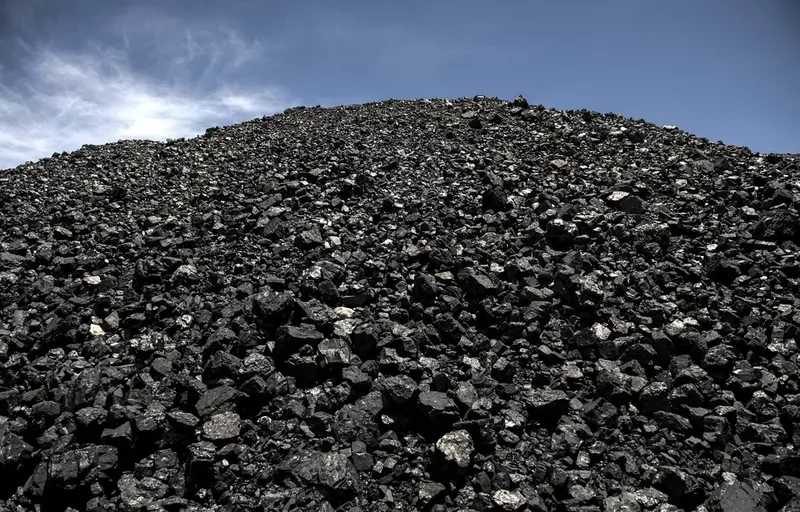
The youth and environmental organisations behind the #CancelCoal case are set to return to court on Wednesday to defend their 2024 victory, after Electricity and Energy Minister Kgosientsho Ramokgopa appealed a high court ruling that stopped plans for 1 500 megawatts (MW) of new coal-fired power.
The government’s appeal before the Supreme Court of Appeal (SCA) challenges the high court’s landmark __ruling __that struck down the plan to procure the 1 500MW, which is equivalent to about three to four large coal-fired power plants, under the 2019 Integrated Resource Plan (IRP).
The court found the record was “ominously silent” on the effects of the additional coal power on the environment and the health of the nation, particularly children. It declared the relevant decisions unconstitutional, unlawful and invalid and set them aside.
It found no evidence that the minister or the National Energy Regulator of South Africa (Nersa) had adequately considered the health, air-quality, environmental and children’s-rights implications of the additional coal capacity.
The case returns to court against a changed electricity landscape. South Africa’s 2025 IRP, gazetted in October 2025, makes no provision for new coal-fired generation. But the respondents say the appeal remains significant because it could clarify the legal obligations of decision-makers in future energy and environmental decisions.
At the centre of the appeal is whether the government must specifically consider children’s rights and interests when making major energy decisions whose consequences could last for decades. The respondents, the African Climate Alliance (ACA), Vukani Environmental Movement in Action (VEM) and groundWork, say it must.
Ramokgopa takes a different view. The minister argues that coal cannot be treated as constitutionally impermissible simply because it produces greenhouse gas emissions.
“Domestic law and international instruments, which have become part of South African law, do not require zero carbon emissions,” his heads of argument state.
He says the government must reduce emissions while balancing environmental concerns against the need for a reliable electricity supply and that coal was needed to provide reliable baseload power when the decision was made.
His argument also emphasises that the challenged procurement has not begun.There was therefore no basis for concluding that the decision had violated or threatened constitutional rights. Courts should not substitute their own judgment for government’s decisions about the country’s energy mix.
The minister says the court wrongly required the government to apply constitutional protections concerning the best interests of children to an energy policy decision.
The IRP and ministerial determination “deal with energy and not ‘matters concerning the child’” and do not directly cause “harm, maltreatment, neglect, abuse or degradation of children”.
The respondents argue that sections 24 and 28(2) of the Constitution required the minister and Nersa to consider how the decision would affect children. They point to the absence of any children’s rights impact assessment and say the decision records contain no meaningful consideration of children or youth.
They also argue that the new coal plan could limit constitutional rights including those to a healthy environment, life, dignity, equality, food, water and healthcare, and that the government failed to show that additional coal was necessary for energy security or more cost-effective than alternatives.
For Dr Jamie Kelly of the Centre for Research on Energy and Clean Air (Crea), the scientific evidence makes the children’s-rights question difficult to separate from the health consequences of coal pollution.
“Children are among the groups most sensitive to air pollution. They have developing lungs, breathe more air relative to their body size and spend more time being physically active outdoors. Exposure to air pollution during pregnancy and childhood can therefore have consequences that extend across the life course.”
Crea’s latest health-impact analysis, conducted with Greenpeace Africa and groundWork, examined the consequences of delaying coal retirements under the 2025 IRP.
“Our latest analysis shows that delaying the phase-out of coal power would have substantial consequences for children's health. We estimate that delays to coal retirements under the 2025 IRP would result in 41 000 additional preterm births, 17 000 additional cases of childhood asthma and 370 additional deaths among children under five.
“These are consequences that fall on people who have no say in today’s energy decisions but who will live with the health consequences of those decisions.”
Kelly said the links between coal-fired power, air pollution and children’s health were “both extremely well established”.
“From decades of scientific research, we know that exposure to pollutants from coal combustion increases the risk of premature death and a range of health problems, including respiratory disease and that children are particularly vulnerable to these effects.”
South Africa has the largest coal-fired power fleet in Africa and the sixth-largest in the world, he said.
“Given the scale of the country's reliance on coal, we would therefore expect the Integrated Resource Plan to include a detailed assessment of how different energy choices affect public health, including children's health. But it doesn't.
“There is a gap between what is known about the health consequences of coal pollution and what is actually quantified and incorporated into energy planning. The issue is not whether we have enough evidence to understand the health consequences of coal. We do.”
The question, he said, was whether the government was accounting for those consequences when deciding how long South Africa's coal-fired power plants should continue operating.
Kelly said incorporating health impacts into energy planning could also improve economic decision-making. “It would mean energy plans can be designed not only to protect energy security and prevent load shedding but also to protect public health.”
The government could assess how different coal-retirement scenarios would affect “air pollution exposure, premature deaths, preterm births and childhood asthma”.
“It can also lead to better economic decisions, because the government would be taking into account the wider economic burden of different energy choices, including their health impacts,” he said.
While coal provides electricity, jobs and economic activity, Kelly said its wider costs also needed to be considered. “The pollution it produces also creates a substantial economic burden through premature deaths, illness, healthcare costs and lost productivity. If those costs are not accounted for, we can end up treating an economically beneficial activity as less costly than it actually is.”
“There is mounting evidence of the health impacts of coal and those impacts can no longer be ignored. The question is whether the government is using that science to make better economic decisions. If we are comparing different energy pathways, we need to consider not just what they cost to build and operate, but also the wider economic costs they impose on society.”
The respondents’ heads also quote the minister’s answering affidavit as acknowledging that “the historic impact of coal fired power generation on climate change and human health is … not disputed”.
The minister argues that coal was needed to help ensure a reliable electricity supply when the decision was made. The respondents dispute this, saying the government did not adequately establish that new coal was necessary for energy security or more cost-effective than alternatives.
The minister says the 2018 draft IRP already provided for 1 000MW of coal and that the final 2019 IRP increased this to 1 500MW after consultation. He argues that the high court was “factually incorrect” in finding there had been no consultation on the additional coal.
The respondents dispute this, saying the final allocation was materially different from the proposal put out for comment.
The case also involves a dispute over “clean coal” technologies. The respondents say the government did not establish whether technologies such as carbon capture and storage were technically and economically feasible. Their court papers describe a departmental “desktop study” ultimately consisting of a single Wikipedia printout on carbon capture and storage.
The minister also argues that no coal power stations have been built under the challenged allocation and that setting aside the decisions therefore amounted to an “academic exercise”.
The respondents counter that constitutional rights can be protected before harm occurs and that preventing future harm was precisely the purpose of their case.
The hearing begins at 10am on Wednesday.