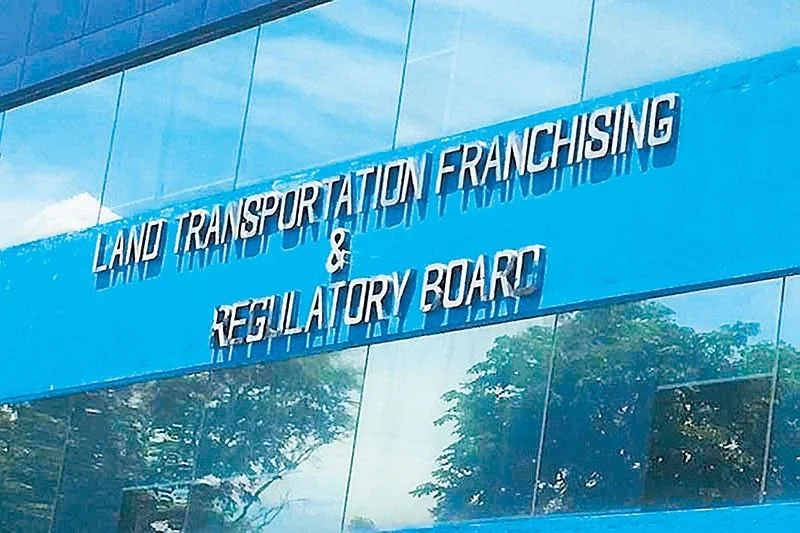
Ombudsman suspends LTFRB chief, OTC chair
MANILA, Philippines — The Office of the Ombudsman has placed Land Transportation Franchising and Regulatory Board (LTFRB) chairman Vigor Mendoza II and Office of Transportation Cooperatives (OTC) chief Teofilo Guadiz III under preventive suspension for six months for their roles in the continued use of the Stradcom-operated LTO information technology system.
Their suspension stemmed from their acts as former chiefs of the Land Transportation Office (LTO) that led to the use of the system, which resulted in an additional P13.3 billion in computer fees.
According to the ombudsman, there were sufficient grounds to suspend the two officials, strong evidence of their guilt in charges of grave misconduct and conduct prejudicial to the best interest of the service.
“The continued utilization of the LTO IT system by Guadiz and Mendoza demonstrates a patent disregard of established government policy and prior official directives intended to transition LTO operations to the LTMS,” the ombudsman said.
Mendoza has yet to receive a copy of the preventive suspension but said he respects the ombudsman decision in relation to its ongoing investigation.
“I have yet to see the copy of the official order and once received, this will serve as the basis to reiterate my position and present evidence-backed legal arguments that all my actions when I was still the LTO chief were all for the protection and interest of not only the motorists but also the Filipino people,” he said.
“This will be a good opportunity for me to prove it, and eventually clear my name, in the proper forum,” Mendoza added.
Meanwhile, DOTr chief Giovanni Lopez said he respects the decision regarding the preventive suspension of Mendoza and Guadiz.
Lopez said the agency will comply with the ombudsman’s order.
“The LTFRB and OTC will remain fully operational and essential services will continue to be delivered efficiently and without interruption,” the DOTr said.
“The DOTr will also continue to cooperate with the Office of the Ombudsman and uphold the principles of accountability, transparency and due process in the performance of our mandate.”
The ombudsman cited Commission on Audit (COA) findings, which flagged the continued parallel use of the two systems for “non-maximization of the benefits” expected from the LTMS project.
The auditing body also found that the dual use of two systems caused an “additional burden and expense for the transacting public,” since the computer fees charged by Stradcom reached P13.3 billion from 2019 to 2025.
In 1998, the government and Stradcom entered into a build-own-operate agreement which covered the establishment and operation of computer systems and other infrastructure used to process LTO transactions nationwide.
The then-Department of Transportation and Communications (DOTC) issued Stradcom a final certificate of acceptance in February 2003. Its original 10-year concession expired on Feb. 10, 2013, but the arrangement was subsequently extended on a month-to-month basis.
In 2016, the LTO and Stradcom entered into a phase out agreement, allowing the arrangement to continue while the LTO had no new or replacement IT system that was fully operational nationwide.
Two years later, the government contracted a joint venture led by Dermalog Identification Systems GmbH for the development and delivery of the new LTO core system, now known as the LTMS.
In 2021, the LTO issued a certificate of project completion and final acceptance for the LTMS.
After its implementation and rollout, the LTMS became the government’s principal platform for motor vehicle registration, licensing and related transportation transactions, with LTO operations directed to gradually transition away from the Stradcom-operated system.
The ombudsman, however, found that Guadiz, LTO chief in 2022, “pushed for the continued use of the LTO IT system” and “favored Stradcom,” with the official saying “the old IT system provides a better solution.”
In 2023, when it was Mendoza’s term as LTO chief, he issued several memoranda “effectively reviving and institutionalizing the continued use of the LTO IT system through a parallel utilization alongside the LTMS.”
In January 2025, Mendoza also directed the processing of PUV registration renewals through the old system without requiring LTFRB confirmation.
Clavano said the suspension order was not punishment but is meant to preserve documents and evidence that may be under the control or custody of the respondents and to prevent the possible commission of further malfeasance or misfeasance in office.
Transport group Coalition 169 welcomed the ombudsman decision, saying it sends a clear message that “no public official is above scrutiny.”
“Allegations involving the exercise of public office must be subjected to a fair, impartial and independent investigation,” the group said.
“For years, Filipino motorists have endured recurring problems at the LTO – system disruptions, delayed services and persistent questions that have eroded public confidence in the agency,” it added.
Coalition 169 trusts that the investigation will establish the truth behind the alleged irregularities involving the LTO.
“We remain committed to pursuing accountability for all remaining respondents named in our complaint filed on May 4, 2026, until justice is fully served,” they said. — Josiah Antonio
- Latest
- Trending