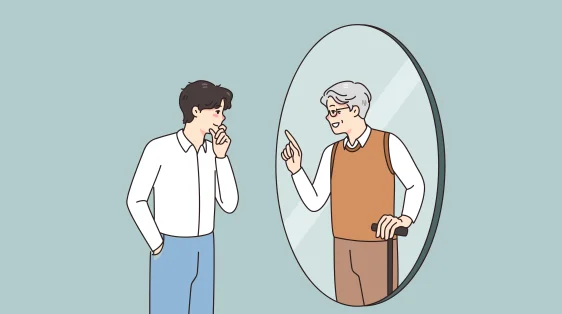
Maintaining an active social life as we get older is an important part of healthy aging. Now, two new studies suggest that our perceptions of how we age can affect how social we are in our golden years.
In the first study, researchers followed more than 450 adults between the ages of 30 and 80 for a period of 10 years. At three points during that decade, participants were asked how they pictured their social lives in old age—whether they envisioned strong relationships with family members, maintaining close friendships, staying active in clubs, and so on. Aside from looking into the future, the team also recorded how much time the participants spent engaging in those social activities in the present.
They discovered that it wasn’t participants’ current active social lives painting their imagined futures in rose-colored hues, instead their expectations predicted their behaviors. In other words, those who anticipated spending more time with friends and family as they grew older seemed to have cultivated those close bonds, manifesting their social futures.
Read more: “Friendship Is a Lifesaver”
In the second study, they found something similar. To determine what role expectations play in shaping our social activities over the short-term, they tracked more than 100 adults between the ages of 50 and 85 for two weeks. Every evening, the participants jotted down both their social interactions and their perceptions of their own aging—any changes, either positive or negative—in a diary. Again, the researchers found that their social interactions didn’t color their perceptions of aging, but their perceptions of aging seemed to affect their social interactions. For example, those who noticed an age-related “loss,” such as walking slower, tended to have more stressful social interactions, a phenomenon that could linger in the following day.
“One possible explanation is that expectations about old age influence what people pay attention to, what goals they pursue and how they interpret social situations,” explained study author Christina Ristl of the University of Vienna in a statement. “Those who expect to be lonely in old age are more likely to anticipate rejection. Maintaining social contacts might therefore seem pointless.”
The good news is that this suggests our perceptions of old age are malleable, which means we may have more control over them than we think. That, in turn, can influence our actual social experiences as we age. “Perceptions of old age therefore don’t merely describe a possible future—they can influence what future we consider possible and how we shape our lives,” Ristl said.
And so, a positive attitude might be your best friend, especially when it comes to keeping all your other friends.
Lead image: drawlab19 / Adobe Stock