Colombia · Security
Tolima has lost more land to fire this month than Colombia recorded nationwide in the seven weeks to 6 August.
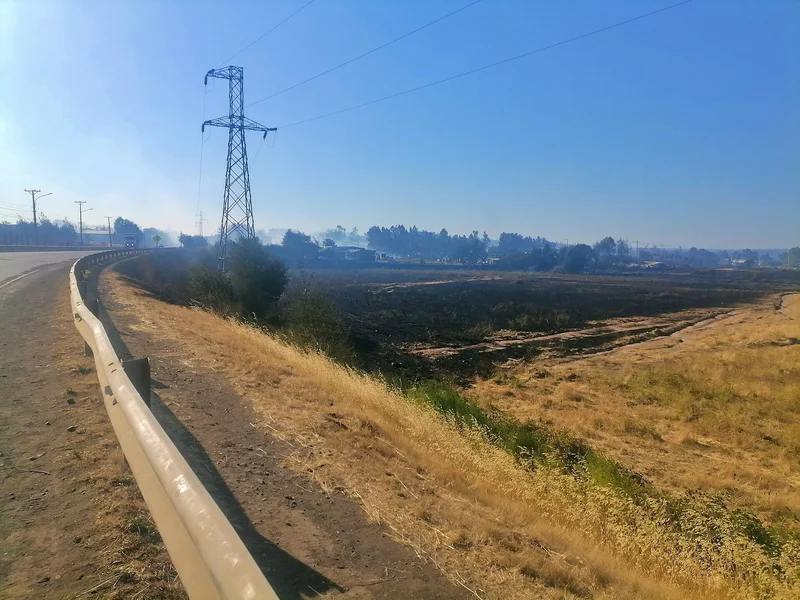
Seventeen Tolima wildfires were still burning on Tuesday, and more than 11,000 hectares of central Colombian countryside have gone with them. Tolima is a farming department of about 47 municipalities, west of Bogota.
Its risk council declared a public calamity on 14 August, and the fires have not stopped since.
What the Tolima Wildfires Have Burned So Far
El Colombiano reported on 18 August that Tolima still had 17 active fires. The figure came from the department’s environment and risk management office.
That same office put the burned area at more than 11,000 hectares. Infobae, working from a later balance, said the total had already passed 11,700.
How the Emergency Escalated
The trouble built through early August. Caracol Radio counted just over 1,700 hectares burned in Tolima on 8 August.
Six days later the department was fighting close to 39 fires at once. That is why the risk council declared a public calamity on 14 August.
Where the Flames Hit Hardest
The official municipal breakdown, published by Caracol Radio, is led by Ortega with 3,185 hectares. Rovira follows with 1,814, then Honda with 1,080 and Coello with 600.
San Luis sits high on that list too, although its numbers are disputed. Valle de San Juan, Guamo, Melgar and Chaparral have all reported active fronts.
The Numbers Are Still Moving
Consolidated figures lag the fire. The mayor of San Luis, Ricardo Andres Acosta, told Caracol that firefighters measured over 7,500 hectares burned in his municipality alone.
The departmental table gives San Luis a far smaller share. Until surveys are finished, the honest reading is that the official total is a floor, not a ceiling.
Why Tolima Is So Dry
June to August is normally a dry stretch in much of Colombia. This year, however, the state weather agency IDEAM says a strengthening El Nino is sharpening it.
IDEAM’s August climate bulletin forecasts below-normal rainfall across the Andean and Caribbean regions. It also issued heat-wave notices naming Tolima among the hottest areas.
What Started the Fires
No single confirmed ignition cause has been published for the Tolima cluster. Authorities point to heat, drought and dry vegetation as the conditions that let small fires run.
Burning of pasture and other human activity is often blamed in Colombia’s fire seasons. Even so, no arson case or arrest tied to these particular fires has been confirmed.
The Response on the Ground
Governor Adriana Magali Matiz has coordinated the response since the calamity declaration. Firefighters, soldiers and environmental staff are working the fronts, backed by aircraft.
A police Black Hawk and a Colombian Aerospace Force helicopter have flown water drops. The governor also contracted extra aircraft for the worst points, including San Luis.
Colombia’s Wider Fire Season
This is not only a Tolima problem. National reporting on 14 August put about 340 municipalities on red alert for forest fires, roughly double the previous day’s count.
The national disaster agency UNGRD logged 438 forest fires across 191 municipalities between 16 June and 6 August. Those fires affected about 7,153 hectares, far less than Tolima has lost since.
The Second Emergency: Catatumbo
Catatumbo is a rugged, coca-growing region of Norte de Santander, on the Venezuelan border. It has been the front line of Colombia’s fight with the ELN guerrilla group since January 2025.
President Abelardo de la Espriella took office on 7 August and scrapped his predecessor’s ‘total peace’ policy. His defence minister, retired general Jorge Eduardo Mora Lopez, has promised a sustained military and police campaign there.
What the Military Says It Achieved
The armed forces say an operation codenamed Beta hit ELN structures in rural Tibu and San Calixto early on 11 August. They claim two suspected members killed, five camps destroyed and two bunkers wrecked.
Mora said troops seized 1.5 tonnes of explosives, enough, he argued, to arm up to 3,000 drones. These are military claims, and independent verification is limited.
The Civilian Cost, According to the Ombudsman
Colombia’s ombudsman, the Defensoria del Pueblo, says three farmers were injured in the operation’s area. It has asked prosecutors to establish who is responsible.
The defence ministry denies that its strike harmed civilians. The ombudsman also flagged other incidents in the same week.
Six people were hurt by an explosive dropped from a drone in rural Sardinata. An elderly man was maimed by a landmine near Tibu.
Retaliation on the Cucuta Road
On 17 August three police officers were seized on the Cucuta-Ocana road, in Bucarasica. The defence ministry called it retaliation by illegal armed groups for recent operations.
No group had publicly claimed the officers by 18 August, and there was no confirmation of their release. Search operations were still running.
A Displacement Crisis That Never Ended
The current fighting sits on top of an older wound. After the January 2025 escalation, UN humanitarians recorded 77,418 people affected in eight Catatumbo municipalities.
Of those, 51,938 were forced from their homes, in what OCHA called the region’s largest mass displacement in 28 years. Human Rights Watch later cited more than 64,000 displaced and over 137,000 confined between January and August 2025.
What to Watch Next
Rain arrived in parts of Tolima on 17 August, and the governor welcomed it publicly. Still, IDEAM’s outlook keeps rainfall below normal into October, so relief may be brief.
In Catatumbo, the tests are simpler and harder. Whether the three officers come home, and whether the ombudsman’s civilian-harm findings go anywhere, will say more than any operation tally.
Frequently Asked Questions
How many Tolima wildfires are still burning?
Tolima’s environment and risk office reported 17 active fires on 18 August 2026. That is down from close to 39 when the public calamity was declared on 14 August.
How much land has burned in Tolima?
More than 11,000 hectares, per the departmental figures cited on 18 August. A later balance reported by Infobae put the total above 11,700 hectares, and surveys are still being completed.
Is El Nino to blame?
IDEAM says El Nino conditions are present and strengthening, deepening the normal mid-year dry season. It has forecast below-normal rain and issued heat-wave notices covering Tolima.
What is happening in Catatumbo?
The military is running an offensive against the ELN in Norte de Santander. It claims results from an 11 August operation, while the ombudsman reports civilian injuries.
This article was produced by The Rio Times’ automated newsroom system. How we use AI · Report an error