For years, the blueprint for building a technology company seemed almost universal. Hire thousands of software engineers and builders, organize them into specialized departments, and scale by adding more people as the business grows.
Artificial intelligence is beginning to rewrite that playbook.
Today, AI is doing far more than helping engineers write code. It is changing hiring strategies, reshaping engineering teams, accelerating product development, and challenging assumptions that have defined Silicon Valley for decades. Some of the world's largest technology companies are quietly evolving into organizations that look less like traditional corporations and more like networks of agile, startup-like teams, the pod model.
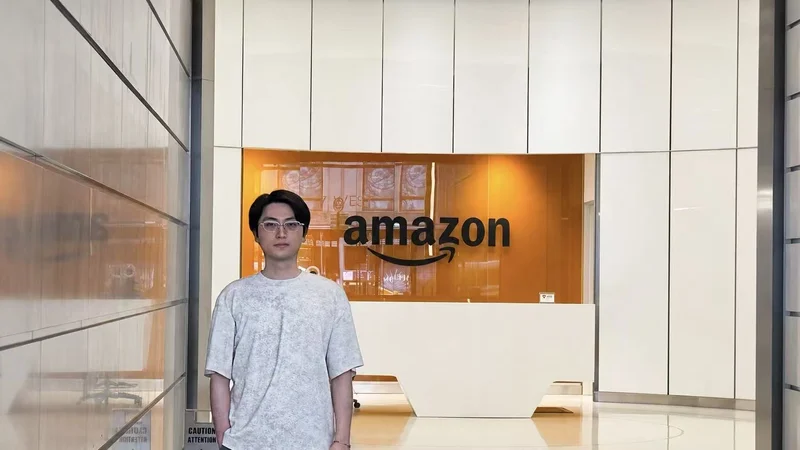
To understand what this transformation looks like from the inside, we spoke with Ting Yan, whose career has spanned multiple corners of the modern technology industry during one of its most significant periods of change. We invited him for a reason: Ting designs the experience of AWS security products used by global organizations ranging from small businesses to large enterprises and governments, and his work tackles a problem the entire cloud security industry struggles with: turning overwhelming, fragmented risk data and signals into something they can readily monitor, understand, act on, and use to protect their cloud security. Ting earned his Master's degree from Dartmouth College, where he specialized in Computer Science and Human-Computer Interaction (HCI). He began his career at Amazon Robotics building technologies that power Amazon's warehouse operations before joining Reddit as a Product Designer. In January 2022, just as generative AI began reshaping the industry, he joined Amazon Web Services (AWS), where he has spent more than four and a half years as part of the AWS Security Services organization.
The 2025 launch of Security Hub is a great example of Ting's core work contribution, which was seen as AWS's answer to one of security's most stubborn problems: alert fatigue. Ting led the design of the new human-centric interaction pattern: one that leads with prioritized risks instead of organizing raw security signals, delivering a unified, accessible user experience. For example, his work extends the visualization design of OCSF (Open Cybersecurity Schema Framework), a contribution AWS has led for the security industry, and backed by Microsoft, CrowdStrike, and dozens of other major security vendors. His recent work places him at the intersection of the two forces now reshaping his field: the shift to AI-driven building, and the push to make security comprehensible, especially the emerging AI-related risks that security users are only beginning to confront.
His experience across Amazon's robotics division, Reddit's consumer platform, and AWS's cloud infrastructure provides a rare vantage point on how different technology organizations are adapting to the AI era. Having worked through the industry's transition firsthand, Ting has observed changes that many people outside Big Tech have yet to see, from how engineering teams are organized to how companies define productivity, evaluate talent, and build products.
Before AI: The Way How Things Worked Before AI
Before generative AI became part of everyday engineering workflows, building enterprise software followed a well-established process. For Ting Yan, who was working on AWS Security Services's unified solution, much of his time wasn't spent writing code, it was spent reading through documents, creating product prototypes, and coordinating teams
His team was building what would eventually become a centralized platform capable of consolidating security findings from across AWS, bringing together vulnerabilities, threats, misconfigurations, and sensitive data signals into a single interface for enterprise customers. But before a single feature reached production, there was a long discovery process.
Because AWS primarily serves businesses rather than consumers, understanding customer needs requires dozens of conversations with security professionals from small and medium-sized companies and large enterprises. Product ideas and design decisions were validated through one-on-one Zoom meetings, where Ting listened to customers describe their existing workflows, frustrations, and the challenges they faced managing cloud security. Ting conducted hundreds of user research interviews trying to find a solution for security platform’s alert fatigue.
"The question wasn't simply 'What feature should we build?'" Ting recalls. "It was understanding how security teams actually worked and what their next step would be after receiving an alert yet not causing AWS service subscribers alert fatigue from constant false alert."
Those conversations translated into design iterations. During this process, engineers, product managers, and designers each owned clearly defined responsibilities. UX designers produced interface mockups, frontend engineers reviewed technical feasibility, and feedback cycled repeatedly between teams before implementation could begin. Even relatively small product changes often required rebuilding Figma prototypes manually. A seemingly minor adjustment to a workflow or user interface could consume hours, not because the problem itself was difficult, but because creating and refining visual prototypes remained a largely manual process. Ting also mentioned that each role involved in this process was carefully consulted for their opinions before moving forward. "Sometimes," Ting recalls, "you weren't solving the product problem - you were spending hours moving pixels in Figma and aligning decisions between team members."
Much of the effort went into documentation, mockups, presentations, and communication rather than solving the underlying product problem. This workflow represented the standard operating model across much of Big Tech before AI became deeply integrated into software development.
After AI: AI Is Collapsing the Distance Between Ideas and Products
One of the biggest changes Ting has witnessed isn't simply that engineers write code faster. It's that the entire product development process has become dramatically shorter.
Today, many of those boundaries are beginning to disappear. With tools like Claude, Cursor, Amazon Kiro, and Figma Make, engineers can move directly from an idea to an interactive prototype, often within minutes instead of days. Instead of manually creating every mockup, AI can generate interfaces, prepare documentation, summarize customer interviews, and even produce working code that connects directly to an application's codebase.
As a result, the most valuable work is shifting away from repetitive execution and toward understanding users, making product decisions, and solving complex technical problems.
Two Buckets: Teammates Are Splitting Into Two Different Paths
This shift is also changing what companies look for when they hire software builders. According to Ting, AI is naturally pushing engineers toward two distinct directions.
The first group consists of engineers with deep technical expertise. These are specialists in backend systems, cloud infrastructure, distributed computing, machine learning, or security. Their value comes from understanding complex systems that AI cannot simply invent. As AI becomes better at generating code, deep domain knowledge becomes even more important because engineers must still determine whether the generated solutions are technically sound.
The second group consists of product-oriented builders. Rather than specializing exclusively in one programming language or framework, these engineers excel at transforming ideas into products. They understand user experience, product strategy, business model, frontend development, rapid prototyping, and increasingly rely on AI to accelerate implementation.
"The middle is getting smaller," Ting suggests. Work that once required separate designers, frontend engineers, and product managers can increasingly be accomplished by a single Amazon employee working alongside AI.
Why Big Tech Is Starting to Look Like a Collection of Startups
This AI evolution is also reshaping how large technology companies organize themselves. Instead of relying on large organizations composed of narrowly defined teams, Ting has observed a growing shift toward pod models (what Amazon describes as “two-pizza-teams”). Each pod functions like a small startup embedded within a much larger company.
Rather than separating designers, engineers, product managers, and researchers into different organizations, a pod brings these roles together around a single customer problem. AI makes this possible. When documentation can be drafted automatically, prototypes generated in minutes, and repetitive implementation accelerated by AI coding assistants, fewer people are needed to move an idea from concept to launch. The long-term permanence of this blueprint for major technology firms is still to be seen. Yet, the current reality is undeniable: artificial intelligence is doing far more than optimizing code; it is fundamentally restructuring the internal architecture of tech organizations. This transformation of corporate structure may emerge as the most significant legacy of the AI era within the tech landscape. For Ting, the reorganization is just the backdrop. The real work, making security comprehensible as AI reshapes both how software is built and the risks it creates, is only beginning.