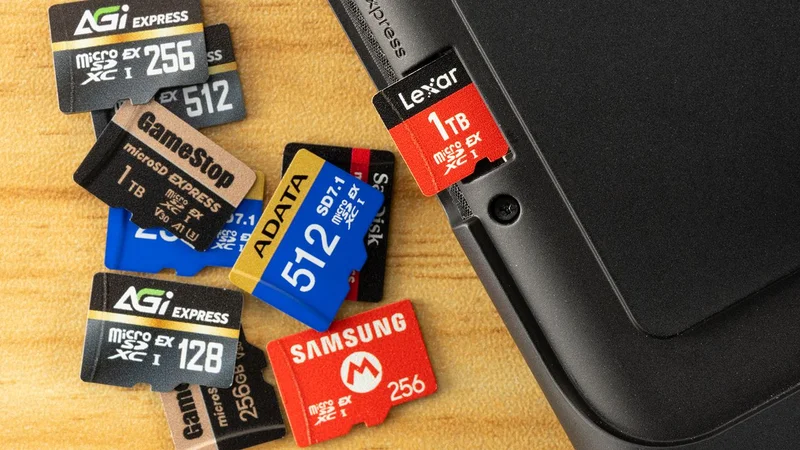
There are many different options available if you want to buy a microSD card, but which one of these lasts the longest? Tech enthusiast Matt Cole wanted to find out, so he set up a torture rig in 2023 to put various cards through their paces and recently released an update on the status of his project on the r/DataHoarder subreddit. Cole said that he has a total of 351 microSD cards in his collection coming from 52 different brands and 111 unique models. Of these, 177 have already been tested until they completely stopped working, have become read-only, or more than half of the sectors on the card have experienced verification failure. Another 107 units are currently being put through their paces, while a further 67 are waiting for a microSD card slot to open up.
Cole has so far tested 200 cards last year, meaning 84 microSD's have failed in the intervening months. While this might sound disastrous for any manufacturer, we should note that the testing conditions are quite extreme, and it’s rare that a user would find themselves in these circumstances. If you want to check out the raw data, Cole’s database is publicly viewable on his website, but he’s also shared some of his observations after three years of testing. First, he divided his microSD cards into three categories: consumer-grade, high-endurance, and industrial-grade. Consumer-grade microSD cards are the typical cards you can get off Amazon, while high-endurance models are often labeled as such (or some other similar wording). Lastly, industrial-grade microSD cards are those that are specifically designed for heavy-duty use and would often come with a data sheet and an endurance claim.
According to the test results, the average consumer-grade microSD withstood 10,000 program/verify/erase cycles, with PNY, Kingston, Delkin Devices, Lexar, and Samsung rounding out Cole’s top five brands.
| Brand | Failed | Total Tested | Average Lifespan (Days) | Average Cycles | Total Written Data (PB) |
|---|---|---|---|---|---|
| PNY | 1 | 10 | 643 | 15,700 | 11.5 |
| Kingston | 3 | 12 | 694 | 23,500 | 11.6 |
| Delkin Devices | 0 | 3 | 662 | 13,500 | 5.1 |
| Lexar | 3 | 8 | 684 | 15,800 | 5.8 |
| Samsung | 3 | 10 | 553 | 11,100 | 7.2 |
Interestingly, Amazon Basics received an honorable mention, with none of the microSD cards being tested failing yet. They’ve been running for 788 days now, with 16,600 cycles and a total of 4.2PB of data written on them. The only reason they didn’t make the main list is that they’re technically generic or off-brand microSD cards and Amazon could replace the NAND chips used in these cards anytime, thereby making the survey results moot. There’s a separate shorter list for high-endurance and industrial-grade cards, given that the sample size is just smaller and the latter is significantly more expensive than all the other microSD cards available here.
| Brand | Failed | Total Tested | Average Lifespan (Days) | Average Cycles | Total Written Data (PB) |
|---|---|---|---|---|---|
| TEAMGROUP (High-Endurance) | 0 | 2 | 404 | 17,300 | 2.2 |
| Transcend (High-Endurance) | 0 | 3 | 760 | 17,000 | 3.2 |
| SanDisk (High-Endurance) | 6 | 7 | 452 | 16,200 | 4.7 |
| Samsung (High-Endurance) | 1 | 3 | 822 | 18,800 | 1.8 |
| Kingston (Industrial-Grade) | 2 | 3 | 77+ | 141,600 | 3.4 |
He also listed some of the worst performers per category from popular brands, like ADATA, Gigastone, Micro Center, Silicon Power, and, surprisingly, SanDisk, although Cole avoided no-name brands, since most users don’t expect much from them.
Doing all these tests simultaneously and continuously is no joke, and we see this in Cole’s setup. He runs a single Beelink Mini-S with an Intel N95 CPU, 8GB of RAM, and a 500GB SSD, five TRIGKEY Green G4 mini-PCs and one TRIGKEY K-N100 with an Intel N100 CPU, 16GB of RAM, and a 500GB SSD, and an AOOSTAR mini-PC with an Intel N150 CPU paired to 12GB of RAM and a 500GB SSD. Aside from these mini-PCs, he also has an MSI GE62VR-7RF Apache Pro laptop with an Intel Core i7-7700HQ, 32GB of RAM, and a 1TB SSD, a Lenovo IdeaPad Y850 laptop with an Intel Core i7-3630QM, 8GB of RAM, and a 1TB SSD, and an ASUS ROG Strix Hero II GL504GM laptop with an Intel i7-8750H, 32GB of RAM, and a 500GB SSD.
Running this experiment can get expensive as Cole needs to purchase all the microSD cards himself (unless someone donates them), especially at a time when memory card prices are skyrocketing. Aside from that, he also needs to purchase and maintain all that testing hardware. Although these are either relatively affordable mini-PCs or used gaming laptops, the cost of acquiring and running all these units will eventually stack up.
Get Tom's Hardware's best news and in-depth reviews, straight to your inbox.
Jowi Morales is a tech enthusiast with years of experience working in the industry. He’s been writing with several tech publications since 2021, where he’s been interested in tech hardware and consumer electronics.