- See more Daily Mail on Google - save us as a Preferred Source
More than £130million of taxpayers' cash has been spent on animal crossings across the UK – including £12million on an unmonitored 'fish motorway'.
The huge bill covers a handful of schemes across the country designed to help wildlife get around roads, railways and rivers without coming to harm.
Some of the projects have sparked criticism and have been branded a waste of public money.
Nottingham's 'fish motorway' has been operational since 2024 but no formal monitoring has taken place – raising doubts over its effectiveness and value for money.
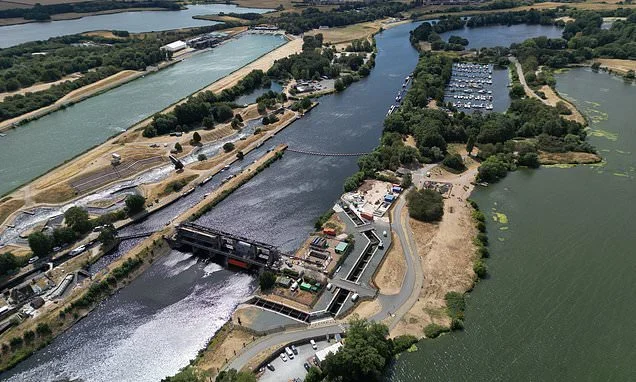
The Environment Agency installed the £12million 200-metre-long pass to help salmon and other migratory species navigate the Colwick flood defences on the River Trent.
A total of £114million has also been spent on a HS2 bat tunnel in Buckinghamshire and an A3 green bridge in Cobham, Surrey, has cost £3.7million.
William Yarwood, campaigns director at the TaxPayers' Alliance, said: 'These eye-watering sums expose why UK infrastructure projects are among the most expensive and delayed in the world.
'Gold-plated environmental mitigation, from £100million bat structures to multi-million-pound animal crossings, has turned routine road and rail upgrades into financial black holes.
Pictured: A £12million fish run, at the Colwick Sluice, on the River Trent in Nottinghamshire
Construction work is underway on the HS2 'bat tunnel' in Buckinghamshire
'Taxpayers expect their hard-earned money to fix potholed roads and fund essential services, not to build wildlife motorways at eye-watering expense.'
In Nottingham, the taxpayer-funded fish bypass has been heavily criticised by locals on social media.
One person posted: 'How can you build something and then not monitor its effectiveness?
'Actually all the fish pass has done is congregate and serve fish up as dinner to the hordes of invasive cormorants that devour them literally yards upstream. You couldn't make it up.'
Another said: 'That money could have been used for so many other things that could have benefitted local communities...could have used the money to help with flood defences in the area.'
Meanwhile in Buckinghamshire, HS2's 1km Bat Tunnel has cost taxpayers £114million since construction began in 2024.
The unfinished tunnel is designed to help protect 13 species of bat, including Europe's most northerly known population of Bechstein's bat, along the route between London and the West Midlands.
The controversial tunnel has been blighted by setbacks and rising costs ahead of its expected completion in 2027.
A spokesman for HS2 Ltd said: 'The demands of the UK planning and environmental consents process when the railway was being developed have come at a high cost, largely out of HS2 Ltd's control.
An artist's impression of the bridge in Cobham, Surrey, built to provide a corridor for sand lizards and heath tiger beetles
'To comply with laws protecting vulnerable species, including internationally protected bats near Sheephouse Wood, a covered structure over the HS2 line is being built.
'A range of alternative options were reviewed and rejected on the grounds that they were more expensive or failed to pass the legal test.'
Elsewhere, National Highways has started establishing 'Green Bridges' across the country in a bid to help wildlife cross dangerous A-roads.
Taxpayers have forked out £3.7million for the first heathland bridge over the A3, around J10 of the M25 in Cobham, Surrey.
The 68-metre-long bridge is covered in heather and has already shown some success with snakes, deer and foxes spotted using the pathways safely since opening in May.
The bridge, which is 30m (98ft) wide, also includes a path for pedestrians, horse riders and cyclists.
Another bridge was finished in January over the A30 in Cornwall, but the project isn't complete so financial figures and success rates are yet to be calculated.
Ben Hewlett, senior biodiversity adviser at National Highways, said: 'Our green bridges are cost-effective as they have been built as part of wider road improvement plans.
'They are also in areas where they will bring most benefit to local communities and the environment.
'Green bridges not only provide safe passage for rare species and protect habitats that have long been disrupted by the road network, they also connect local communities and support active travel by providing routes for walkers, cyclists and horse riders.'