Google just released its Pixel 11 series, and while the initial reaction to the new phones has been slightly muted, the company also launched the Google Pixel Watch 5.
On the hardware side, however, it's a similar story, with relatively minor upgrades and a slightly higher price tag.
But as is often the case with Google Pixel devices, the real story is in the software. Alongside the new Pixel Watch 5, Google has introduced a new family of health features called Health Guardian.
While this new suite includes many features, one in particular seems to have flown under the radar: Insulin resistance trends.
This is the first time a mainstream wearables company has offered a feature related to blood sugar and insulin resistance, and it could be a game-changer for health tracking.
The good news is that the feature isn't exclusive to the Pixel Watch 5 either. The company is also bringing Insulin resistance trends to the Google Fitbit Air, meaning you won't have to buy its latest smartwatch to get access to it.
Wearables have been chasing this health feature for years
Blood sugar has long been a holy grail for wearables
Smartwatches have come a long way in tracking our daily health, from something as simple as counting steps to more advanced features like detecting sleep apnea.
But one thing that almost every major wearable company has been trying to crack for years is blood sugar.
Unlike vitals like heart rate and blood oxygen levels, blood sugar has traditionally required invasive medical devices that require access to your blood.
Plenty of companies have been working on ways to track it noninvasively through a wearable. Still, nobody has managed to bring something meaningful to a mainstream wearable.
Well, that was until the recent Made by Google event.
During the keynote, Google announced its new Insulin resistance trends feature. Put simply, insulin resistance happens when your body has to work harder than usual to keep your blood sugar under control.
If that resistance continues to increase over time, sugar can start building up in your blood, eventually increasing your risk of developing Type 2 diabetes.
So this means that for the first time, a mainstream wearable could (potentially) give you an early hint that something requires your attention before it progresses into something serious.
To be clear, your Google wearable still won't diagnose diabetes, but having that kind of trend data on your wrist could be incredibly useful.
What's even more impressive is that Google's Insulin resistance trends doesn't require invasive techniques. Instead, it uses the sensors available to identify "trends over months" and then provides nudges to help you adjust your daily habits.
The best part is that the feature isn't exclusive to the Pixel Watch 5. Google confirmed that the feature will also arrive on other devices, including the Fitbit Air.
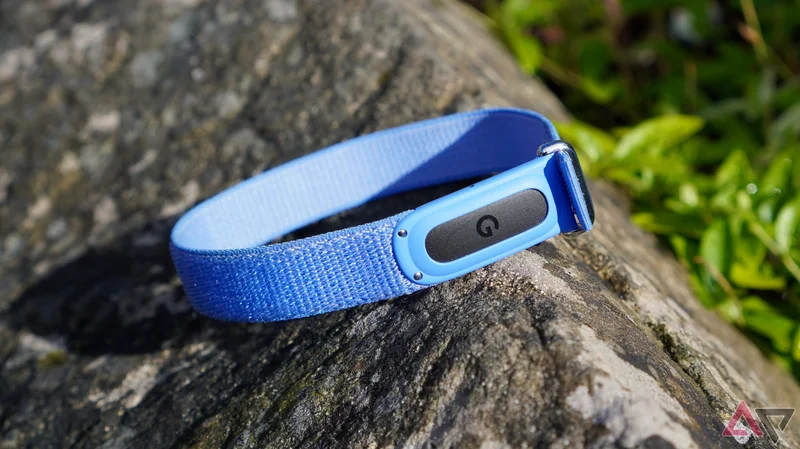
That means one of Google's most impressive health features won't require buying its latest smartwatch, and will be available on the $99 Fitbit Air (starting next month), making an already great-value fitness tracker even more compelling.
Insulin resistance trends isn't the only Health Guardian feature I'm excited about
Google has even more health features on the way
Insulin resistance trends isn't the only interesting feature coming with Google's new Health Guardian suite. Google is also working on several other non-invasive health features, including Blood Pressure Trends.
Similar to Insulin resistance trends, this won't require a traditional blood pressure cuff or calibrating your wearable against a medical-grade device.
Instead, Google says it will use existing sensors and AI to identify blood pressure trends over time — similar to how Whoop does it.
For the first time, a mainstream wearable could potentially give you an early hint that something is changing before it progresses into something more serious.
This isn't meant to replace a real blood pressure monitor, but it could help detect cardiovascular changes earlier and give you a chance to make lifestyle changes accordingly.
Google Health is also adding insights into your breathing quality while you sleep. Every morning, the app will show how much of your sleep was spent with optimal breathing, which can have a long-term impact on things like energy and recovery.
Combined with Insulin resistance trends, these features could make Health Guardian one of the most interesting health-tracking suites available on a mainstream wearable.
Insulin resistance trends could make the Fitbit Air an even better value
None of these features are available yet, and it's still too early to say how accurate or useful they'll actually be.
But considering Google is focusing on long-term trends rather than pretending these wearables can replace medical-grade devices, I'm cautiously optimistic.
The Fitbit Air is already an excellent value at $99. Its week-long battery life and lightweight design have won me over.
There are a few concerns, like inaccurate step counting. Still, if this affordable fitness tracker can give me useful long-term insights into these (more important) metrics, those smaller compromises suddenly become much easier to overlook.
Fitbit Air
-
**Battery Life** - 7 days
-
**Health sensors** - Optical heart rate, 3-axis accelerometer, temperature sensor
-
**Dimensions** - 35 x 17 x 8.3mm (Module)
-
**Water Resistance** - 50 meters
-
**Connectivity** - Bluetooth 5.0
-
**Materials and finishes** - Polycarbonate module
The Fitbit Air is a screen-free (and distraction-free) health tracker that weighs just 12 grams. It tracks sleep stages, heart rate, and SpO2 around the clock, and it's rated for up to a week of battery life. It syncs with your phone via the Google Health app.