- READ MORE: White House source reveals fears of a MAJOR defense vulnerability that few people are tracking
- See more Daily Mail on Google - save us as a Preferred Source
Donald Trump said Thursday he was near to a decision on a massive escalation of attacks on Iran as oil hit its highest price in two months and Tehran-backed Houthi rebels opened a new front in the Red Sea.
'I am considering a massive attack. Bigger than ever before,' the President told Axios. 'I am close to making a decision. We are all set for it.'
Trump added that Iran wanted a deal but had not yet felt 'enough pain' to properly negotiate.
He did not say when he would finalize his decision.
The President indicated that if he asked, Israel would join in on new strikes, but said the Israelis' help was unnecessary.
Trump also said that Israeli Prime Minister Benjamin Netanyahu wants to be at Senator Lindsey Graham's wake in DC next week, and that he would meet with Netanyahu if he comes.
Oil prices surged past $100 per barrel for the first time since May 26 as the war escalates after the collapse of the the tenuous ceasefire between the US and Iran.
The US has carried out strikes on Iran for 12 consecutive nights.
The US has beefed up its military presence around Iran, deploying a powerful B-1 bomber for the first time since the end of the ceasefire, surging additional special operations forces to the area, and sending 150 additional medics to a military hospital in Germany that treats wounded soldiers from the Middle East.
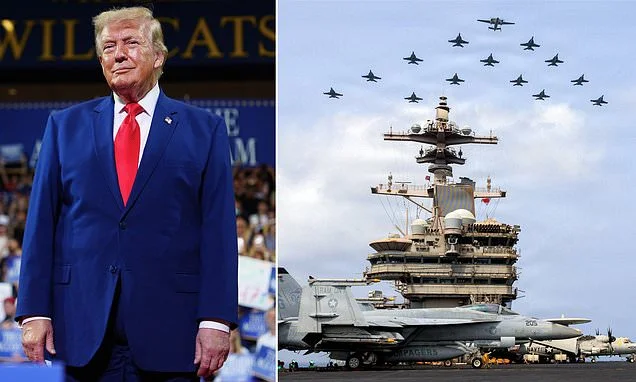
US military planes fly in formation over the USS George HW Bush in a June 30 photo from CENTCOM Public Affairs
Houthi rebels in Yemen claimed two attacks on Saudi tankers in the Red Sea Wednesday night, threatening another disruption to the global energy supply chain.
Analysts warn that the Houthis' attacks could cut off Saudi Arabia's alternative export route through the Red Sea.
European countries could be hit hard if the Houthis succeed in restricting Red Sea traffic, as the continent is dependent on Saudi exports through that waterway.
Ukrainian strikes on Russian oil refineries have already hurt European oil supplies.
In the US, Capitol Hill Republicans defending slim majorities fear that rising fuel prices, combined with an open-ended war, could hand Democrats potent lines of attack in the midterm elections.
Some in the GOP have voiced doubts about the war, both publicly and privately.
Secretary of War Pete Hegseth was grilled in a Senate committee hearing on Tuesday, where even a Republican senator rebuked him for not giving 'straight answers' to questions.
Hegseth testified that the cost of the war has already exceeded $37.5 billion, and the White House is asking Congress for even more than that in emergency war funding.