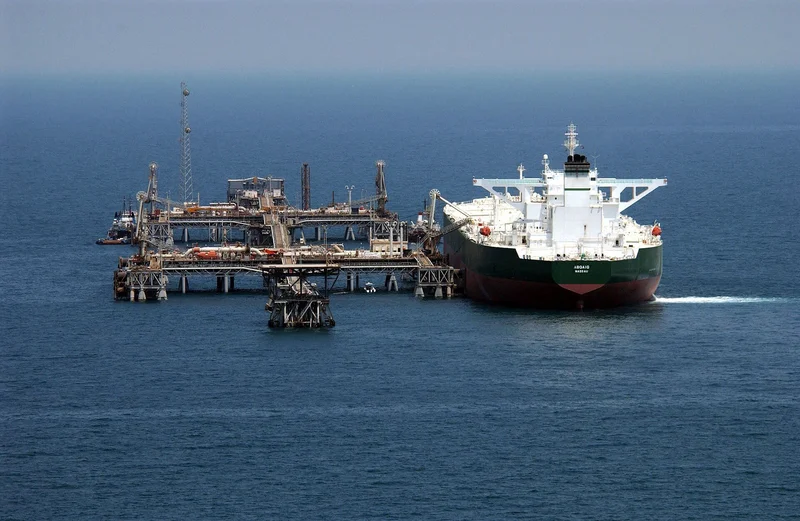
Venezuela Oil Exports Up 19.7% This Year, PDVSA Says
Venezuela · Energy
Caracas will court oil, gas and petrochemical money at a four-day investment summit in February 2027.
Venezuela oil exports have risen 19.7 percent so far this year, the state producer PDVSA told an investor audience in Houston. Its exploration chief added that crude output would reach 1.245 million barrels a day by the end of August.
Both figures come from the company itself, so they sit beside, not above, independent tanker data.
What PDVSA Told Investors in Houston
Jovanny Martinez, PDVSA’s vice president for exploration and production, spoke on 18 August at an industry showcase in Houston. He said crude output would reach 1.245 million barrels a day by the end of August.
He also said fuel production was up 12.9 percent this year, with 5.4 percent more fuel reaching the domestic market. Because those numbers come from the producer, they are best read as a company progress report.
The venue was The Post Oak Hotel, and the event was a curtain-raiser for a much larger summit in Caracas. Venezuela’s Ministry of Hydrocarbons and PDVSA both put their names to it.
Reading the Venezuela Oil Exports Figure Carefully
The 19.7 percent rise is a year-to-date number, not a month-on-month jump. PDVSA did not spell out the exact base period it measured against.
That matters, since Venezuela started 2026 from a very low floor. Exports were about 498,000 barrels a day in December 2025, then bounced to roughly 800,000 in January.
Growth from a collapsed base always looks dramatic in percentage terms. The absolute volumes are the honest measure, and those tell a steadier story.
Tanker Tracking Tells a Flatter Recent Story
Reuters shipping data shows exports climbing to 1.23 million barrels a day in April and 1.25 million in May. After that the line went sideways.
June came in near 1.2 million barrels a day, and July slipped to about 1.16 million. So Venezuela oil exports are clearly higher than a year ago, yet the last two tracked months went the other way.
Earthquake-related terminal delays were blamed for part of the June dip. In July, Reuters said the country simply drew down fewer stored barrels.
Almost Half the Crude Now Heads North
Kyle Haustveit, the US Under Secretary of Energy, spoke at the same Houston event on 18 August. He said more than 500,000 barrels a day were moving to American refineries, about half of Venezuelan production.
Reuters shipping data put US-bound cargoes at some 786,000 barrels a day in July, the most since early 2019. In short, one buyer now dominates the trade.
The two figures are not in conflict. Haustveit described a rough average across recent months, while the Reuters number is a single-month peak.
Gulf Coast refineries were built for heavy, sour crude of exactly this kind. That is why the trade snapped back so quickly once it was allowed.
The Licences That Made It Possible
None of this happens without Washington. A series of US Treasury general licences issued through 2026 reopened lifting, shipping and refining of Venezuelan crude.
Separate authorisations cover diluent sales, upstream services and even contingent contracts for future investment. Chevron, BP, Shell, Eni, Repsol and Maurel & Prom are the majors named in that framework.
Chevron’s earlier permission was wound down in 2025 before a narrower licence returned. So the whole trade rests on decisions that can be reversed with a single filing.
Venezuela Energy Week Lands in February 2027
The event the Houston showcase was promoting is Venezuela Energy Week 2027. Organiser Energy Capital & Power has set it for 22 to 25 February 2027 in Caracas.
It was originally planned for 26 to 29 October 2026 and moved back. The organiser says the summit is officially supported by Venezuela’s Ministry of Hydrocarbons and PDVSA.
No specific Caracas venue has been published. The organiser bills it as the country’s largest international energy investment summit to date.
What Caracas Wants From the Summit
The pitch is oil, gas and petrochemical investment, aimed squarely at international operators and service firms. Venezuela holds roughly 303 billion barrels of proven reserves, the largest declared total in the world.
Reserves are not the bottleneck, though. Money, wells, power and refining capacity are, and each takes years to rebuild.
A February date also buys time. It puts the summit after the year-end production numbers land, when Caracas hopes to arrive with a better scoreboard.
The Gas Problem Sitting Underneath
Martinez also flagged a natural gas shortfall of about 500 million cubic feet a day. Gas is what lifts heavy oil out of ageing fields, so the gap is an output ceiling.
Venezuela’s heavy crude further needs light diluent to move through pipelines. Martinez argued that diluent should eventually be produced at home instead of imported.
Until then, the country buys the lighter liquids abroad and pays freight on both legs. Every barrel exported therefore carries an imported ingredient.
The Year-End Target Is Higher Still
The Ministry of Hydrocarbons has set an official production goal of 1.37 million barrels a day by the end of 2026. Reuters reported the same target in July, against output then running near 1.2 million.
Meeting it means adding meaningful volume in four months, from fields that have been starved of investment. That is possible, although the June and July export dips show how easily the curve flattens.
PDVSA first put the 1.37 million figure to investors in an April presentation. It has not been revised since.
What to Watch Next
The next hard checkpoint is the Reuters tanker count for August, published in early September. It will show whether Venezuela oil exports resumed climbing or stalled again.
After that, watch Washington. Once licence terms shift, volumes follow within weeks, and no summit in Caracas can change that.
For readers in the region, the practical signal is refinery demand on the US Gulf Coast. While that demand holds, the barrels keep moving.
Frequently Asked Questions
Is the 19.7 percent rise a monthly or annual figure?
It is year-to-date. PDVSA said exports were up 19.7 percent so far in 2026, and did not give a month-on-month comparison.
Is 1.245 million barrels a day an export target or a production target?
It is production. PDVSA said crude output, not exports, would reach 1.245 million barrels a day by the end of August.
When and where is Venezuela Energy Week 2027?
Caracas, 22 to 25 February 2027, organised by Energy Capital & Power. It was moved from 26 to 29 October 2026, and no specific venue has been announced.
Who is buying Venezuelan crude now?
Mostly the United States. Reuters put US-bound cargoes at about 786,000 barrels a day in July.
This article was produced by The Rio Times’ automated newsroom system. How we use AI · Report an error