Sometimes, it’s fun to think about the great games that might have been — until they were canceled without ever getting the chance to make their mark. Most of the time, we just shrug our shoulders and move on, because that’s life. But sometimes, we mourn the wasted potential.
Some of those canceled games might have fought the odds and disappointed us anyway, like Duke Nukem Forever. Others might just as easily have become massive hits, if only they had been allocated additional time and resources. In that regard, they’re a bit like Schrodinger’s cat. With both possible outcomes in mind, here are the 10 canceled games we’re still upset about years later. They could have been contenders!
1 StarCraft: Ghost
Developer: Nihilistic Software
Players looking forward to a shooter set in the StarCraft universe had twelve years to hope and dream before finally having to accept that nothing was ever going to come of StarCraft: Ghost. First announced in 2002, the title spent several years in active development before being placed on indefinite hold in 2006. Over the course of those years, the industry changed a lot. For that matter, so did the development team. Although there has been a lot of discussion about what went wrong with StarCraft: Ghost, the game’s eventual cancellation was due to numerous factors. Perhaps the biggest of them was the success of a different Blizzard property: World of Warcraft. We can easily understand why Blizzard management would have chosen to allocate resources toward a property that was red-hot at the time. Even so, it stings a little that StarCraft didn’t get its spinoff.
2 Dead Space 4
Developer: Visceral Games
Electronic Arts, who would have been the one to publish Dead Space 4, technically never announced it. Years later, we only know the game was in development because some of the developers responsible have said so. Originally, it began development in February of 2013, following the launch of Dead Space 3. That previous game clearly didn’t sell as well as Electronic Arts hoped. Since the writing was on the wall, leadership chose to have Visceral focus on other projects. Dead Space 4 development ended not long after it began, and well before any playable levels could be built. The development studio itself followed in 2017. As for the franchise, it seems to be done for, especially after the terrific Dead Space remake failed to expand its audience.
3 Fable Legends
Developer: Lionhead Studios
History has proven that games can be all but finished and still get canceled. Such was the case for Fable Legends, a multiplayer action-RPG that was preparing for its open beta phase at the time of its cancellation in 2016. First revealed at Gamescom in 2013, the game spent around four years in development. Developer Lionhead Studios had just finished Fable Journey and said goodbye to co-founder Peter Molyneux when it went to work on a new action-RPG intended to showcase the power of the Xbox One. A live service game might not seem like the right fit for a studio known for its single-player prowess, but Microsoft executives knew best and they were willing to spend piles of money to make their vision a reality. When the game’s development finally ended in 2016, just shy of a proper release, so did Lionhead Studios.
4 The California Raisins: The Grape Escape
Developer: Radiance Interactive Designs
The California Raisins: The Grape Escape came about as close to releasing as a game can without entering the manufacturing process, then dropped out of sight at the last minute. If you read old gaming magazines, you’ll sometimes find pictures of the familiar dried fruit mascot in sunglasses, forcing its way around a plump bunch of grapes. But the ads and all references to the game disappeared overnight. One possible reason for the abrupt change is the fact that the raisins and their crooning style were already on their way out of fashion. Capcom also had other big projects to tend to. For context, 1990 is the same year it released Mega Man 3 and Gargoyle’s Quest in North America, along with numerous arcade titles. Besides that, the Super Nintendo was fast approaching. But at least for fans of the raisins, there’s good news: someone found a prototype cart and dumped its contents all over the internet. If you want to see what the game was all about, you technically can, even though it never got its flowers.
5 Star Wars Battlefront 3
Developer: Free Radical Design
In 2006, we learned that we could look forward to playing Star Wars Battlefront 3, this time from Free Radical Design instead of Pandemic Studios. Then in late 2008, we learned that we shouldn’t look forward to it at all when LucasArts canceled the project. During the time it spent on the game, the team reportedly produced a build that was nearly final. Unfortunately, Free Radical Design and LucasArts couldn’t reach an agreement to carry that third installment across the finish line and serve it up to players. Then, in 2016, an Xbox 360 prototype leaked. It provided a glimpse of how the game might have played, had it been released. Next, a fully playable Wii build of Star Wars Battlefront 3 materialized in late 2024. We finally got to see what we had missed. Sadly, nothing could give us back the 16 years we had to live without that experience.
6 Scalebound
Developer: PlatinumGames
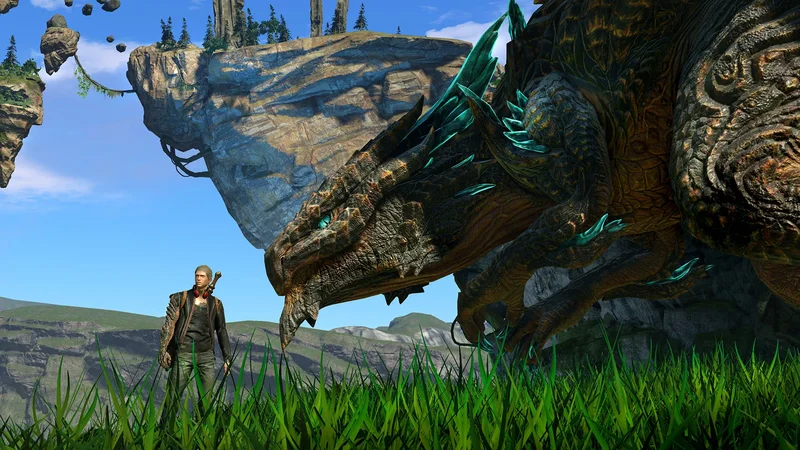
Game engines are supposed to simplify the development process, but they don’t always achieve that result. Unreal Engine 4 enabled some amazing games to come to fruition, but it didn’t streamline things for the team at PlatinumGames, which wrestled with the engine and ultimately failed to deliver Scalebound to Microsoft. First announced at E3 in 2014, the promising game was scheduled to arrive in 2016. Then it slipped into the next year and finally was canceled when the developer failed to produce a stable, playable piece of software. Perhaps the ambitious team, led by Hideki Kamiya of Bayonetta fame, simply tried to do more than its resources permitted. Maybe there were other less interesting problems. Whatever the case, the game never happened and probably never will. That’s a shame. The story of a boy and his dragon is one we would have liked to see.
7 Star Wars 1313
Developer: LucasArts
There must be something about Star Wars, because two games from that franchise found their way to this list. Star Wars 1313 was to be an action-adventure game focusing on everyone’s favorite bounty hunter, Boba Fett. Handled internally at LucasArts, the title spent roughly three years in development. When Disney acquired LucasArts in late 2012, there was still a ways to go. Unfortunately, the new owners weren’t interested in paying to provide the necessary runway, especially not after investing more than $4 billion to buy the company. They canceled the project around six months later, leaving us to mourn what might have been. The closest we’ll probably ever get to a Star Wars experience along similar lines is Ubisoft’s semi-recent release, Star Wars Outlaws.
8 Sleeping Dogs 2
Developer: United Front Games
Some publishers consider sales in excess of 1 million units a success, but Square Enix is not one of them. At least, it wasn’t when the title in question was Sleeping Dogs (previously set to be published by Activision as True Crime: Hong Kong). It presented an engaging environment that compared favorably to the likes of Ubisoft’s Watch Dogs, but it failed to meet sales projections. United Front Games then went to work on a sequel that would have expanded the story and offered two-player cooperative play, among other enhancements. Square Enix passed on the pitch, however, and encouraged the team to build the project that became Triad Wars… which only made it as far as a beta phase before it also got shut down. For United Front Games and the Sleeping Dogs franchise both, that cancellation marked the end of the line.
9 Silent Hills
Developer: Konami
If you own a working PlayStation 4 with the demo of Silent Hills (originally known as P.T.) installed, you have a piece of history. First revealed in August 2014 as a playable teaser, the game’s development united Hideo Kojima (best known for Metal Gear Solid) and Hollywood horror director Guillermo del Toro. The happy pair planned to work with actor Norman Reedus to revitalize the popular Silent Hill horror franchise, which had fallen upon hard times. Eight months later, Konami canceled the game-in-progress and Kojima left the company to make Death Stranding (partnering with Reedus again). A few years later, Capcom presented a fresh take on Resident Evil with a seventh installment that reminded some players of P.T. As for Konami, it wasn’t done with Silent Hill. In fact, Silent Hill: Townfall, a promising new installment from No Code and Annapurna Interactive, is due next month.
10 Mega Man Legends 3
Developer: Capcom
Capcom didn’t quite have a massive hit with its two Mega Man Legends games (three if you count The Misadventures of Tron Bonne). Still, it had cultivated an audience that it decided to pursue with a third numbered installment. Announced as an early 3DS title in September 2010, Mega Man Legends 3 incorporated feedback from a community of Mega Man fans. Eager players voted on characters, designs, and mechanics as development progressed. When Capcom canceled the project in July of 2011, not long after Keiji Inafune left the company in late 2010, the move felt very abrupt. A demo was on its way, with multiple levels and a new protagonist, but it never got released. The 3DS recovered from its alarming weak launch and went on to become a genuinely successful platform, but the reversal of fortune came too late to spare the third installment in Capcom’s niche series. Its cancellation means the cliffhanger at the end of Mega Man Legends 2 remains unresolved to this day. Maybe Capcom will come back to the series in the future to explore what comes next, but we wouldn’t count on it. In the meantime, at least we have Mega Man: Dual Override to look forward to in 2027.