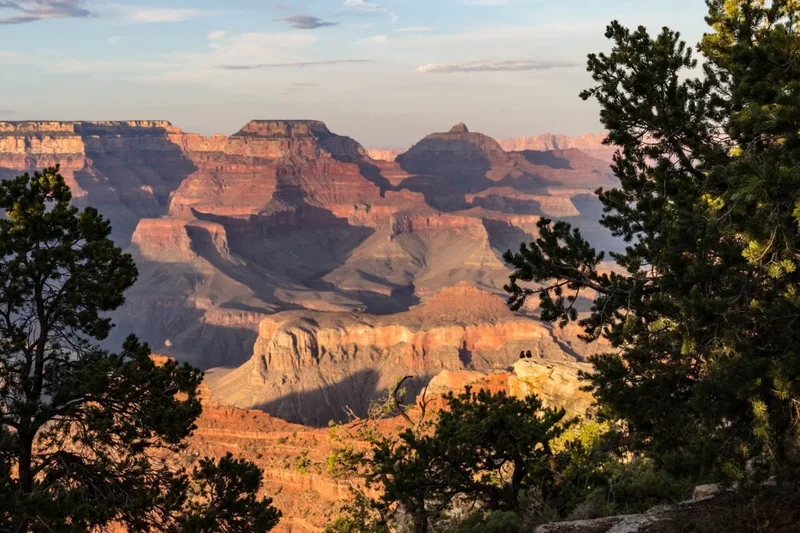
Amateur archeologist Bill Ott was already a legend before he disappeared into the Grand Canyon 14 years ago. During the 2012 search and rescue mission, one sheriffâs sergeant described Ott as âjust a higher level of Grand Canyon hiker.â He was the first to complete the traverse on the Canyonâs north side over 78 days alone in 1981. No one had even considered Ottâs disappearance odd until the 65-year-old backpacker had been missing for 12 days.
Ott had been on a solo expedition to document ancient rock art dating back roughly 3,000 to 4,000 years before he vanished, according to his friend, Flagstaff-based anthropologist Scott Thybony. But now Ottâs remains have become something of a case of forensic anthropology themselves: The Coconino County Sheriffâs Office announced Tuesday that DNA testing confirmed remains discovered by members of the Hualapai Tribe west of the Grand Canyon belonged to Ott, solving the long-standing mystery of the missing backpackerâs fate.
Thybony had been among the first modern researchers to study these prehistoric pictographic sites, thanks to a National Geographic grant in 1998, teasing out curious images of tall beings from the faded rock art, including humans with antlers and animals walking on their hind legs. Ott, as Thybony told Outside this week, was helping in this processâdevoting his free time to photographing and digitally restoring these rock panels in the time off from his day job at a nursing facility.
âHe would go pixel by pixel, hours after hours, trying to match the colors with broken-off pigment, removing smoke stains,â Thybony told the outdoor magazine. âIt was a painstaking effort, and it went on for years.â
âOtherworldlyâ
In the late 1990s, Thybony documented one of these pictographic sitesâ painted and etched onto a rock-shelter wall 1,500 feet (457 meters) down along the western edge of the Grand Canyon. These âpolychrome imagesâ of spectral human-like forms, geometric shapes, and animals, as he wrote in field notes later published in the newsletter Vestiges, âpossess a haunting quality, the last traces of a way of life we know little about.â
Back in 1998, Thybony had hoped that organic binding material mixed into these ancient paintsâpotentially plant juice or urineâcould one day be used to help radiocarbon date the finds. The pictographsâ etched designs and mineral-based pigments had resisted that level of precision. Researchers still had plenty of work to do, which is partly how Ott became involved.
âSeveral times Ott had stopped by my office to talk about his passion, a style of otherworldly rock art painted thousands of years ago,â as Thybony recollected for a piece published by NPR affiliate KNAU in 2017. âThe last time we met he asked, âWhat areas did you not explore?ââ
The vanishing
The area that Ott reportedly chose to explore was just outside Grand Canyon National Park on remote Hualapai Indian Reservation lands where the tribe no longer permits hikers. Ott, according to Thybony, decided to make the trek surreptitiously. âThat was where he disappeared,â he wrote for KNAU.
Ottâs remains were found inside a patch of pinyonâjuniper pines underneath a 15-foot (12-meter) cliff not too far from the trail he would have traveled. His remains were found along with a light-weight daypack containing his wallet, camera, cash, and a navigational GPS. Ottâs main pack, however, Thybony told Outside, has not been found.
Coconino County Sheriffâs told local press that Ottâs cause of death is unknownâbut Thybony and others suspect that the unusually dry season in which Ott was hiking in 2012 might have played a role in the predicament that led to his demise.
In their statement, Coconino County Sheriffâs expressed âgratitude to the Hualapai Tribe for locating and recovering the remains, as well as to the agencies that participated in the original search efforts,â a team of about 12 to 15 federal, local, state, tribal, and civilian volunteers.