Your support helps us to tell the story
From reproductive rights to climate change to Big Tech, The Independent is on the ground when the story is developing. Whether it's investigating the financials of Elon Musk's pro-Trump PAC or producing our latest documentary, 'The A Word', which shines a light on the American women fighting for reproductive rights, we know how important it is to parse out the facts from the messaging.
At such a critical moment in US history, we need reporters on the ground. Your donation allows us to keep sending journalists to speak to both sides of the story.
The Independent is trusted by Americans across the entire political spectrum. And unlike many other quality news outlets, we choose not to lock Americans out of our reporting and analysis with paywalls. We believe quality journalism should be available to everyone, paid for by those who can afford it.
Your support makes all the difference.
Read more
A Trump administration push to keep aging Midwest coal plants alive could cost Americans billions of dollars in the coming years, including $117 million in the state of Wisconsin alone, according to the state’s governor.
“Not only are you making energy bills go up for Wisconsinites with no demonstrated need or benefit, but this practice flies in the face of state, local, and utility planning efforts,” Gov. Tony Evers wrote on Monday in a letter to Energy Secretary Chris Wright.
“Rather than needlessly increasing energy bills for American families, U.S. DOE should follow Wisconsin’s lead by refocusing its efforts on accelerating our nation’s transition to a clean energy economy and lowering costs for working families,” he added.
The Independent has contacted the DOE for comment.
The Trump administration has used emergency authorities to prolong the life of the Campbell Power Plant in Michigan and the R.M Schahfer and F.B. Culley plants in Indiana, which are connected to the Wisconsin energy system via a regional grid.
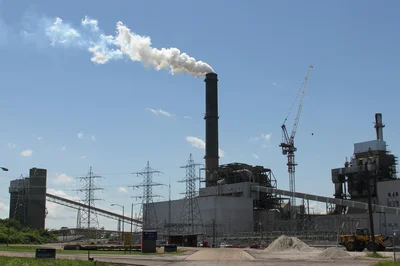
The Trump administration has pushed to extend the life of aging coal-fired power facilities across the country, costing American ratepayers hundreds of millions of dollars (Peter Burzynski via Creative Commons Attribution-Share Alike 3.0 Unported license)
“This means Wisconsinites will continue to foot the bill to keep these regional plants online despite their age, inefficacy, and, in some cases, their own operating utilities’ plea to allow these expired assets to be shut down,” Evers wrote of the extensions, which the energy department claims are needed to bolster reliability.
The Campbell plant, whose closing has been delayed five times, has now operated more than a year past its originally planned shutdown.
Donald Trump, a climate denier who received support from the coal industry in the 2024 election, has championed coal as part of his larger push to support fossil fuel development and roll back clean energy initiatives.
Environmentalists argue the administration has illegally used emergency powers to extend the life of coal plants across Washington, Colorado, Indiana, Michigan, Pennsylvania and Florida, decisions the Sierra Club estimates have cost Americans more than $405 million so far.
Critics and some of the impacted states have sued to block the plant extensions.
The Trump administration has directed hundreds of millions of dollars to support the coal industry, while moving to slash regulations (Getty)
“Abusing emergency powers in this way sets a terrible precedent for grid planning,” Ted Kelly, director and lead counsel for U.S. clean energy at Environmental Defense Fund, said of one such effort in May.
In addition to propping up aging coal facilities, the administration has worked to support new ones, announcing $700 million in federal funding in June, part of which will flow to the first new U.S. coal plants in more than a decade. The Trump White House has also opened more than 13 million acres of federal land for leasing by coal companies.
The Trump administration Environmental Protection Agency, meanwhile, has moved to roll back federal oversight of coal ash and wastewater, and it is working to repeal the 2024 updates to the Mercury and Air Toxics Standards regulation and carbon pollution standards.
“Many of the items that were on your wish list are now done,” EPA Administrator Lee Zeldin told members of the National Coal Council on Tuesday. “Over the course of the coming few months, hopefully [we get to] the remainder of those items, although I will not prejudge the outcome of any rule-making.”