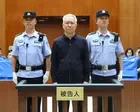
The founder of Evergrande, one of China’s largest property developers, has been sentenced to life in prison and had all of his personal property confiscated.
Hui Ka Yan, 67 and once named by Forbes as China’s richest man, with a net worth of $42.5bn (£31.2bn) in 2017, pleaded guilty in April to eight charges.
These included misuse of funds, fundraising fraud, illegally taking public deposits, illegally extending loans, fraudulently issuing securities and bribery.
The company Hui founded, Evergrande Group, was fined 8.8bn yuan (£950m), while its property arm was fined 7bn yuan, according to Chinese state media.
Hui’s convictions relate to a debt crisis at Evergrande, which shook China at a time when the government had been trying to make the world’s second-largest economy less reliant on the real estate sector.
Evergrande, which delisted from the Hong Kong stock exchange last year, has defaulted on most of its $300bn in liabilities.
Shenzhen intermediate people’s court in southern China said in its ruling that between 2016 and 2021, Hui “violated state laws by employing methods such as sustained, large-scale financial fraud to inflate assets and conceal liabilities”.
It said Hui’s actions had “severely disrupted the order of the socialist market economy” and “caused exceptionally heavy economic losses”.
More than 50 individuals linked to Evergrande were also sentenced on Thursday, with prison terms ranging from 20 months to 18 years.
Evergrande’s troubles began in 2020 when the Chinese government introduced regulations limiting the amount of debt that property companies could hold. This torpedoed the debt-fuelled real estate sector, which has traditionally accounted for between one-quarter and one-third of China’s GDP.
Construction stalled on hundreds of property developments as companies scrambled for cash and struggled to pay suppliers amid weak demand during the Covid-19 pandemic. A study published this year estimated that the regulatory crackdown led to about $347bn in sunk costs across the Chinese economy.
Hui’s company was at the centre of this crisis. Evergrande’s implosion has been seen as a symbol for the wider troubles in the property sector, which still weighs heavily on the Chinese economy.
Born to a poor family in rural Henan province, Hui was raised by his grandmother before setting up Evergrande in 1996.
In 2018 he thanked the Chinese Communist party for providing “everything that Evergrande and I have”.