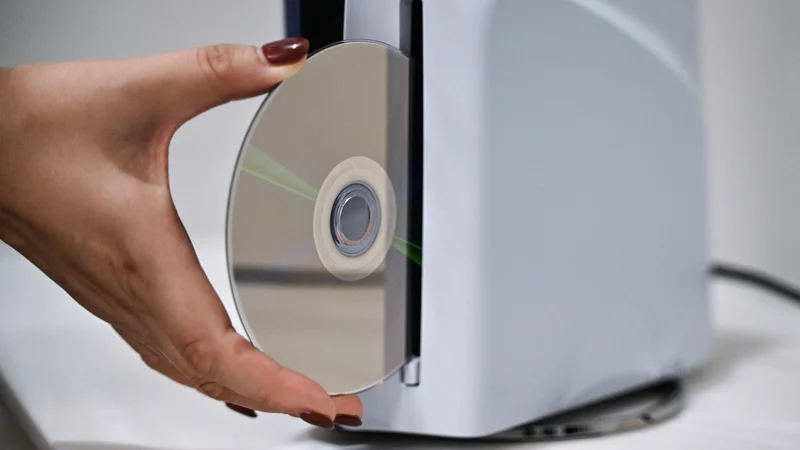
New data shows that physical software dollar sales plunged to an all-time July low of $85 million in the US — that’s the worst total since tracking began in 1995.
Circana’s July video games report reveals that for the 2026 year-to-date period, sales of physical software for PlayStation hardware accounted for 32% of total U.S. consumer spending on new physical games. Games made for Nintendo platforms made up 63% of year-to-date spending on new physical software. Xbox wasn’t mentioned.
The data comes hot on the heels of Sony’s shock announcement that it will end the production of physical discs for PlayStation games from 2028. The announcement has sparked a significant backlash online, with some insisting that Sony should continue to print games on disc despite current trends.
When Sony announced its decision it said it was simply following consumer trends. “In response to shifting trends in consumer preference, new games will be released on PlayStation Store and at retailers in digital formats only,” Sid Shuman, Senior Director, Sony Interactive Entertainment Content Communications, said in a post on PlayStation Blog.
Similarly, Strauss Zelnick, boss of Rockstar parent company Take-Two, recently defended the company’s decision not to release GTA 6 on a physical disc, insisting when it comes to big games, discs “don’t really make sense for the consumer.”
However, gamers have called on Sony to U-turn on its decision, signing online petitions and swarming over PlayStation social media posts to express concern about video game preservation and ownership. Complaints have also come from other groups. The UK’s Digital Entertainment and Retail Association (ERA), for example, called Sony’s decision “a triumph of corporate convenience over consumer choice.”
Last month, Sony finally broke its silence on its decision to discontinue PlayStation discs to say it is not having any effect on its business now, and it doesn’t see any negative effect in the future. Sony executives insisted they will not change their minds, while acknowledging “strong views” from the video game community.
Today’s data shows that PlayStation makes up a significant portion of physical game sales in the U.S., but it’s worth noting that we do not have actual sales or revenue figures for 2026 so far to give us the bigger picture.
Sony's latest financials show an 82% digital download ratio for full game software across PS4 and PS5. Reinforcing this trend, Mat Piscatella, Senior Director and Video Game Industry Advisor at Circana, recently said that just seven PlayStation video games had sold more than 100,000 physical units so far this year in the U.S.. Only two PlayStation video games sold more than 10,000 physical units in the U.S. during the week ending July 11.
July was a particularly bad month for video game and hardware sales in the U.S., Circana’s data reveals. Total U.S. video game spending dropped 10% year-on-year, with hardware spending plummeting 29% off the back of a tough comparison with the launch of Nintendo Switch 2 as well as price rises for PlayStation 5 and Xbox Series X and S.
Piscatella said hardware spending fell to a low ($282 million) not seen since July 2020 ($163 million), when pandemic-fueled sellouts and logistics challenges made finding new video game hardware to buy extremely difficult. Subscription spending was the only category showing growth in July versus a year ago (+6%).
“The market comparables continue to be impacted by the record-setting June 2025 launch of Nintendo Switch 2,” Piscatella said. “However, the challenges extend far beyond simple cyclicality. Higher hardware prices driven by the RAM and component crisis have significantly impacted the selling rates of both PlayStation 5 and Xbox Series, with a price hike for Nintendo Switch 2 hardware coming on September 1, 2026.”
Total hardware unit sales fell 39% versus July 2025, while the average selling price of a new unit of video game hardware jumped by 16%, to $542. Unit sales were down on all console platforms when compared to a year ago. PlayStation 5 unit sales fell 6% versus July 2025, while Xbox Series dropped 18% and Switch 2 declined by 51%. With 14 months in market, Nintendo Switch 2 is 11% ahead of the time-aligned sales pace of the original Nintendo Switch. How this lasts remains to be seen.
In a poor month all round, Call of Duty: Black Ops 2 was projected as the best-selling game of July in dollar sales, driven by the release of a PlayStation port supporting PS4 and PS5. Call of Duty: Black Ops also received a PS4/PS5 port in the month and ranked 5th overall. Ubisoft's Assassin's Creed: Black Flag: Resynced was third, Halo: Campaign Evolved sixth, and Splatoon Raiders seventh.
Photo by Richard A. Brooks / AFP.
Wesley is Director, News at IGN. Find him on Twitter at @wyp100. You can reach Wesley at wesley_yinpoole@ign.com or confidentially at wyp100@proton.me.