How did life begin? This mystery has tantalized scientists since Charles Darwin mused on it in 1871, spawning no shortage of competing theories about the origins of Earth’s biology around four billion years ago. Yet, even today, a definitive answer remains elusive. Maybe, a team of scientists now suggests, that’s because we’ve been asking the wrong question all along.
In a paper in Science Advances, evolutionary biologist Bill Martin of Heinrich Heine University Düsseldorf in Germany and his colleagues present evidence that life might have, in effect, begun twice. They argue that the two earliest lineages of Darwin’s “tree of life” sprung independently from a single source that was itself not yet truly alive.
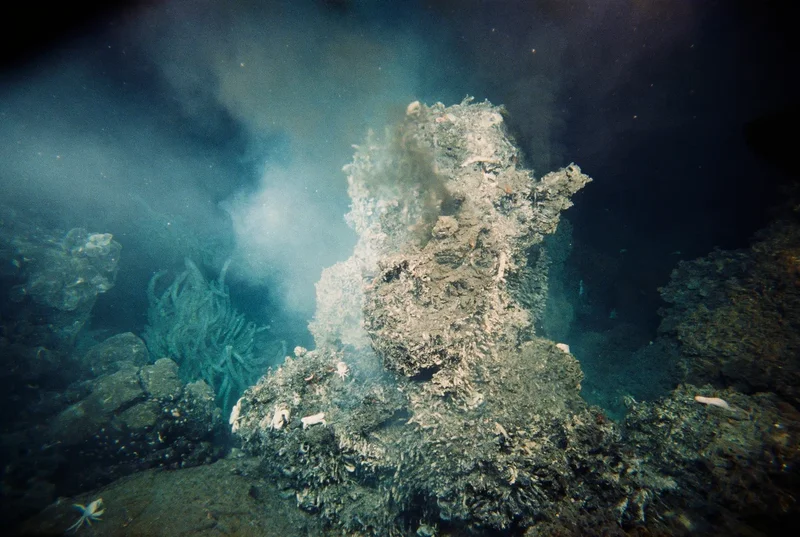
This source is often called the last universal common ancestor (LUCA) and is generally regarded as a kind of ur-organism: a primitive bacteriumlike cell from which all life on Earth has descended. But in the view of Martin and his colleagues, LUCA was not exactly biological but rather a chemical system formed in the unique environment created by hydrothermal vents. At these deep-sea mineral formations, a rich chemical brew, warmed by volcanic activity, spills out over the ocean floor. As a source of abundant energy and chemical ingredients, vents have long been leading candidates for life’s earliest cradles, in contrast with the “warm little pond” suggested by Darwin.
On supporting science journalism
If you're enjoying this article, consider supporting our award-winning journalism by subscribing. By purchasing a subscription you are helping to ensure the future of impactful stories about the discoveries and ideas shaping our world today.
The Düsseldorf group’s version of LUCA would have possessed many of the ingredients needed by living systems, including a primitive form of genetic encoding, as well as metabolic chemical reactions required to harness energy. The researchers say, however, that some of the metabolic reactions were catalyzed not by elaborate protein enzymes, as in all organisms today, but by simple metallic chemical elements found in the hydrothermal vents’ minerals. LUCA, they say, was part organic, part rock. The idea “changes the way we view the early evolution process,” Martin says.
“I think there’s truth in it,” says biochemist Nick Lane of University College London, an origins-of-life researcher, who was not involved in the study.
This vision of a “half-alive” LUCA is not totally new. Work from the Düsseldorf team in 2016 “already pointed to LUCA being reliant on its environment,” says Natalie Mrnjavac, lead author of the latest paper. But at that stage, she adds, “we didn’t have much experimental data on the specific functions the environment could have promoted.”
Mrnjavac, Martin and their colleagues have now used phylogenetic reconstruction—basically, a mathematical back-extrapolation of the genetics of modern-day organisms—to identify differences between the metabolic networks of Earth’s two most ancient single-celled domains of life: bacteria and archaea. Such differences within the networks of metabolic reactions seem to extend all the way down to these domains’ earliest stages: to the last bacterial and archaeal common ancestors (LBCA and LACA, respectively).
Metabolism involves a complex cycle of chemical reactions. It begins with an environmental source of chemical energy, which is converted to energy-rich compounds within cells; these compounds then drive other enzymatic processes that culminate in a series of reactions resetting the metabolic network to its original state so that the cycle can repeat indefinitely.
The researchers identify various “missing links” in the cyclic metabolic networks of LBCA and LACA, suggesting a serious lack of the requisite enzymes in LUCA. “LUCA only had genes for about half of metabolism,” Martin says. What’s more, the enzymes involved in some reactions are not always shared by LACA and LBCA. “We can see cases where the ancestors of bacteria and of archaea independently evolved structurally distinct enzymes to catalyze the same essential metabolic reaction,” Mrnjavac says.
Rather than reflecting genuinely absent enzymes, these gaps could simply mirror methodological limitations in the phylogenetic reconstruction that prevented the identification of all the original ancient enzymes in bacterial and archaean lineages. Other groups have previously assumed as much. Alternatively, asks biologist Daniel Segrè of Boston University, “can one rule out the possibility that LUCA had the enzymes found in LBCA and that LACA substituted them with different ones, or vice versa?”
But Martin and his colleagues are instead claiming that if an enzyme can’t be found in the reconstructed metabolic networks, “it was genuinely missing,” Lane says. Those gaps, the researchers argue, could have been filled by chemical reactions catalyzed by metals in the vent systems such as nickel, iron, cobalt and palladium. “We can see that early biochemical evolution was a hybrid of enzymatic and metal catalysts,” says co-author Joseph Moran, an organic chemist at the University of Ottawa.
“What we are beginning to appreciate,” Martin says, “is how tight the congruence is between these metals and the enzymes of metabolism.”
Such metals are commonly used as industrial catalysts today—and all occur in the minerals of hydrothermal vents, where a process called serpentinization converts igneous rocks from volcanism to metamorphic rocks. Some previous studies, Mrnjavac says, have suggested that “serpentinization may have been more widespread and more exposed on the early Earth.”
The serpentinization reactions can generate native metals such as iron and the iron-nickel alloy awaruite (which can contain palladium, too). “Awaruite is really common,” says Martin, adding that on the early Earth, which had very little oxygen in the atmosphere, this alloy and other metals wouldn’t have readily oxidized—rusted—and so would’ve been even more abundant in rocks on and near the planet’s surface.
But Lane points out that serpentinization itself happens several kilometers beneath the seabed and that it’s unclear whether the metal by-products could have been brought up from such depths in appreciable amounts. “How much raw metal really is there in these systems?” he wonders.
The availability of metallic catalysts is only one part of the problem of how LUCA’s putative metabolic system could have been enabled. What, ultimately, was the energy source driving it? Modern organisms use metabolic energy (for example, via burning a candy bar’s sugary calories) to make the molecule adenosine triphosphate (ATP), a universal energy store in the biosphere that is derived from phosphates. But ATP synthesis requires enzymes that LUCA didn’t possess.
Instead the researchers think that a phosphorus compound called phosphite, found previously in serpentinizing systems, could have played the same role. Phosphite is more soluble in water than phosphate and has been proposed before as a prebiotic source of phosphorus. In their new study, Mrnjavac and her colleagues report chemical experiments showing that palladium metal can catalyze the reactions of phosphite in metabolic processes.
Most microbial life at hydrothermal vents today, however, uses phosphate, not phosphite. “To be convinced that microbes began by using phosphite, we need a good explanation of why life would switch to phosphate and not revert to the previous state,” says biologist Joanne Boden of the University of Bristol in England, who was not part of the study.
Another quandary concerns how LUCA could have manufactured proteins as complicated as enzymes, which are made from many amino acids linked together in a particular sequence. In today’s organisms, proteins are encoded in the sequences of DNA, which are inherited from one generation to the next. Martin and his colleagues think that LUCA already possessed such an encoding system in the form of nucleic acids much like modern DNA or RNA, as well as the molecular machinery to translate it to proteins. This system would have used the same genetic code—the correspondence between nucleic acid sequence and protein sequence—as that used by all organisms today. “An early informational system [like this] had to precede a complete enzymatic metabolism,” Mrnjavac says, “not least because enzymes are synthesized by the genetic machinery.”
Researchers have long debated whether, at the origin of life, genes or metabolism came first because each seems dependent on the other. This new picture makes that question moot: they coevolved, and a complete, autonomous metabolic network wasn’t needed before a kind of genetic encoding could arise. Martin and his colleagues say that LUCA only birthed truly autonomous, free-living systems—LBCA and LACA—when it evolved a core set of enzymes and assisting compounds called cofactors that ended its reliance on catalytic metals in the environment.
And because current working definitions dictate that only free-living cells can be considered “alive,” Martin says, “we are looking at one origin of the genetic code but two origins of life.”
If true, this would imply that the origin of “life” wasn’t as revolutionary as is often suggested because much of the hard work was already done incrementally within LUCA. “Traditionally, LUCA has been associated with a fully functioning modern cell,” Segrè says, “which I have always felt must have appeared only long after the problem of life’s origin was solved at a more fundamental level.”
Segrè, however, cautions against regarding this vision as “an incomplete LUCA inventing new enzymes for previous nonenzymatic reactions.” Before becoming a firmly established system for making all the proteins involved in the metabolism of free-living organisms, he says, LUCA merely “was what it was—not ‘incomplete,’ as there was no foresight of the next [evolutionary] stage.”
Evolutionary biologist Joanna Masel of the University of Arizona sees yet another possibility in the differences between the metabolic enzymes of LACA and LBCA. Maybe, she says, LUCA didn’t precede them at all. Rather LACA and LBCA might have coexisted with different genetic codes, and LUCA might then not really have been a kind of proto-organism at all. Instead it would then represent a stage at which interactions between LACA and LBCA caused convergence that gave them both a common genetic code.
Such speculations reflect the richness of possibilities that the new work opens up. Although many aspects of the study remain to be tested, perhaps its biggest contribution is thus to reframe the whole debate: to worry less about “when life began” and more about how and when the various ingredients and pathways arose. “These are great research questions to be investigating,” Boden says.
At any rate, the emerging picture of life beginning with a proto-metabolism at hydrothermal vents is a very different scenario to the spontaneous formation of replicating molecules in Darwin’s “prebiotic soup.” Before he began touting that notion, Darwin was pessimistic about the whole issue, writing in 1863 that speculations on the origin of life were “mere rubbish thinking,” akin to wondering about the origin of matter itself. Even if we might never be sure about the true answer, it’s now no longer a rubbish question to be asking.