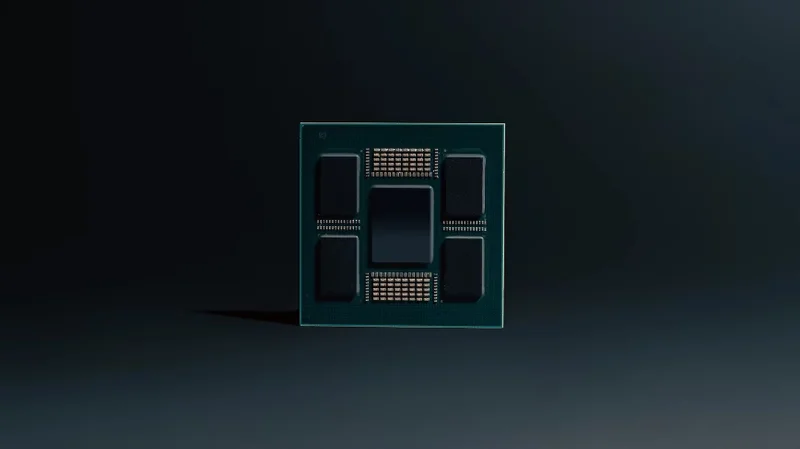
Waymo has published what is in the boot of its robotaxis. A blog post on Thursday set out the architecture of its onboard computer, introduced a custom 5-nanometer chip of its own design, and named the seven suppliers it builds the system with.
The company calls it the first look under its trunk. For a firm that discloses very little about its hardware, it is a substantial opening.
What the chip actually does
This is where the coverage and the company diverge, so it is worth being precise.
The part is an application-specific integrated circuit built on a 5nm process. Waymo describes it as handling “the massive influx of raw data before it reaches our core ML brain”. It extracts information from raw lidar, radar and camera streams, including temporal denoising for better perception in low light, then feeds that into a separate inference engine that runs the sensor-fusion models.
In other words, it is a front end. It prepares what the driving system sees rather than deciding what the car does.
That matters for the number everyone quoted. Waymo says “these ASICs alone deliver over 1,000 TOPS of ML performance dedicated to front-end processing and ML models”. Bloomberg reported that on that measure Waymo would land level with Nvidia’s latest autonomous-driving systems. That compares one component doing one job against complete driving platforms. It is not a claim Waymo made.
Waymo has not dropped Nvidia
Nor has it dropped AMD. Both appear in the supplier list Waymo published, alongside Micron, Samsung, Sandisk, Socionext and TSMC.
The company describes a “balanced, heterogeneous system” that pairs its own machine-learning silicon with what it calls the best CPUs, GPUs and accelerators available. The custom chip adds a capability. It does not replace the merchant parts around it.
Waymo also says the ASIC is “just one of several exciting custom components we’re developing”. More in-house silicon is coming, and the company has not said what.
Three constraints, and one of them is a safety design
Waymo builds the system around three requirements it calls responsive, ruggedised and redundant.
The first is latency. It has coined the phrase “pixels-to-actuation” for the delay between a photon hitting a sensor and the car acting. Raw compute has scaled 20 times in eight years to shorten it.
The second is physical. The computer sits in a car, not a rack, so it endures vibration, shock and temperature swings from Midwest winters to Phoenix summers. Waymo plumbs it into the vehicle’s liquid cooling system, and it has to run silently and leave room for luggage.
The third is the interesting one. “Our compute is designed like two independent engines,” the post says. They normally run full parallel workloads as a single unit, and if one develops a fault the other takes over. There is no human backup, so the redundancy is in the hardware.
The scale, and whose numbers they are
Waymo cites more than 200 million miles of fully autonomous experience behind the design. It runs about 4,000 vehicles in more than 10 cities and completes roughly 500,000 paid trips a week, The Verge reported.
Every one of those figures comes from Waymo. The company also says its technology reduces crashes and injuries against human drivers, on its own safety data. No outside body has audited any of it.
Where the silicon is going
The system processes 13 high-resolution cameras at once. That count matches the Ojai, the purpose-built four-seater that also carries four lidar sensors.
Zeekr builds the Ojai, and Zeekr is an arm of the Chinese carmaker Geely. TNW covered the vehicle in May as cheaper to build, harder to break, and made in China. Bloomberg reports it is now being equipped with the custom chip, though nobody has said how many are fitted or by when.
The politics are live. Washington has spent the year tightening rules on Chinese vehicle hardware, and one supplier the Pentagon calls a military company still has Chinese lidar running in American robotaxis. Waymo designing the brain while Geely builds the body is one response to that exposure. Neither company put it that way.
A day before the chip post, Waymo opened the Ojai to all riders in Los Angeles, Phoenix and San Francisco, Engadget reported. It had been invitation-only.
The pattern, and the node
Waymo is not acting alone. Its parent has been designing silicon for years to hold down AI infrastructure costs, and on Wednesday Marvell handed Google a $12.2bn share option in a custom-chip arrangement.
One comparison is worth sitting with. Waymo chose 5nm, a mature node rather than the leading edge. BYD has built a 4nm driving chip for a car costing $10,000. Node size is not capability and the two parts do different work, but it is not the ranking most readers would assume.
Socionext is the name to notice in that supplier list. The Japanese firm designs custom ASICs for other companies rather than selling its own, which is the sort of partner a company turns to when it wants silicon of its own without building a chip division from scratch.
What the post does not answer
Publishing a supplier list is not normal corporate behaviour, and the timing invites a question. Waymo faces a rival that talks about its hardware constantly, and Chinese competitors expanding abroad through partners. Specifications are an argument.
What the post does not address is the year Waymo has had. It issued its sixth recall after robotaxis drove into highway construction zones 13 times, suspended freeway service in May and restored it in July.
Faster front-end processing does not fix a decision made downstream of it, and Waymo does not claim otherwise. The engineers will present more at Hot Chips. That is where the specifications get questioned by people equipped to question them.
Get the TNW newsletter
Get the most important tech news in your inbox each week.