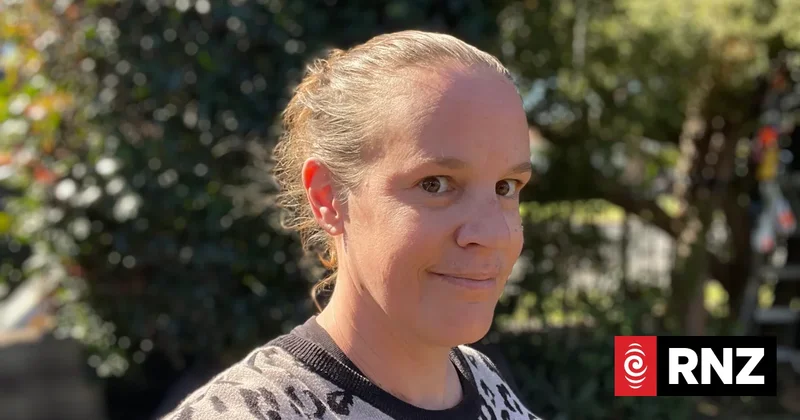
'Horrible way to live': 15-year wait for an endometriosis diagnosis
Melissa Aubroeck hopes planned changes to endometriosis diagnosis will spare others years of chronic pain, but is cautious about whether they will deliver.
Melissa Aubroeck's first episode of severe cramps, which landed her in the Emergency Department, marked the beginning of a nearly 15-year search for answers while she continued to suffer.
The 43-year-old mother-of-two says it was "demoralising" to repeatedly be told nothing was wrong after countless tests, including CT scans, ultrasounds, colonoscopies, gastroscopies and capsule endoscopy.
Now diagnosed with endometriosis, she's cautiously optimistic about the new plans to speed up diagnosis and treatment by moving away from reliance on diagnostic laparoscopy. However, she worries others may still get stuck in the system she experienced.
Endometriosis is an inflammatory disease in which tissue similar to the lining of the uterus grows outside it. Symptoms include period and pelvic pain, subfertility and infertility. The condition is estimated to affect about 120,000 New Zealanders, and lengthy waits for a diagnosis are not uncommon.
The new clinical guidelines will mean general practitioners can make a clinical diagnosis based on a patient's symptoms, family history, and examination, rather than them having to wait for a laparoscopy.
The change would mean low impact hormonal medication could be prescribed without delay. Laparoscopic surgery would remain available for those who needed it, but it would no longer be the only route to diagnosis.
The guidelines are expected to be launched in mid-2027.
“I hope that it changes the future for so many hundreds of thousands of Kiwi women. I just want there to be follow-through,” Aubroeck told Morning Report.
Aubroeck believes an endometriosis diagnosis wasn't raised over the years in her case because she didn't fit the stereotypical image of someone with the condition, despite her pain. Initially, she didn't have heavy menstrual bleeding, had given birth to two children and had no family history of the disease, another factor considered during diagnosis.
"I don't think I ever had a conversation about a period with a doctor [prior to the diagnosis and symptoms escalating]. And that's the scary part."
Instead, she says doctors initially believed she had a gastro bug, and she was referred to chronic pain specialists, where she remained for about five years.
"They were there to manage my pain. Not to figure out where it was coming from."
But Aubroeck began to suspect her symptoms were hormone-related when she became pregnant with her first child 10 years ago and the pain disappeared during pregnancy and for a year postpartum.
"Then it started coming back. Even my whole family vouched for the fact that I said to so many people, ‘how is this not something hormone related? If it's going away when I was pregnant’.
"I remember saying to someone, ‘why don't they do research into this stuff?’ Never heard endo still."
It wasn't until last year, when her periods became so heavy she was unable to work, that she decided to see a new doctor. The bleeding was so severe that she organised her life around the weeks she expected her period.
"That's a horrible way to live. Counting your life in literal weeks.
"I probably lost so many of my friends because people just didn’t believe, because you cancel things, and people get sick of it, which fair enough, but that’s hard.
"Because my body reacts to stress [due to fibromyalgia], it's just a vicious circle. Just goes round and round."
After months of waiting for an ultrasound and MRI, they found deep infiltrating endometriosis, adenomyosis and three fibroids.
"I didn't get a follow-up appointment for three months."
When she finally saw a specialist, she says she arrived prepared to clearly state what she needed, but was surprised to be asked almost immediately when she wanted to have a hysterectomy. (For Aubroeck, a hysterectomy was considered a solution because of her adenomyosis, rather than laparoscopic surgery, which is generally used to remove endometriosis when the condition reaches that stage.)
"I cried. She was just amazing… there's so many people that have to fight for it."
Her advice to others who suspect they may have the condition is to speak up and find a doctor who will listen.
"I think I've just grown to know that if I don't say something, no one else will. I've learned, for my boys, I have to do it. They've never seen me not sick. Their whole life I've been like this.
"They're the most amazing, sympathetic, caring boys. But it sucks, though. Mum guilt, it's huge. There's so many things I can't do."
For 10 years, she was also taking nerve pain medication and antidepressants, as well as codeine and tramadol for about a year because of the severity of her pain. Being off codeine now is "huge", she says.
Shortly before her surgery, Aubroeck volunteered at a Royal College of Obstetricians and Gynaecologists workshop, allowing specialists to perform an internal ultrasound as part of their training.
"If it changes it for one person, honestly, just one person didn't have to deal with what I have then that would make it – not it worth it, none of it's worth it, but something good comes out of it."