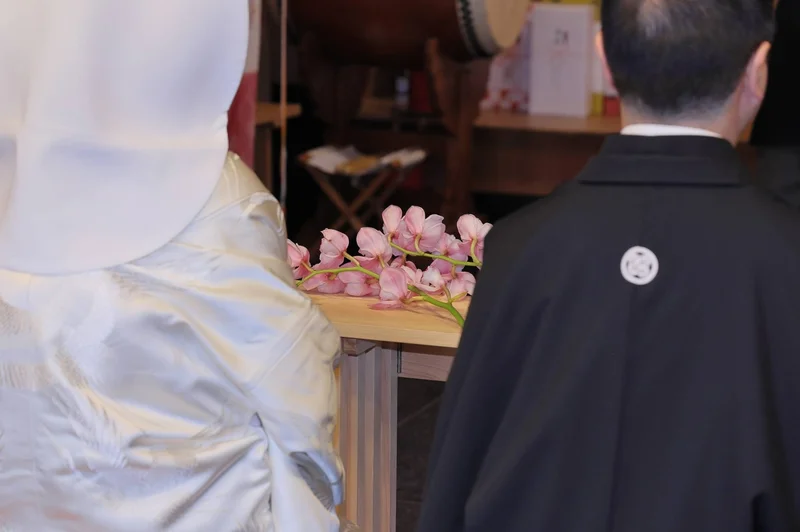
The phrase 死が二人を分かつまで (Shi ga futari o wakatsu made, “Till death do us part”) suggests that a marriage ends with death, but in Japan that’s not always the case.
In many countries, 結婚 (kekkon, marriage) is understood as a relationship between two individuals. In Japan, however, 結婚 has traditionally been understood as becoming part of a 家制度 (ie seido, family household system) — a cultural expectation that continues even after your 配偶者 (haigūsha, spouse) dies.
The 家制度 was enacted in 1898 and continued until 1947, when it was abolished as part of Japan’s postwar reforms. Under the old system, marriage meant more than a relationship between 夫 (otto, husband) and 妻 (tsuma, wife), it also meant becoming part of one spouse’s family line. The system prioritized the continuity of the household across 世代 (sedai, generations), with the 長男 (chōnan, eldest son) expected to inherit the 姓 (sei, family name), 財産 (zaisan, property) and 扶養義務 (fuyō gimu), which refers to the legal duty to provide financial and sometimes practical support for parents.