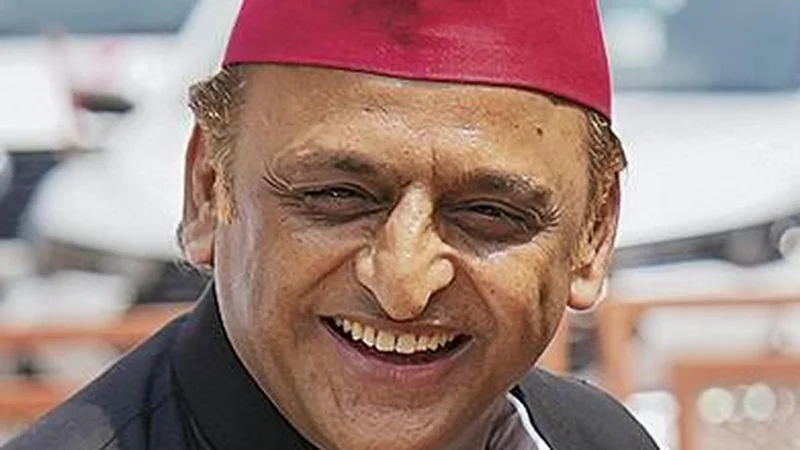
Amid Samajwadi Party president Akhilesh Yadav’s renewed attempt to woo Brahmins in Uttar Pradesh by claiming that the community is also a part of the Pichhda-Dalit-Alpsankhyak (PDA or Backwards, Dalits and minorities) matrix, several Brahmin social groups and activists hailing from the community said the SP has a long way to go to win the trust of Brahmins but agreed that the outreach holds significance in view of the 2027 State Assembly election.
“The Samajwadi Party and Akhilesh Yadav talking about Brahmins and promising respect to the community is a good beginning, but he has to cover a long road to win sizeable votes. Traditionally, the SP is considered a ‘Muslim-Yadav’ party with these communities forming the core of its support base,” said Shivesh Trivedi, a social activist associated with Akhil Bharatiya Brahmin Mahasabha.
Support in pockets
“Brahmins never supported the SP in large numbers. A section supported the party in some constituencies, but mass support of Brahmins was always for the Bharatiya Janata Party (BJP), the Bahujan Samaj Party (BSP) or Congress. To change that, the SP’s words need to translate into policy decisions like what kind of specific policies the party is planning to bring for the Brahmins in its election manifesto, how many electoral tickets the party is giving to leaders hailing from the community, etc.,” he further said.
After the renewed push by Mr. Yadav, the community will be closely watching the SP and this has opened up an opportunity for deeper outreach, said Mr. Trivedi.
Ravindra Pandey, an activist associated with Brahmin Parishad, said the SP needs to make its stand clear on setting up a Brahmin Welfare Board. “The community consists of educated people. We analyse statements. The larger question is what is Mr. Yadav’s and his party’s stand on Brahmin Welfare Board, demand for its formation from the government is going on for betterment of the community.”
“The other issue is the role of Brahmin leaders in decision-making of the party. Appointing a Brahmin as Leader of Opposition in the Assembly is one aspect but how much influence the person had on decision-making within the party, our community examines such aspects. Brahmins moved towards the BSP in 2007 [polls] because [BSP leader] Satish Chandra Mishra was the key person in decision-making of the party and the government,” Mr. Pandey pointed out.
Nearly one-tenth of population
Brahmins, an influential social group, comprise over 9% of the total electorate in Uttar Pradesh. The SP has one Lok Sabha MP hailing from the community and a few MLAs in the 403-member State Assembly. Mata Prasad Pandey, a Brahmin face, is the Leader of Opposition in the Assembly from the party.
Ram Dutt Tripathi, a veteran political commentator, says Mr. Yadav’s attention towards Brahmins hints at the problem as ad-hocism and lacks continuity towards the community. “During [party founder] Mulayam Singh Yadav’s time, the SP used to have influential leaders from all caste groups, who played an important role in the decision making. Presently, that seems absent. The leadership makes statements on occasions but for broader outreach they need continuity and clarity over core concerns,” added Mr. Tripathi.
Mr. Yadav, a former Chief Minister, had recently stated on the birth anniversary of late socialist leader and MP Janeshwar Mishra that “the friendship between Lord Krishna and Sudama is not new, tell me how many thousands of years old is this friendship, which era does it belong to”.
Whenever Samajwadi Party has got a chance to govern, it has been respectful towards the community and its members, the SP chief added.
The SP was in power in U.P. for five years between 2012 and 2017 when Mr. Yadav was the Chief Minister.
Published - August 21, 2026 05:24 pm IST