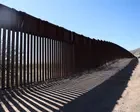
According to newly released data from the medical examiner’s office in Pima county, Arizona, the remains of 19 migrants, including children, were recovered along the Arizona-Mexico border last month.
The figure accounts for the highest number of monthly deaths in that area since 2024 and brings the number of total remains found to 73 this year, 14 more than the same time period last year.
Experts and immigration advocates say the new data is a reflection of US policy abroad and at home, including the recent blocking of asylum seekers. Despite extreme temperatures caused by global warming and the threat of arrest by ICE, people are still making the perilous journey through Mexico.
“When the current administration is talking about closing the border, I think that they’ve been very effective at closing legal ports of entry and making it darn near impossible for people to actually enter the country or, as certain groups in the country like to say, ‘Come in the right way,’” said Octavio Torres, executive director of the non-profit Humane Borders organization.
The group helps rescue migrants from dehydration and exposure and works alongside Pima county to track migrant deaths. Their data shows that at least 4,505 migrants have died in the Arizona desert over the last 25 years, an average of roughly one every other day.
The most frequent causes of death are dehydration and exposure, but people also die from hypothermia or blunt force trauma caused by passing out and hitting their head on a rock.
Brad Jones, a Humane Borders board member and professor with the Global Migration Center at the University of California, Davis, said the most recent data reveals a high number of “contemporaneous” deaths compared with recent years. This means the deaths occurred recently rather than representing old remains finally being discovered.
Jones added that it’s often “random happenstance” when someone – a hiker or law enforcement officer, for instance – comes across human remains. The desert can quickly obscure or destroy evidence, and Jones said remains can “disappear without a trace pretty quickly” because of scavengers and animals.
That means the true number of migrant deaths along the southern US border is undoubtedly higher than what’s known.
“There’s estimates that the true number of migrant deaths ranges as high as four times what we’ve seen,” said Jones. “For every migrant’s remains that you find, how many do you not find?”
Amelia Frank-Vitale, an anthropology professor at Princeton University, focuses on what compels people to risk death migrating to the US through harsh terrain like a desert or the Darién Gap, the dense jungle that connects Colombia and Panama.
Oftentimes, she says, the people making these journeys feel like they have no choice at all.
While researching and writing her book Leave If You Can: Migration and Violence in Bordered Worlds, Frank-Vitale traveled to Honduras and met a woman who was preparing to migrate while pregnant.
“This is in the full throes of the Trump administration’s real attacks on immigrants,” Frank-Vitale said. “The actions of ICE are making international news. And still, she thought the best thing for her at this moment is maybe to try and get to the United States.”
Frank-Vitale argues that the US has never fully addressed the role it’s played in creating instability in other countries whose people are now seeking refuge.
But even before the Trump administration largely shuttered the asylum process, only a fraction of people from Central America – or, for that matter, from many parts of the world – were granted asylum.
Torres, the executive director of Humane Borders, shares Frank-Vitale’s frustration with US policies that sow chaos then effectively neglect the people affected by that chaos.
“Ever since Operation Gatekeeper in 1994 under the Clinton administration, it’s all been about prevention through deterrence,” Torres said, referring to a border patrol enforcement strategy that made crossing in safer, more obvious places extremely difficult.
“Out of desperation, people think, ‘How else can I get in?’” Torres said. “And that’s what has driven people into the Arizona desert for the last 32 years.”
The Trump administration turned the CBP One app from a digital appointment-maker to a means of encouraging “self-deportation”, and the administration also revived policies that require many asylum seekers to remain in Mexico while their cases proceed.
As a result, the number of border “encounters” – a data point signifying when law enforcement encounters people at or between ports of entry – have plummeted since the Biden administration. But people are still coming, experts say; the journey is just harder and more lethal.
Jones, the professor from California, compares the resulting deaths to a plane crash.
“Suppose that every single July for 26 years straight, a Boeing 737 with between 100 and 250 passengers crashed right in the Arizona desert,” he said. “We’d be up in arms. You’d be freaking out.”
One difference, he allows, is that deaths in the desert come in “dribs and drabs”.
“But when you accumulate them,” he said, “we’re talking large numbers of deaths in any given year.”