TL;DR
Robots and autonomous machines on peaqOS can now verify whether they are interacting with a real human through World ID, using zero-knowledge proofs instead of names, faces, or documents. The integration, available through robotic.sh, requires no API key or verification fee. A medication delivery scenario demonstrates the concept: a patient verifies at order, a pharmacist verifies at loading, and the recipient proves they are the same human at delivery, all without the robot learning anyone’s identity.
It lets autonomous machines confirm they are interacting with real people without learning their identities
August 21, 2026: Robots and autonomous machines running peaqOS can now verify whether they are interacting with a real human through World ID, following a new integration available through robotic.sh.
The integration brings proof of human directly into peaqOS, allowing machines to request and verify World ID proofs without requiring an API key or charging a fee for each verification.
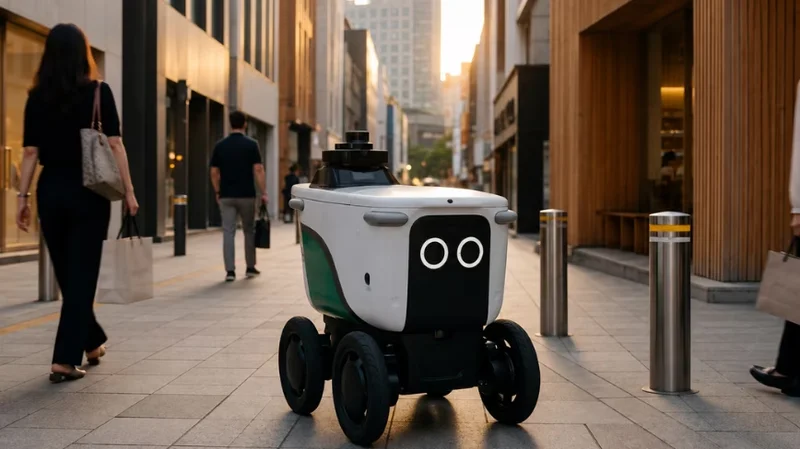
The development addresses a growing challenge as robots move beyond controlled industrial environments and begin interacting directly with people. Delivery robots, shared machines and other autonomous systems increasingly need ways to determine whether the person requesting or completing an action is a real human, while avoiding unnecessary collection of personal information.
World ID approaches the problem using zero-knowledge proofs. Instead of providing a robot with a person’s name, face or identity document, a user can generate a proof through World App demonstrating that they are a real, unique human.
In certain interactions, the system can also establish that the person completing an action is the same human who initiated it, without revealing that person’s underlying identity.
That capability could become particularly relevant for autonomous delivery.
In a medication delivery scenario demonstrating the integration, a patient verifies through World App before an order is accepted. The robot receives a zero-knowledge proof rather than identifying information about the patient.
At the pharmacy, the pharmacist verifies before placing the medication inside the robot and sealing its compartment. When the robot arrives at its destination, the patient verifies again. The system can then establish that the recipient is the same human associated with the original order before allowing the compartment to unlock.
The model offers an alternative to PINs, pickup codes, user accounts and conventional identity verification checks. Codes can potentially be transferred or stolen, while traditional identity verification can require companies to collect and retain personal information. World ID instead allows the machine to receive a cryptographic proof.
peaqOS provides the coordination infrastructure that allows machines to access and use World ID. Robots can use peaq decentralized identifiers for machine identity, discover the service through the Machine Market and coordinate the verification process from request through result.
The interaction can also generate a verifiable and auditable record showing that verification occurred while keeping proof metadata redacted. This gives machine operators a way to establish that a verification took place without requiring the robot to collect the person’s identity.
The integration could also support situations where machines need to establish human uniqueness rather than identity. A robot distributing promotional products, for example, could use World ID to enforce a one-item-per-human rule without maintaining a database containing the identities of recipients.
Shared robots and machines represent another potential application. Instead of requiring someone to create an account and provide personal information before accessing a machine, operators could use World ID to establish that a user is a real, unique person while minimizing the amount of personal data collected.
World ID is now available through robotic.sh for robots and machines running peaqOS, extending privacy-preserving proof of human into interactions between people and autonomous systems.