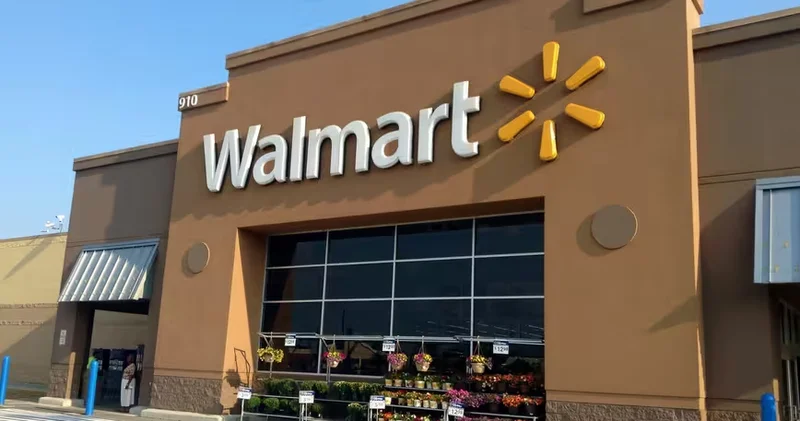
Walmart is adding tap to pay at its checkouts from Monday, ending more than a decade of refusing the technology.
The retailer will not say so in those terms. Its announcement does not use the word Apple once.
The rollout starts at selected Walmart stores and Sam’s Club locations on 24 August, the company said. Every US store and club should have it by the end of 2026. Fuel stations follow by the middle of 2027.
Shoppers will be able to pay with an eligible contactless card, phone or smartwatch.
For most retailers this would be a footnote. Walmart is the largest in the world, and it has spent eleven years insisting its customers use something else.
Walmart did not say the words
The announcement never names Apple Pay or Google Pay.
It refers only to “contactless payment methods”, and lists cash, credit card and Walmart Pay as the company it keeps. Shoppers can also add Walmart, Sam’s Club and OnePay cards to their digital wallets.
Google had no such reticence. It published its own post the same day, under the headline “Tap to pay with Google Pay is coming to Walmart.”
“Starting next week, shoppers can tap to pay using Google Pay,” wrote Stavan Parikh, vice president and general manager for payments, on Google’s blog. He named the retailer, the clubs and the timeline.
Apple has said nothing publicly. A Walmart spokesperson confirmed to Business Insider that Apple Pay and Google Pay are both included. AppleInsider reported that Samsung Wallet will work too, and noted that Walmart went out of its way not to name any of them.
Walmart tried to kill Apple Pay
This is not a company that never got round to it. Walmart actively fought the technology.
Walmart joined other large retailers in building CurrentC, a rival mobile payment system meant to head off Apple Pay, TechCrunch noted. The effort collapsed. It shut down in 2016.
Walmart briefly accepted Apple Pay after its 2014 launch, then cut it off and moved to Walmart Pay, according to AppleInsider. That system asks shoppers to load a card into Walmart’s app and scan a QR code at the till. It also tells Walmart who is buying what.
Walmart Pay is not going anywhere. It continues alongside the new option, and the company still lists it first among the alternatives.
The holdout list is nearly empty
Apple Pay is accepted at 85% of US retailers, TechCrunch reported. Walmart was one of the few names left outside that figure, and by far the biggest.
Kroger and Home Depot both resisted for years before relenting. Walmart has accepted Apple Pay in its Canadian stores for six years, while refusing it at home.
The pressure was public. Business Insider noted that the issue went viral last year, when the YouTuber MrBeast could not find a tap option at a Walmart till.
Why a retailer resists a card reader
The objection was never the hardware. Contactless card readers have been standard for years, and some shoppers assumed Walmart’s terminals were simply too old.
Walmart Pay routes the transaction through Walmart’s own app, which keeps the shopper inside Walmart’s system and hands the company data that a bank card tap does not.
That data feeds the rest of its financial services business. The company points shoppers towards options to save, build credit and pay over time. Sam’s Club members get Sam’s Cash and Sam’s Club credit.
Walmart has been building outwards from that base. TNW reported in June that the startup Parafin took a Goldman Sachs credit facility to embed lending inside Walmart, Amazon and DoorDash.
The company also bought the advertising platform Vibe.co for $1.4bn in June, chasing Amazon in ads. Both businesses run on knowing what shoppers do.
Where checkout is going next
Tap to pay arrives as the industry moves on to something else.
Synchrony said this month it wanted Amazon and Walmart store cards available inside ChatGPT, so an AI agent could use them. Google’s own post ties the Walmart deal to its work on agentic commerce.
Regulators are circling the same territory. The UK’s competition authority proposed in June letting developers steer users away from Apple and Google payment systems. Walmart spent a decade doing exactly that without needing a regulator’s permission.
Apple’s payments business is also changing hands. Jennifer Bailey, who launched Apple Pay, is retiring after 25 years. She leaves with the last big American holdout signed up.
What Walmart is calling it
The company frames the change as choice rather than reversal.
“It all comes back to giving customers and members more choice and making everyday shopping a little easier, from how they manage their money to how they pay at checkout,” the announcement says.
It also markets the move alongside Sam’s Club’s Scan and Go, which lets members scan items as they shop and skip the till entirely. Both of the alternatives it highlights are its own.
What is not settled
Walmart has not said which stores go first, or how many are in the initial batch. It says only that the rollout begins on Monday at selected locations, and gives no target for how quickly it scales.
It has not named a single wallet, so the confirmations for Apple Pay, Google Pay and Samsung Wallet come from Google, a Walmart spokesperson and AppleInsider rather than from the release.
Walmart has not said whether its EV charging network will take contactless payments. The fuel station timeline does not mention chargers.
Nor has the company explained what changed. It gives no reason for reversing a position it held for eleven years, and no executive is quoted in the release at all.
Get the TNW newsletter
Get the most important tech news in your inbox each week.