I first learned to think about ethanol as a fault line in conversations with my friend Joan Martinez Alier, a political ecologist. We met in 1987, drawn together by a shared question: how much energy really goes into producing our food once you count what nature and human labour truly cost?
My own interest was in the energetics of marine fisheries: the input-output balance of energy in that world. Ethanol was one of the clearest examples Alier used of that balance being falsified elsewhere.
Energetics involved converting everything – a litre of diesel, an hour of a fisherman’s labour, a kilogramme of fish – into the same currency: the calories, or kilocalories, of energy each one represents.
Simple bookkeeping can then be done: for every calorie that goes into fishing, how many calories of food come back out? When the return is high, the fishery is productive. When it costs more energy to catch the fish than what the fish give back as food, there is a deficit – even if the market still calls the catch a success.
When I met, Alier he was writing about Brazil, whose ethanol programme, Proálcool, was being celebrated by economists as a triumph of energy planning.
The programme, Alier pointed out, benefited the car-owning fifth of Brazilians. But its costs – water diverted from other uses, land turned over to cane and sugarcane workers whose life expectancy was shortened by brutal harvesting conditions – fell on people who never saw a drop of the fuel they were subsidising with their bodies and their land.
He called this an ecological distribution conflict: where the gains from a resource are captured by one group while the losses are pushed onto another with no voice in the decision.
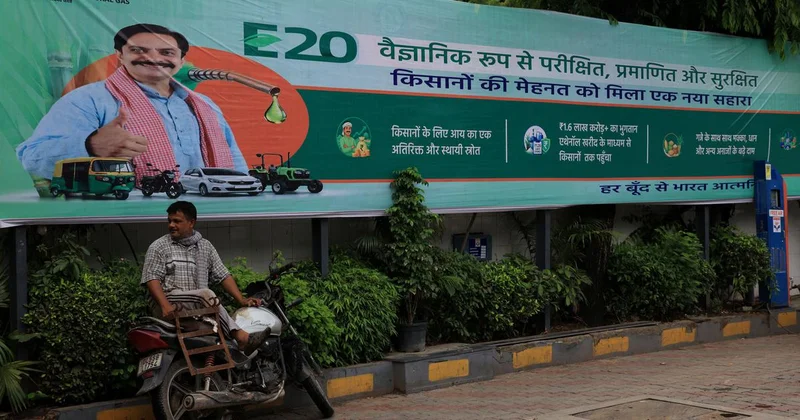
That framework, which he explained in his book * Ecological Economics: Energy, Environment and Society*, has stayed with me. It is the lens through which India should look at its own ethanol programme.
There are three hidden ledgers to India’s ethanol push: the diversion of food, the strain on water and land, and the uneven technical burden on the vehicle fleet.
There is, of course, the debate over mileage loss, corroded fuel lines, E10 versus E20. But the central issue is who bears the weight of a policy being sold as a national benefit in a country that remains, by any honest reckoning, one of the hungriest, most polluted and most unequal societies on the planet.
Food on the altar of fuel
In July, the government told Rajya Sabha that India’s three state-run oil marketing companies had purchased 705.43 crore litres of ethanol up till June 2026, for the ethanol supply year 2025-26, at a cost of Rs 49,577. In the last three years, the oil marketing companies had spent over Rs 1.72 lakh crore (roughly $20.6 billion) procuring ethanol. India also had 501 ethanol distilleries with a capacity approaching 16 billion litres annually.
The government’s defense is that only surplus stocks are being diverted to make ethanol after food-welfare needs are met. This saves precious foreign exchange from being spent on crude oil imports while shielding farmers from price crashes.
But look at the economics of that “surplus”.
The Food Corporation of India procures rice from farmers at roughly Rs 44 per kg. That rice is then sold to ethanol distilleries at around Rs 23 per kg. So public money for food security is subsidising fuel for private vehicles.
Meanwhile, the National Food Security Act underwrites free foodgrains for nearly 80 crore Indians and rice makes up roughly two-thirds of what they receive. Diverting rice toward ethanol, even at the margin, tightens a food system that covers a population larger than Europe.
As maize is pulled into ethanol production as well, farmers are shifting away from pulses and oilseeds – the crops that provide essential nutrition to poor households. The result is a double burden: higher prices for essential food items and greater market volatility. A policy to manage surplus grain is, in practice, reshaping what the country grows and who can afford to eat well.
It is also worth asking who controls this enterprise. India’s ethanol market is a mix of state-owned refineries and private conglomerates. But public-sector oil marketing companies are the sole purchasers of fuel-grade ethanol: they set prices, decide quotas and approve supplies.
When the government sets a blending target, oil marketing companies are obliged to buy the ethanol to meet it, guaranteeing a market for private producers regardless of the social or environmental costs. Private producers capture the profits, public agencies absorb the market risk and the socio-ecological costs are dispersed onto the rest.
Water, land and bodies
The environmental costs of ethanol add to the food costs.
Here, it helps to separate the two kinds of water sources. Green water is rainfall absorbed directly by soil. Blue water is surface and groundwater drawn for irrigation, which competes with drinking supplies and other demands in a water-stressed country.
On this measure, India’s three main ethanol feedstocks look strikingly different:
Rice: Monsoon rainfall means green water dominates nationally, but western and southern regions rely heavily on blue water pumped from aquifers. In India, it takes between 2,800 cubic metres per tonne and 3,500 cubic meters to produce a tonne of rice – more than double the global average of 1,325.
Sugarcane: Sugarcane, which requires more than 1,500 cubic meters per tonne, relies heavily on blue water drawn continuously from rivers and aquifers in already water-stressed states like Maharashtra and Uttar Pradesh.
Maize: Maize in India is the most water-intensive relative to global benchmarks. India’s maize water footprint runs to roughly 2,500 cubic meters per tonne (against a global average of 1,220), largely because low hectare yields require vastly more water to produce a single tonne.
Then there is land. Meeting India’s ethanol targets is expected to require diverting seven million hectares to eight million hectares of cropland. Land conversion on this scale risks pushing agriculture into the margins of forests, releasing stored soil carbon and undoing the climate benefits ethanol is meant to deliver.
Combined with the intensive fertiliser and groundwater use for high-yield farming, India’s ethanol policy is reducing vehicular emissions while piling up ecological debt upstream.
The human cost is severe. Across India’s sugarcane belt, harvesting is done manually, often in punishing heat. Studies document severe heatstroke and chronic kidney disease among agricultural labourers, a heavy health penalty that is omitted from cost-benefit analyses.
Sugarcane cutting exacts such a severe physical toll that a true thermodynamic ledger must account for the energy cost of replacing the workforce – the premature deaths, chronic illness and bodies worn out before their time.
The technical burden
The mechanical impact of ethanol similarly maps onto India’s socio-economic fractures.
The impact of ethanol on an engine depends on whether its fuel system can automatically adjust to ethanol's lower energy density and corrosive properties. Vehicles built after April 2023 feature the Electronic Fuel Injection and upgraded materials, which means they adapt better to ethanol’s lower energy density and corrosive properties, suffering a modest 2% to 5% drop in efficiency.
Older, carburetted vehicles cannot adjust. Their mileage drops by 15% to 20% while fuel lines swell and crack, and carburettors corrode, leaving owners to pay for out-of-pocket repairs without manufacturer retrofit support.
India’s vehicle fleet is dominated by older automobiles used by the working-class and middle-class.
Two-Wheelers are 70% to 75% of all registered vehicles in India, with an average working life of 12 to 15 years. The vast majority of two-wheelers on the road predate the 2023 Electronic Fuel Injection mandate and belong to delivery workers, commuters and traders for whom a two-wheeler is an economic necessity.
Cars: Private cars are owned by 7.5% to 8% of Indian households. These owners skew wealthier and are far more likely to drive post-2023 fuel-injected vehicles. (While three-wheelers are rapidly shifting to electric drive, the two-wheeler majority remains bound to petrol.)
Triple strain
Combine these three threads – food security, environmental strain, and vehicle mechanics – and it is evident that a policy aimed at financial and fuel efficiency is being paid for by Indians carrying the heaviest burdens: poor households dependent on public grain, water-stressed farming regions, and the two-wheeler-riding majority.
Cleaner tailpipe combustion and reduced crude oil imports are genuine gains from the ethanol transition, but the social and ecological costs must also be considered.
There are viable alternatives, like second-generation or 2G ethanol produced from agricultural waste, such as paddy straw and sugarcane bagasse, rather than food crops. India has demonstrated this potential with plants like Indian Oil’s 2G facility in Panipat. This technology is expensive and faces waste-logistics bottlenecks, but it does not compete with the dinner plate and nor does it demand that India’s most vulnerable citizens underwrite an energy transition they had no role in designing.
John Kurien is a reflective development practitioner and former professor at the Centre for Development Studies, Thiruvananthapuram.
We welcome your comments at letters@scroll.in.