Tanzania Paid US$2.8 Billion for Its Biggest Dam. Egypt Built It
EGYPT · GEOPOLITICS
What Egypt actually delivered
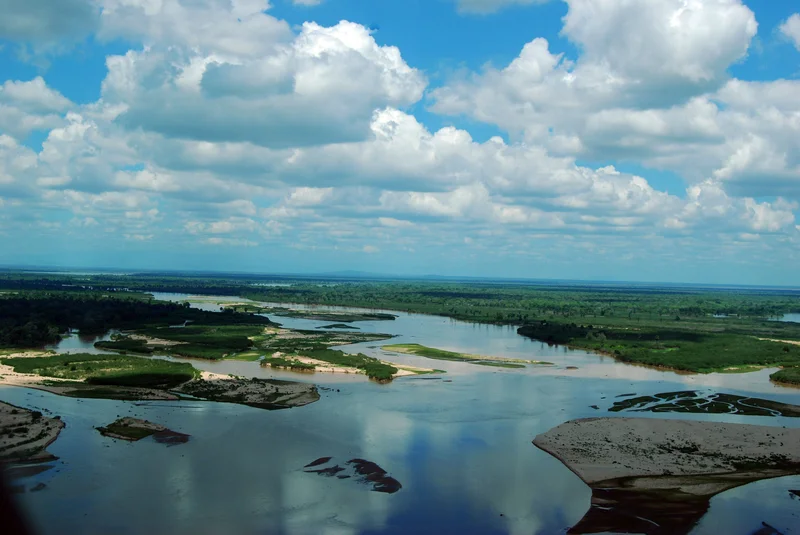
The scheme sits on the Rufiji River in Rufiji District, Coast Region, inland from Dar es Salaam, and generates 2,115 megawatts across nine turbines. That makes it comfortably the largest generating asset in the country.
It was built by an Egyptian consortium of Arab Contractors and Elsewedy Electric, two firms that have spent the past decade turning Egyptian engineering capacity into an export business. Construction began in June 2019 and was completed in March 2025.
The important point about the money is that it was Tanzanian. The government puts the cost at Sh7.452 trillion, about US$2.8 billion at the shilling’s late-August rate, and financed it from its own budget rather than through a foreign loan.
About 12,000 people worked on the site, of whom 1,700 were Egyptian engineers and technicians, according to the Egyptian government. President Samia Suluhu Hassan led Saturday’s ceremony at the site.
The Nile argument the Julius Nyerere hydropower plant is meant to settle
Egypt’s Prime Minister Mostafa Madbouly flew in for the ceremony on behalf of President Abdel Fattah El-Sisi, and the line he chose was aimed squarely at Addis Ababa. He said the project refutes previous claims that Egypt opposes development in Nile Basin countries, while insisting Cairo will safeguard its rights in the river.
The timing was not accidental. On 20 August, Ethiopia’s water and energy minister Habtamu Itefa said his country would build further dams whenever it judged them necessary.
A day before that, Egyptian Foreign Minister Badr Abdelatty said on television that Cairo would not allow the construction of additional dams on the Nile. The two statements sit about as far apart as two governments can manage while still nominally negotiating.
Talks among Egypt, Ethiopia and Sudan over the Grand Ethiopian Renaissance Dam have been frozen since 2024. The Nile basin is shared by eleven countries, and Egypt has spent years losing the argument that its historic allocation should hold.
Why building somebody else’s dam is a strategy
For most of the past fifteen years Egypt’s Nile diplomacy has been defensive, and it has not worked. Ethiopia built the GERD anyway, and the rest of the basin largely sided with the upstream case.
Building 2.1 gigawatts for an upstream basin state is a different kind of argument. It is harder to accuse a country of blocking African development while its contractors are commissioning the largest power station in Tanzania.
There is a commercial dimension as well. Arab Contractors and Elsewedy Electric are becoming genuine pan-African engineering, procurement and construction players, and their order books are one of the more overlooked Egyptian export stories.
Egyptian contractors as an export industry
Elsewedy Electric began as a cable manufacturer and has spent two decades moving up the value chain into transmission, substations and turnkey power projects. Arab Contractors is one of the oldest construction houses in the Arab world and has worked across Africa since the 1970s.
Between them they now bid for the kind of work that used to go automatically to European, Chinese or Turkish firms. Tanzania is the largest single demonstration of that capability so far.
For Egypt the appeal is straightforward. Engineering exports earn hard currency, build political relationships that outlast any single government, and do not require Cairo to win a legal argument about water rights.
The limitation should be equally clear. A contractor delivers what a client finances, and here the client was Tanzania, which chose the Egyptians and wrote the cheques.
What it means for Tanzania
Saturday was a formal inauguration rather than a switch-on, and the distinction matters. The turbines have been feeding the grid progressively, and by 31 May the plant had supplied about 44.9% of all the electricity delivered to the national network over the preceding year.
Total installed capacity in Tanzania has now reached roughly 4,646 megawatts, of which this single site is 2,115. That is a level of concentration few countries would choose.
The country has spent 2026 courting large energy capital, from the long-delayed liquefied natural gas project to the Tanga corridor. Reliable baseload is the precondition for most of it.
One caution belongs on the record, and it is the usual one with large hydro. The Rufiji is a seasonal river, so a plant supplying nearly half the national grid ties the country’s electricity to the rains.
Frequently Asked Questions
How big is the Julius Nyerere hydropower plant?
It generates 2,115 megawatts, which makes it Tanzania’s largest single power project. It sits on the Rufiji River in Rufiji District, Coast Region.
Who built it and who paid?
An Egyptian consortium of Arab Contractors and Elsewedy Electric built it between June 2019 and March 2025. Tanzania financed it from its own budget at a stated Sh7.452 trillion, about US$2.8 billion.
Why is Egypt highlighting the project?
Prime Minister Mostafa Madbouly said it refutes claims that Egypt opposes development in Nile Basin countries. The statement came days after Ethiopia said it would build more dams as needed.
Are the GERD talks still running?
No. Negotiations among Egypt, Ethiopia and Sudan over the Grand Ethiopian Renaissance Dam have been frozen since 2024.
This article was produced by The Rio Times’ automated newsroom system. How we use AI · Report an error
LatAm Markets: Live Signals → — real-time movers, turnover leaders and FX across Latin America.