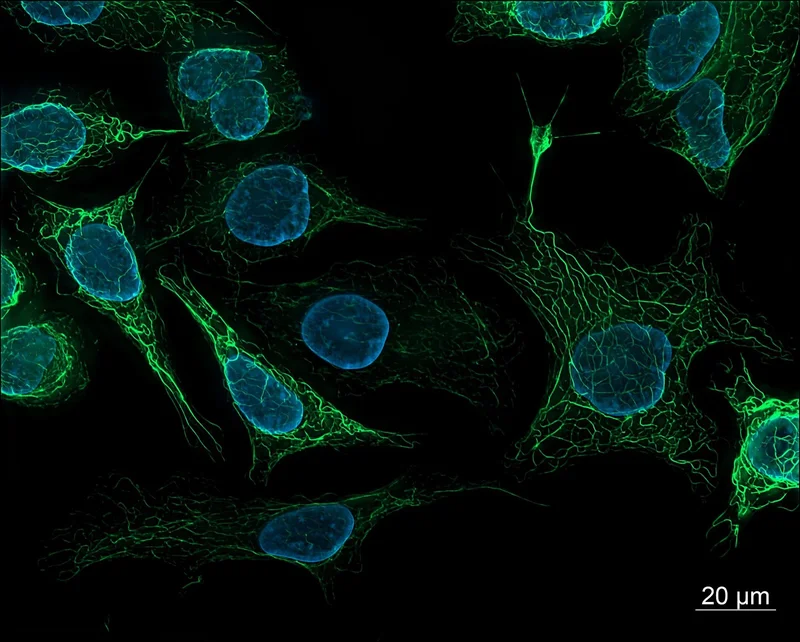
The science, the systems, and the very expensive question of who gets to keep living
Every human being who has ever lived has been party to a contract none of us signed.
The terms are simple. You grow. You peak. You decline. You die. There is no appeal, no premium tier, no clause your lawyers can renegotiate. For all of recorded history, across every culture and every century, death has been the one institution that could not be bought — indifferent to wealth, immune to lobbying, the single deadline that always gets met.
And that indifference has been doing enormous, invisible work.
Death is why estates get divided. Why thrones get vacated. Why fortunes disperse, boards turn over, and each generation eventually gets its turn at the controls. Max Planck's grim joke about his own field — that science advances one funeral at a time — is really a description of how everything advances. Mortality is the mechanism that forces circulation. We have never had to think of it as load-bearing architecture, because it was never optional.
It is now being renegotiated.
In laboratories from South San Francisco to Cambridge, backed by tens of billions in venture capital and increasingly steered by artificial intelligence, a coordinated scientific effort has recast aging itself — not heart disease, not dementia, not cancer, but aging — as a treatable condition. Not wear and tear to be endured. A systems failure to be debugged. The technical term is "healthspan extension." The pitch decks say longevity. The subtext, in a lot of rooms, is immortality.
Here is what those rooms are quieter about: the gap between the promise and the evidence is still enormous. Several of the most celebrated longevity drugs have just posted underwhelming results in actual humans. The one genuinely historic breakthrough of the past year isn't a pill at all — it's a gene therapy injected into an eyeball and switched on by an antibiotic. And the infrastructure meant to carry all these extra years — pensions, housing, care work, the basic arithmetic of retirement — was built for people who die in their seventies.
So this is a story about molecular biology. But underneath it is a much older question, and a much more uncomfortable one: what happens to a society when the great equalizer stops showing up on schedule — and only some of us can afford the exemption?
Part One: Aging Isn't a Molecule. It's a System.
The part of longevity that no molecule delivers. Aging is a social system before it is a cellular one.
If you want to understand why the longevity conversation keeps going sideways, start with the fact that it's dominated by people who study cells for a living. Molecular biologists. Computational geneticists. Tech founders who read a paper about mitochondria and never emotionally recovered.
Stephen Johnston is not one of those people, which is precisely why he's worth listening to.
Johnston studied economics at Cambridge, picked up an MBA at Harvard, spent his early career in European-American trade policy, then rode the spectacular rise and even more spectacular fall of Nokia — where he ran an internal innovation push at the seam between mobile technology and healthcare. Useful training, it turns out, for watching a technology hype cycle from the inside.
His pivot into aging came from a moment of pure systems failure. Working with a network of dementia researchers on behalf of a wealthy client in Texas, Johnston noticed something that unsettled him: even families with essentially unlimited money couldn't assemble a coherent set of products, technologies, and services to handle the crushing daily reality of caregiving. The money was there. The market wasn't.
There was no ecosystem. So in 2012, with Katy Fike, he built one. Aging2.0, headquartered in San Francisco, grew into a global network of more than 30,000 people across 79 chapters in 23 countries before being acquired in 2022. Johnston now runs the impact consultancy Fordcastle, serves as a Fellow of Healthy Longevity at SOMPO Digital Lab, and writes the newsletter Looking Forward, where he makes a case that's deeply unfashionable in a field obsessed with cellular mechanisms:
Aging is not a disease to be cured in isolation. It's a system to be redesigned.
Johnston points to three megatrends that will decide whether age tech actually works or just generates a lot of very sophisticated press releases: the datafication of the individual — the shift to continuous physiological monitoring; the home as the primary battleground for innovation; and the return of social infrastructure, the unsexy connective tissue of community, care, and belonging.
The numbers underneath this are genuinely staggering. In 2023, the world crossed a threshold with no precedent in the human record: people aged 50 and over began to outnumber children under 15. Global population pyramids are inverting into something more like a column, then a mushroom.
The reflex is to call this a crisis. Systems people call it a market. The "longevity economy" — the economic gravity of the 50-plus cohort — is estimated to contribute roughly $45 trillion to global GDP. That's not a demographic burden line item. That's the largest growth opportunity of the century, currently being served by an industry that mostly designs for it badly and markets to it worse.
Getting that transition right, Johnston argues, means moving past fragmented policy patches toward mechanisms that capture value across multiple layers of economic and social return — using AI to scale preventive care, and finally reckoning with ageism, which quietly imposes one of the largest and least-measured economic tolls in the developed world.
Hold that thought. We'll come back to it, hard, at the end.
Part Two: The Hardware — Why the Bathroom Beats the Hospital
The new front line of preventive medicine. Not a waiting room — a bathroom.
Here's a statistic that should reorganize how you think about medicine: roughly 60 percent of health outcomes are driven by lifestyle — diet, movement, sleep, stress, social connection. Not by what happens in a clinic. By what happens in a kitchen, a bedroom, a living room, at 7 a.m. on a Tuesday.
Which means the doctor's office is, structurally, the wrong place to fight aging. You show up twice a year. You get a snapshot. Between snapshots, your body does whatever it wants, and the first real signal that something has gone wrong is often an ambulance.
Extending healthspan requires the opposite: continuous, passive observation that catches physiological drift before it becomes an acute event.
Which is how the most consequential device in age tech turned out to be a toilet seat.
The Heart Seat
There is a toilet seat in upstate New York that can read your heart. Not metaphorically — it has electrodes in it. Sit down, do the thing you already do several times a day without thinking about it, and it captures an ECG-style trace of your cardiac electrical activity, an optical read of your blood oxygen, and your body weight. No charging. No pairing. No app. It is the least glamorous hardware in the entire longevity industrial complex, and it may end up mattering more than most of the billion-dollar biology.
Casana was founded in 2018 by Nicholas Conn out of the Rochester Institute of Technology, and later led by CEO Austin McChord — the founder who'd previously built and sold the data-backup company Datto. The company's insight was less about sensors than about human nature.
Remote patient monitoring has a well-documented failure mode: people. Active monitoring requires adherence. Charge the smartwatch. Wear it correctly. Fit the blood pressure cuff on the right arm at the right height. Sync the device. Remember, every single day, forever. For older adults who didn't grow up as digital natives — and honestly, for everyone else too — that's a maintenance job nobody signed up for. Adherence decays. Data goes patchy. Patchy data is nearly worthless for detecting subtle trends.
So Casana looked for a behavior that requires zero compliance because it's already non-negotiable — and built clinical-grade instruments into it. The electrical contacts do the ECG-style measurement; photoplethysmography (PPG) sensors read blood oxygenation and pulse waveform optically; force sensors handle weight. You change nothing about your day. The data arrives anyway.
In May 2023, after clinical testing at the company's Smart Integrated Technologies Lab, the Heart Seat cleared the FDA for measuring heart rate and blood oxygen saturation (SpO2) in adults. Casana has raised more than $56 million from investors including General Catalyst and Morningside, and is pursuing additional clearances — the big one being non-invasive systolic and diastolic blood pressure.
Think about what that unlocks. Not a single reading, but a dense longitudinal stream from a person's actual life. Enough data for machine learning models to build a personal physiological baseline — your normal, not a population average — and then flag the micro-deviations that precede congestive heart failure, stroke, or severe dehydration. Not hours in advance. Potentially months.
"Set-and-forget" ambient sensing isn't a gadget category. It's the prerequisite data layer for a society engineered to live longer — the quiet decentralization of healthcare from the hospital to the bathroom.
Now for the part where the science gets harder and the results get messier.
Part Three: The Pills — and the Geroprotection Paradox
The dream is always a pill. The data keeps declining to cooperate.
The dream is a pill. It's always been a pill.
The scientific logic behind longevity pharmacology is genuinely elegant. The cellular pathways that sense nutrients and regulate energy — AMPK and mTOR chief among them — are deeply conserved across mammals. They're the machinery that translates "food is scarce" into "switch to maintenance and repair mode." Caloric restriction extends lifespan in a remarkable range of species by pulling those levers.
So: what if a cheap, off-patent drug could pull them for you, while you eat dinner?
That's the geroprotector thesis. Biohackers love it. Longevity influencers have built careers on it. And between 2024 and 2026, the clinical data came in — and it was considerably less fun than the thesis.
Metformin: The King Gets a Reality Check
Metformin is one of the most-prescribed drugs on Earth, used for over sixty years to manage type 2 diabetes. Mechanistically, it's clever: it suppresses hepatic glucose output and inhibits mitochondrial complex I, which cuts ATP production and raises the AMP-to-ATP ratio. The cell reads that as an energy crisis and activates AMPK, its master metabolic regulator. AMPK then drives glucose uptake in muscle, suppresses lipid synthesis, and inhibits mTOR — the growth-and-inflammation accelerator.
In other words, metformin makes your cells behave a little like they're fasting.
The excitement came from retrospective epidemiology. Diabetics on metformin showed lower rates of cardiovascular disease and certain cancers — and in some datasets, appeared to outlive non-diabetics who weren't taking it. Read that again: sick people on the drug looked healthier than well people without it. That finding launched a thousand podcasts.
It also launched TAME — Targeting Aging with Metformin — championed by Dr. Nir Barzilai and the American Federation for Aging Research. TAME was designed as the field's landmark study: 3,000 subjects aged 65 to 79, testing whether metformin could delay a composite endpoint of cancer, cardiovascular disease, dementia, and death. Crucially, it was also designed as a regulatory Trojan horse — a trial structured to get the FDA to treat aging itself as an indication.
As of 2026, TAME still has not delivered published efficacy results showing metformin delays aging in healthy humans.
Meanwhile, other trials kept arriving, and they steadily dismantled metformin's reputation as a longevity prophylactic for people who aren't diabetic.
Researchers now describe a "geroprotection paradox." Metformin improves systemic metabolic markers — genuinely, reliably. But its effects on individual tissues are bidirectional and highly context-dependent. Skeletal muscle is the flashpoint. Muscle is the body's largest metabolic organ, and its age-related loss — sarcopenia — is one of the most reliable predictors of frailty, falls, and metabolic collapse in later life.
The MASTERS trial (2019) and subsequent work found that in healthy older adults, metformin blunted the muscle growth and strength gains produced by resistance training. The drug that mimics fasting also mutes the signal that says build. mTOR inhibition cuts both ways: it's the same brake pedal.
It got worse for the thesis:
- The MET-PREVENT trial(2025) gave metformin to frail older adults with probable sarcopenia. It failed to improve walking speed or physical performance, and was poorly tolerated — the gastrointestinal side effects are not theoretical.
- The 21-year DPP/DPPOS follow-up, published inJAMAin 2026, found that intensive lifestyle intervention reduced multimorbidity risk, while metformin wasnot significantly different from placebofor that outcome.
The 2026 consensus is uncomfortable but clear: metformin remains an excellent cardioprotective and metabolic drug for people with diabetes or prediabetes. For metabolically healthy adults who exercise, prescribing it for longevity isn't supported by the evidence — and may be counterproductive. Add known vitamin B12 depletion and GI distress (mediated partly through shifts in the gut microbiome, including Akkermansia muciniphila), and the risk-benefit math stops working.
The lifestyle intervention beat the pill. Again.
Rapamycin: Easter Island's Long Shadow
Ahu Tongariki, Rapa Nui. The soil beneath these statues produced the most effective life-extending drug ever tested in mammals.
If metformin's star has dimmed, rapamycin is still the brightest object in the sky — and it comes with the best origin story in pharmacology.
In 1964, a Canadian expedition collected soil samples from Rapa Nui — Easter Island, the place with the statues. In that soil lived a bacterium producing a macrolide compound, later named rapamycin after the island. It became an FDA-approved immunosuppressant used to prevent organ transplant rejection. Then researchers discovered what it was actually doing at the molecular level, and named an entire cellular pathway after it: the mechanistic target of rapamycin, or mTOR.
Rapamycin directly inhibits mTORC1. That downregulates cellular growth signaling and dramatically upregulates autophagy — the cell's internal recycling program, which digests damaged proteins and worn-out organelles and reuses the parts. Less building, more repairing. In genetically heterogeneous mice, rapamycin has consistently extended lifespan by up to 25 percent. That's not a subtle effect. It's the most robust pharmacological life extension in mammals we know of.
So: does it work in people?
The longevity community got tired of waiting for someone else to find out. Led by Dr. Sajad Zalzala of AgelessRx, working with Lifespan.io, they crowdfunded the answer: the PEARL trial — Participatory Evaluation of Aging with Rapamycin for Longevity. Decentralized, 48 weeks, double-blind, placebo-controlled, 114 generally healthy adults aged 50 to 85, randomized to 5mg weekly, 10mg weekly, or placebo.
Published in 2024–2025, the results were a bracing lesson in how far a mouse is from a human.
| PEARL Trial Metric | Outcome | What It Actually Means |
|---|---|---|
|
|
| The central hypothesis did not hold. Rapamycin is not a reliable metabolic fat-loss agent in this population. |
|
|
| A strongly sex-specific biological response. Whatever the right protocol is, it isn't one dose for everyone. |
|
|
| Patient-reported outcomes are real data — but they sit low on the evidence hierarchy and are the most vulnerable to placebo effects. |
|
|
| The single most valuable result. Low-dose intermittent dosing does not cause transplant-level immunosuppression. |
|
|
| The trial was far too small and too short to say anything about living longer. |
Read that table honestly and you get a split verdict. PEARL succeeded beautifully at what safety trials are for: it demonstrated that low-dose, intermittent rapamycin appears safe in healthy adults over a year, defusing the field's biggest fear. On efficacy, it delivered modest, sex-specific quality-of-life improvements — not biological rejuvenation.
There are adjacent signals worth watching. The 2014 Mannick/Novartis work showed rapamycin analogues improved elderly immune responses to vaccination — a real, measurable reversal of an age-related deficit. The ongoing VIBRANT trial shows early promise in preserving ovarian reserve in women, which would be a significant intervention in one of the fastest-aging organ systems in the human body.
But the 2026 consensus stands: rapamycin is not a proven systemic therapy for delaying human aging. It is a fascinating drug with a spectacular mouse résumé and a thin human one.
Spotlight: Bryan Johnson, the Experiment of One
There is one more rapamycin data point, and it isn't from a journal. It's from a man who turned his own body into a laboratory and livestreamed the results.
Bryan Johnson — no relation to Stephen Johnston, and very nearly his intellectual opposite — made his money the ordinary Silicon Valley way. He founded the payments company Braintree in 2007, bought Venmo along the way, and sold the whole thing to PayPal for $800 million in 2013. He put the proceeds into OS Fund and then Kernel, a neurotech company building non-invasive brain-interface helmets. Then, around 2021, he pointed all of it at himself.
Project Blueprint is the most thoroughly instrumented human experiment ever run on a single willing subject. Johnson, now 48, follows an algorithmically managed protocol overseen by a team of physicians: a fixed vegan-leaning diet of roughly 2,000 calories, dinner finished in the early afternoon, lights out at 8:30 p.m., a rigid exercise block, and — at peak — north of 100 pills a day. Hundreds of biomarkers are tracked across essentially every organ system. He has measured the aging rate of his heart, his lungs, his liver, his skin, his gums, even his nighttime erections. The full protocol runs him upwards of $2 million a year.
The results he publishes are genuinely striking, if unverifiable by anyone else. He reports a DunedinPACE score of 0.64 — a measure of pace of aging, where 1.0 is the population norm — meaning his body is accruing roughly 7.6 months of biological age for every 12 months on the calendar. Epigenetic clocks put him around 38 against a chronological 48.
And here is why he belongs in this chapter rather than a profile page: Bryan Johnson quit rapamycin.
After nearly five years on what he called the most aggressive rapamycin protocol in the industry — cycling doses from 5mg to 13mg — he stopped in September 2024. His stated reasons read like a checklist of everything the mouse literature doesn't capture: recurring skin and soft-tissue infections, lipid abnormalities, elevated glucose, a higher resting heart rate. Then came the finding that actually ended it. A preprint analyzing longevity interventions across 16 epigenetic aging clocks found rapamycin associated with accelerated epigenetic aging in humans. Johnson's conclusion: the benefits of lifelong dosing "do not justify the hefty side-effects."
Sit with the shape of that. The single most measured human being alive, with unlimited budget, physician oversight, and every incentive to believe, ran the field's most promising longevity drug for five years — and concluded it was aging him faster.
He has retired other interventions the same way. In 2023 he underwent a widely covered "multi-generational plasma exchange," taking a litre of plasma from his then-17-year-old son Talmage while donating his own to his father. It was the most viscerally science-fictional thing anyone in longevity had done. He discontinued it within months, reporting no measurable benefit.
That habit — publishing the failures — is the strongest argument for taking Johnson seriously. He is not a clinical trial. An n of 1 with no control arm and no blinding cannot establish that anything works; every result is confounded by the other 99 things he does simultaneously, and by the fact that a man who sleeps eight hours, eats vegetables, and lifts weights would post good numbers regardless. But he is running the interventions faster than institutions can, at doses no ethics board would approve, and reporting when they fail. Blueprint has since been commercialized — a supplement stack at $333–$449 a month, a biomarker panel at $365 a year — and Johnson has spoken openly about winding the company down to focus on "Don't Die," which he describes less as a business than as a movement, and sometimes as a religion.
The Counterpoint: Ornaments Without a Tree
Which brings us back to Stephen Johnston, and the reason both men belong in the same article.
Johnson's model of the problem is individual and optimizable: aging is a signal-processing challenge, the body is a system to be measured and tuned, and the limiting factor is data and discipline. Johnston's model is collective and structural: aging is a social and economic arrangement, and the limiting factor is infrastructure — housing, caregiving, pensions, transport, the ordinary machinery of a long life.
Johnston's critique of the first model is not that it's fraudulent. It's that it doesn't scale, and that mistaking it for progress is dangerous. A protocol costing $2 million a year, or even $400 a month, is not a public health intervention; it is a consumer product for people who already have the least to worry about. Johnston's line for startups that chase biological optimization while ignoring the structure underneath is that they are "like Christmas tree ornaments without the Christmas tree" — beautiful, intricate, and hanging on nothing.
The uncomfortable synthesis is that both men are describing something real. Johnson is demonstrating that the biology is more tractable — and more treacherous — than the marketing admits. Johnston is pointing out that a society can perfect the biology and still fail completely at delivering it. Neither observation cancels the other. Which is precisely the problem the rest of this article runs into.
The Pivot: From Immortality to Muscle
The smart money noticed. Watch how the framing changes.
BioAge Labs has repositioned its apelin receptor agonist azelaprag (BGE-175). Rather than chasing an abstract anti-aging claim, BioAge is advancing azelaprag into a Phase 2 proof-of-concept trial in combination with Wegovy (semaglutide) — the blockbuster GLP-1 agonist. The logic is sharply practical: GLP-1 drugs produce dramatic weight loss, but a meaningful fraction of what's lost is lean muscle mass. In an older patient, that's not a cosmetic issue; it's an express lane to frailty. Azelaprag's job is to preserve the muscle while the GLP-1 strips the fat.
That's the whole industry's trajectory in one deal: away from "immortality," toward the concrete, fundable, regulatable preservation of physical function. Less Fountain of Youth. More physical therapy with better molecules.
Part Four: The Rejuvenation Revolution — Resetting the Epigenome
Where the factory reset gets tested. Partial reprogramming is, at bottom, a problem of dose and duration.
Everything so far has been about slowing the age clock. This next part is about turning it back.
And the capital has voted with unusual violence. Partial epigenetic reprogramming went from roughly 2 percent of biotech funding in 2024 to 78 percent year-to-date in 2026. That is not a trend. That is a stampede.
The Discovery That Started It
In 2006, Shinya Yamanaka showed that introducing four transcription factors — Oct4, Sox2, Klf4, and c-Myc, collectively OSKM — could force a mature adult cell, like a skin fibroblast, to revert to an embryonic-like induced pluripotent stem cell.
This was a bomb going off in developmental biology. Cell identity was supposed to be a one-way street. Yamanaka found the reverse gear. He got the Nobel Prize in 2012.
For longevity, the crucial detail is what else got reset. The reprogrammed cell doesn't just lose its identity — it loses its age. Age-associated DNA methylation patterns — the chemical annotations on your genome that constitute the epigenetic clock, the closest thing biology has to a true readout of how old you are — get erased. Mitochondrial function returns to a youthful profile. Telomeres lengthen.
That clock is the thing this entire industry is trying to hack. Not the calendar. The molecular record of what the calendar did to you.
Here's the mental model worth carrying: your DNA is the hardware; the epigenome is the software configuration — the accumulated settings, flags, and annotations that determine which genes are readable in which cells. Aging looks less like the hardware wearing out and more like the configuration file filling with decades of cruft, bad defaults, and corrupted entries.
Yamanaka found the factory reset.
The Problem With Factory Resets
You do not want a factory reset. A factory reset gives you a teratoma.
Sustained OSKM expression strips cells of their mature identity entirely. They forget they're liver, or retina, or muscle. They divide without restraint and form tumors containing chaotic assortments of tissue — hair, teeth, bone, in the wrong place, in a body that had other plans. A liver cell that fully reprograms is no longer a liver cell. It's cancer with an interesting backstory.
So the entire modern rejuvenation industry is defined by one engineering problem: partial reprogramming. Pulse the factors briefly. Rejuvenate the epigenome. Stop before the cell forgets what it is.
Wipe the cruft. Don't reformat the drive.
Every serious company in this space is a different bet on how to control that pulse.
The Contenders
| Company | Capital & Backers | Delivery | Strategy | Status |
|---|---|---|---|---|
|
| $3 billion (Jeff Bezos) | Undisclosed | Deep biology of cellular rejuvenation; core OSKM mechanisms | Preclinical; heavy basic-science and resilience focus |
|
| $1.8B valuation (Sam Altman) | Small molecules & cell therapy (AAV/iHSC) | Autophagy boosting (RTR242), tissue reprogramming, plasma-inspired therapies | Phase 1 initiated (Alzheimer's; aging biology) |
|
| $435M Series C (Founders Fund, Brian Armstrong) | Lipid nanoparticles + mRNA | Non-Yamanaka transcription factors discovered via AI ("Ambrosia") | Preclinical, approaching Phase 1 for alcohol-related liver disease |
|
| $80M Series D (David Sinclair) | AAV vector |
|
|
Two of these deserve a closer look, because they represent genuinely different philosophies about how to do this without killing anyone.
Life Biosciences: The One That Got Through the Door
The eye: small, contained, immunologically privileged, and — crucially — something a doctor can simply look at. The obvious place to try this first.
In January 2026, Life Biosciences — founded by Harvard geneticist David Sinclair — did something no one had done before: it obtained FDA clearance of an Investigational New Drug application for ER-100, the first partial epigenetic reprogramming therapy authorized for human clinical trials.
The safety engineering here is worth appreciating, because it's a masterclass in de-risking a terrifying technology.
First, they dropped c-Myc. Of the four Yamanaka factors, c-Myc is the notorious one — a pioneer factor with a long rap sheet in human cancers. Life Biosciences uses only OSK: Oct4, Sox2, Klf4. Three factors, one fewer oncogene.
Second, they picked the eye. ER-100 is delivered by adeno-associated viral vector directly into the eye — a compartment that is small, immunologically privileged, physically contained, and, crucially, observable. You can look directly at the treated tissue with equipment that's been in ophthalmology offices for decades. If something goes wrong, you see it. Compare that to a systemic therapy quietly reprogramming a pancreas.
Third — and this is the elegant part — they built an off switch. Once injected, the OSK gene sequence sits dormant. It does nothing until the patient takes a course of oral doxycycline. The antibiotic is the key. It opens a tightly controlled expression window — roughly eight weeks — during which the factors do their work on retinal ganglion cells. Stop the doxycycline, and the window closes.
A rejuvenation therapy with a kill switch you swallow.
The Phase 1 first-in-human trial targets open-angle glaucoma and non-arteritic anterior ischemic optic neuropathy — conditions in which retinal neurons die irreversibly and for which no regenerative treatment exists. These aren't wellness-clinic indications. They're diseases that take people's sight, permanently, with nothing to offer them.
The preclinical work is what makes this more than a safety exercise. In aged mice and non-human primates, OSK reversed age-associated DNA methylation, regenerated damaged optic-nerve fibers, and restored lost vision. Not slowed the loss. Restored.
ER-100 is not an immortality drug. It treats two eye conditions. But its regulatory significance is difficult to overstate: the FDA has now accepted a rejuvenation-style therapy into human trials, on the condition that it be anchored to a specific localized disease, use conventional clinical endpoints, and carry a defined genetic off switch.
That's not just a milestone. It's a roadmap — and every other company in this sector has read it.
NewLimit: Searching 10 Quadrillion Doors
Ten quadrillion possible combinations. You do not search that space with graduate students.
In South San Francisco, NewLimit — founded by Coinbase CEO Brian Armstrong and computational biologist Jacob Kimmel — is making a more radical argument, freshly funded by a $435 million Series C led by Peter Thiel's Founders Fund.
Their position: the Yamanaka factors are the wrong tool. Not a tool to be handled carefully — the wrong tool. OSKM evolved to build embryos, not to maintain adults. Using it for human rejuvenation is like reinstalling the operating system to fix a font.
So NewLimit went looking for something better. The trouble is the size of the search space.
The human genome encodes roughly 2,000 transcription factors. The number of possible therapeutic combinations runs to around 10 quadrillion. No amount of graduate students and pipettes will ever brute-force that.
So they built Ambrosia, a generative AI system trained on an unprecedented corpus of single-cell gene expression data — a model that learns the grammar of how transcription factors reshape cell state, and proposes combinations worth testing. Then they test thousands of those predictions in parallel using pxbc-seq (perturbation barcode sequencing), a screening method that tags each perturbation so the results can be read out together.
The most important methodological choice, though, is what they test in. Not immortalized cancer cell lines — the biological equivalent of testing car safety on a vehicle that's already on fire. NewLimit screens in humanized mice: animals whose livers have been repopulated with human hepatocytes. Real human cells, real tissue architecture, real aging. The company reports this slashes screening costs by roughly 100x.
And their delivery is deliberately temporary. Instead of viral vectors that permanently integrate into the genome, NewLimit's lead candidate uses mRNA in lipid nanoparticles — the same delivery platform behind the COVID-19 vaccines. The mRNA produces a pulse of reprogramming factors and then degrades naturally within days. Nothing permanent is written into the genome, which structurally limits the risk of nudging cells toward an oncogenic state.
Their first clinical targets are alcohol-related liver disease and age-related metabolic disorders. In preclinical models, the LNP-mRNA therapy restores regenerative capacity, resilience to toxic diets, and youthful function in aged human liver cells.
Note the pattern, again: not "immortality." Liver disease. The FDA doesn't approve indications for wanting to live forever. It approves them for organs that are failing.
Part Five: The Ethics of Eternity
Capital circulates because people die. Remove the horizon and the architecture starts to deform.
Now the part that keeps the more thoughtful people in this field up at night.
Suppose it works. Not fully — just partially. Suppose epigenetic reprogramming delivers a fraction of its promise, and a meaningful number of people get an extra two or three functional decades.
Humanity would then face a problem with no historical template.
This is where the contract we opened with stops being a metaphor and starts being an actuarial table.
Every institution we have — inheritance law, pension funding, corporate succession, term limits, tenure, the whole apparatus of who holds what and for how long — quietly assumes a maximum duration. Nobody wrote that assumption down, because nobody had to. It was enforced by biology, for free, universally, forever.
Push the horizon out far enough and the enforcement stops. Not all at once, and not for everyone — which is precisely the problem.
The Immortality Gap
Johnston has been sounding this alarm for years, and his framing is sharp. Life expectancy roughly doubled over the last century — a monumental achievement. But rising inequality means the gains landed unevenly.
"Only the richest are living their additional 30 years of life to the fullest, while for too many, chronic disease and frailty impact their quality of life."
Read that carefully, because it describes something already happening. The immortality gap isn't a future risk. It's the current baseline. Extra years already accrue disproportionately to the wealthy, and — more importantly — the quality of those years does too. Rich people don't just get more time; they get more time worth having.
Now imagine layering exorbitantly priced cellular rejuvenation therapies on top of that gradient.
This is the ornaments-without-a-tree problem again, scaled up from a supplement stack to an entire civilisation. And it points at the sharpest version of Johnston's critique: the age-tech sector has been optimising for the wrong customer. It builds for the affluent early adopter who will buy a $400 monthly protocol, because that customer is legible, reachable, and solvent. The person whose remaining decades will actually be determined by whether age tech works — someone with a modest pension, a walk-up flat, a bad knee, and no one nearby to help — is not in anyone's addressable market.
A longevity industry that serves only the first customer will not fail. That's what makes it dangerous. It will succeed commercially, generate real science, and leave the demographic problem entirely untouched.
Science fiction got here first. In Richard K. Morgan's Altered Carbon, the hyper-wealthy — "Meths," short for Methuselah — live for centuries, compounding capital across lifespans, regarding ordinary mortals as a short-lived, faintly pitiable underclass. Written as dystopia. Increasingly readable as a product forecast.
The socioeconomic mechanics are the genuinely alarming part. If a billionaire can biologically reset their tissues toward 30 and hold cognitive sharpness indefinitely, generational succession simply stops functioning. Boards don't turn over. Fortunes don't disperse. Political influence doesn't age out. You get an entrenched gerontocracy — not of the frail elderly, but of the biologically young and institutionally immovable, holding positions for a century or more.
The "occult economies" that anthropologists describe — the unconventional means by which the powerful extend and mystify their dominance — will absorb these biological technologies without friction. That is exactly what they're for.
The Other Side of the Gap
And for everyone else, the risk runs in the opposite direction — not too much life, but not enough money to survive it.
A 2019 U.S. Government Accountability Office report found that 48 percent of American households headed by someone 55 or older have zero retirement savings. Not insufficient. Zero.
Pension systems and Social Security frameworks were built on actuarial tables assuming people would die in their late seventies. They were not designed for populations routinely reaching 100, let alone 110. The math doesn't stretch. It breaks.
This is the cruel asymmetry at the center of the longevity project: the same technology that could make a billionaire functionally ageless could make a retail worker destitute at 92, having outlived savings that were never designed to last that long.
Reviving a 17th-Century Instrument
Which is why some of the most interesting longevity work is happening in finance, not biology.
The Tontine Trust in Dublin is resurrecting the tontine — a financial instrument from the 1600s, banned in much of the world after it inspired a memorably grim genre of murder plot. The structure: participants pool capital into a shared retirement fund and receive payouts as long as they live. When members die, their share redistributes among the survivors. Live longest, collect most.
It sounds macabre. It's also, mathematically, a near-perfect hedge against longevity risk — the risk of outliving your money. In a tontine, extreme longevity is the thing being insured, and the pool self-corrects. The Dublin version is backed by physical gold to hedge inflation over multi-decade horizons.
An instrument from the age of sail, resurrected to solve a problem created by gene therapy. This is what the 2020s look like.
The Unevenly Distributed Future
The future is already here. It is just very unevenly distributed — and none of the trials above are recruiting anywhere near here.
Strip out the hype and here's what's actually true in 2026.
The search for eternal life has left philosophy and entered engineering. Ambient sensors like Casana's Heart Seat are building continuous physiological data streams from ordinary domestic life. Metabolic pathways are being modulated with real, if modest, effects. And AI-designed epigenetic reprogramming — delivered by LNP-mRNA or switched on by an antibiotic — has, for the first time in history, been cleared to enter a human body in a clinical trial.
The age clock is, at last, genuinely negotiable.
But the negotiation is going worse than advertised. The repurposed-drug story — metformin, rapamycin — is a running lesson in humility. Human biology does not yield to single molecules. It compensates. It responds differently by sex, by tissue, by training status, by microbiome. The same mTOR inhibition that extends life in a mouse blunts muscle growth in a 70-year-old lifting weights. There is no free lunch in a system optimized over a billion years of evolutionary trade-offs.
Hacking the age clock requires systems biology at a depth that even the best-capitalized companies — Life Biosciences, NewLimit, Altos, Retro — are only beginning to map. They are entering Phase 1. Phase 1 means we think this probably won't hurt you. That's the beginning of the road, not the end.
And the harder problem isn't in the biology at all.
Extending human lifespan without simultaneously rebuilding the social and economic infrastructure underneath it isn't progress. It's a blueprint for stratification more extreme than anything in the historical record. If the longevity dividend is available only to those who can afford proprietary LNP-mRNA infusions and bespoke epigenetic resets, then the ultimate triumph of medical science will arrive as the ultimate failure of human equity — a world where the powerful stop aging and everyone else just gets old for longer.
Death may eventually stop being the great equalizer.
Making sure the life that replaces it is worth having — for everyone, not just the people who can buy it — is a systems problem far harder than rewriting a genome. Nobody has a trial for that one yet.
Image Credits
All images are used under Creative Commons licences via Wikimedia Commons. Resized and recompressed for web.
| # | Image | Source | Licence |
|---|---|---|---|
| 01 | Human-derived cells, fluorescence microscopy | CC BY 2.0 | |
| 02 | Intergenerational dance, Pleasantview Care Facility | CC BY 2.0 | |
| 03 | Modern bathroom interior | CC BY 2.0 | |
| 04 | Pharmaceutical tablets | CC BY 3.0 | |
| 05 | Moai under the Milky Way, Ahu Tongariki | CC BY-SA 4.0 | |
| 06 | Laboratory micropipettes | CC BY-SA 4.0 | |
| 07 | Human eye, macro | CC BY 2.0 | |
| 08 | Data centre server racks | CC BY-SA 3.0 | |
| 09 | Hong Kong skyline at night | CC0 | |
| 10 | Elderly Lahu woman | CC BY 2.0 |
Sources & Further Reading
- Open Society Foundations — Transforming— opensocietyfoundations.org
- Stephen Johnston — All Party Parliamentary Group for Longevity — appg-longevity.org
- Looking Forwardby Stephen Johnston — lookingforward.life
- An Interview with Stephen Johnston: Tech and Aging Innovator — globalhealthaging.org
- Healthspans — Global innovations in healthy longevity — healthspans.substack.com
- Growing a Productive Longevity Economy — ASA Generations — generations.asaging.org
- Global Innovations in Aging and Longevity — AARP International — aarpinternational.org
- Casana: Funding, Team & Investors — startupintros.com
- Casana lands $30M to take its heart-scanning smart toilet seat to the FDA — Fierce Biotech — fiercebiotech.com
- Casana receives FDA clearance for smart toilet seat — Rochester Beacon — rochesterbeacon.com
- Smart Toilet Seat Wins FDA Nod to Monitor Heart Rate — MD+DI — mddionline.com
- FDA: The heart-checking smart toilet seat is a go — Fierce Biotech — fiercebiotech.com
- The Anti-Aging Mechanism of Metformin: From Molecular Insights to Clinical Applications — MDPI — mdpi.com
- Metformin: An Insulin Sensitizer Used for Blood Sugar and Longevity Research — superpower.com
- Metformin in 2025: Still the King or Time to Step Aside? — GlobalRPH — globalrph.com
- Metformin for Longevity in 2026: TAME, Dosage, Muscle and B12 — Progevita — progevita.com
- TAME — Targeting Aging with Metformin — AFAR — afar.org
- Controversial effects of metformin on human physiology and pathophysiology — Frontiers — frontiersin.org
- Metformin at the convergence of aging and longevity — Aging— aging-us.com
- Metformin for Longevity and Sarcopenia: A Therapeutic Paradox in Aging — PMC/NIH — pmc.ncbi.nlm.nih.gov
- Results of a Crowdfunded One-Year Human Rapamycin Trial — Lifespan Research Institute — lifespan.io
- First Results from the PEARL Trial of Rapamycin — Fight Aging! — fightaging.org
- What PEARL Actually Changes in Clinical Practice — healthrx.com
- Results of the PEARL Trial: An Expert Analysis — AgelessRx — agelessrx.com
- Safety and efficacy of rapamycin on healthspan metrics after one year: PEARL Trial Results — medRxiv — medrxiv.org
- The Largest Rapamycin Trial Ever Conducted in Humans Is Now Underway — Healthspan — gethealthspan.com
- I Stopped Taking Rapamycin — Bryan Johnson / Blueprint — blueprint.bryanjohnson.com
- Analyzing Bryan Johnson's Rapamycin Pivot — Healthspan — gethealthspan.com
- Biohacker Bryan Johnson Stopped Taking This Anti-Aging Drug for Adverse Effects — Men's Fitness — mensfitness.com
- Bryan Johnson's Blueprint Protocol: Cost, Diet & Body Fat 2026 — NOVOS Labs — novoslabs.com
- Bryan Johnson's Blueprint Protocol in 2026: What Changed and What It Costs — formblends.com
- Tech CEO Bryan Johnson admits he saw 'no benefits' after injecting his son's plasma — Fortune — fortune.com
- Tech CEO defends using his 17-year-old son's blood plasma in pursuit of youth — Fortune — fortune.com
- Why biohacker Bryan Johnson wants to sell his anti-aging business to build a new religion — Yahoo News — ca.news.yahoo.com
- SEC Filing — BioAge Labs, Inc. — ir.bioagelabs.com
- BioAge commences dosing in trial of obesity treatment candidate BGE-102 — clinicaltrialsarena.com
- Nelson Advisors Big Questions in HealthTech: Is Longevity the Next Trillion-Dollar Market? — healthcare.digital
- Rejuvenating human beings: the rise of cellular reprogramming — World Stem Cell Summit — worldstemcellsummit.com
- Partial reprogramming deep dive: the good, bad, and partially unresolved — Ada Nguyen — adanguyenx.com
- Yamanaka Factors and Cellular Reprogramming — Lifespan Research Institute — lifespan.io
- Multi-omic rejuvenation of naturally aged tissues by a single cycle of transient reprogramming — PMC — pmc.ncbi.nlm.nih.gov
- The Anti-Aging Therapeutics Boom — Contrary Research — research.contrary.com
- Partial cellular reprogramming: A deep dive into an emerging rejuvenation technology — PMC — pmc.ncbi.nlm.nih.gov
- Cellular reprogramming and the rise of rejuvenation biotech — University of Birmingham — pure-oai.bham.ac.uk
- Altos Labs — altoslabs.com
- Retro Biosciences — Pipeline — retro.bio
- Cure's Longevity Biotech Funding Tracker 2026 — wewillcure.com
- NewLimit raises $435m Series C to advance aging reprogramming medicine toward human trials — AllSci — allsci.com
- NewLimit raises $435m for liver trials, and other financings — pharmaphorum — pharmaphorum.com
- NewLimit Business Breakdown & Founding Story — Contrary Research — research.contrary.com
- New heights for NewLimit as anti-aging biotech nabs $435M to rejuvenate old cells — Fierce Biotech — fiercebiotech.com
- Life Biosciences — lifebiosciences.com
- Study Details | NCT07290244 | Evaluating ER-100 for Safety in People With Glaucoma or NAION — ClinicalTrials.gov — clinicaltrials.gov
- FDA clears first human trial of epigenetic reprogramming therapy — Longevity.Technology — longevity.technology
- Life Biosciences Announces FDA Clearance of IND Application for ER-100 in Optic Neuropathies — lifebiosciences.com
- The Eyes Have It: FDA Approves Phase 1 Clinical Trial of Life Biosciences' Reprogramming Therapy for Vision Loss — ArentFox Schiff — afslaw.com
- FDA clears investigational new drug application for ER-100 — Healio — healio.com
- Techno-Feudalism in Fiction — Medium — medium.com
- Ethics and ageing: Facing maturity and fallibility — Psychotherapy and Politics International— ojs.aut.ac.nz
- Occult Economies, Revisited — John Comaroff — johncomaroff.com
- Tontine Trust Launches Gold-Backed Tontines for Lifelong Payments — PRWeb — prweb.com