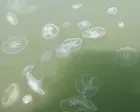
An unusually high number of jellyfish are crowding Delaware’s beaches this summer amid climate change and other environmental factors – keeping some beachgoers out of the ocean and stinging lifeguards as well as bathers.
Beach safety patrols in the state have reported hundreds of daily stings as the jellyfish have increased with intensifying environmental factors, including warmer waters, hot and dry conditions, and water circulation favorable to the invertebrates.
Jellyfish have been spotted in the water and washed ashore across popular beach destinations, including South Bethany Beach, Rehoboth Beach, Dewey Beach and Lewes Beach, and the frequency of stings has alarmed beachlovers.
Nico Caceres, the Rehoboth Beach patrol captain said in an interview: “The jellyfish for the past couple weeks have been very plentiful … The type of stings we’re seeing this summer, we haven’t really seen in past summers.”
Caceres, who has been stung “plenty of times” himself, explained that the effect of stings he has typically seen in past seasons last between 30 and 45 minutes, but that this summer’s stings have caused pain and other symptoms lasting an entire day.
“We have been seeing a lot of smaller children who actually end up vomiting a lot,” Caceres said. Along with many beachgoers, the lifeguards on his team who have also been stung have been avoiding going into the water out of concern about being stung again.
“People think we close the water because no one’s going in, but it’s just because people don’t want to get stung. It’s pretty much a guarantee you’ll get stung if you go,” he said, adding that since the end of July, his team has recorded between 150 and 200 stings a day.
Braden Jones, a lifeguard at Lewes Beach, also noted plenty of stings, averaging about 100 a day.
“It gets to the highest around the afternoon,” Jones told the Guardian from his lifeguard chair, adding that he has been seeing beachgoers go in the water less this summer and “staying away from the jellyfish”.
Jones, who himself has gotten stung before, described the sensation as a “stinging pain” that then gets itchy.
State officials warn beachgoers to watch for four species this summer: lion’s mane, Atlantic sea nettle, moon jellyfish and sea walnut. If stung, they advise rinsing the affected area with vinegar, then treating it with hot water or a warm towel. Anyone stung on the face or neck should seek immediate medical attention. Officials also caution against the popular notion of urinating on a jellyfish sting, saying it can actually worsen the pain.
The unusually high number of various species of jellyfish in the Delaware waters this summer has been driven by a combination of environmental conditions, Chris Petrone, marine advisory service director at Delaware Sea Grant, a university-based research and outreach program focused on supporting healthy coastal communities, said.
Petrone said warming air and water temperatures, along with drought conditions that have increased salinity, seasonal winds, and water circulation patterns, have combined to create a “perfect storm” for local jellyfish to thrive.
Such conditions could also become more common as temperatures rise and droughts become more frequent.
But Petrone also added: “The quieter hurricane season thus far can contribute to the accumulation of jellies on the coast as those types of systems not only break up the sea jelly population and move it offshore or up on to land, but dredge up cooler bottom waters, which are less favorable to summertime jelly species.”
Pointing to warming climates, Petrone said: “The best available data show that our air temperatures, and thus water temperatures, are rising over time and droughts may become more frequent. So those conditions will favor higher numbers of summertime sea jellies.”
Many beachgoers are staying out of the water altogether.
Kristen Zerby, a Delaware resident, stayed ashore on Lewes Beach and called the situation “disappointing”.
“My boys and my husband are down at the waterline just to feel the water, but it’s disappointing that you can’t go in,” she said.
Zerby added: “I’m not taking that chance … I’ve been to the Delaware beaches every year of my life, and I’ve never seen it so empty.”
Meanwhile, in southern California, a persistent marine heatwave fueled by the climate crisis has brought unusually large numbers of stingrays closer to shore as they seek warmer waters, contributing to a spike in injuries as beachgoers flock to the coast to escape the summer heat.
In Huntington Beach alone, the local fire department reported at least 240 stingray incidents last month.