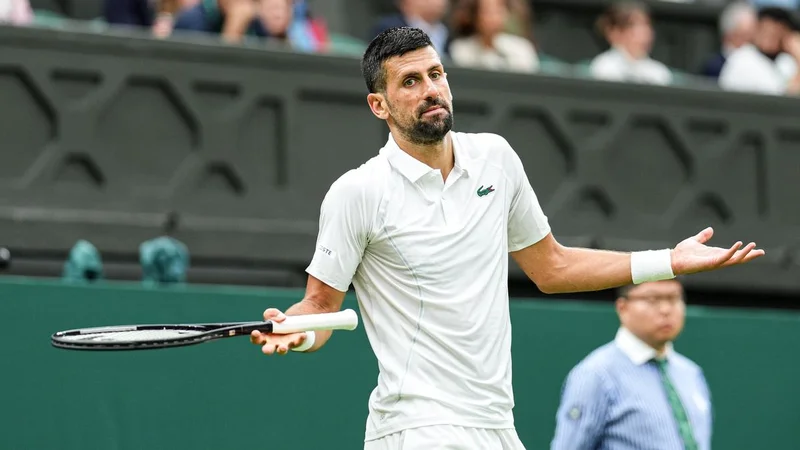
Novak Djokovic is the undisputed poster boy of sports longevity. He turns 40 in 2027, and at 39, his ATP ranking is No. 5. He embodies longevity as the world knows it today. When it comes to winning, Djoko or Nole, as he is known among fans, still pushes out the fangs. He defeated World No. 1 Jannik Sinner in a four-plus-hour battle in the semi-final of the Australian Open in 2026 itself.
A question that haunts the tennis world: “Will Djokovic retire soon?” Given his momentum, that question is starting to feel stale, and as the documentary reveals, it annoys him. “If I can still be a top 10 player and compete at the highest level, why should I stop?” he asks.
Out of the three greats of his generation, Rafael Nadal and Roger Federer are now overseeing their own companies and playing golf. Jason Hehir, director of the new documentary on Djokovic, Novak Djokovic: The Wolf in Winter, also directed the definitive documentary on Michael Jordan, The Last Dance. He recently said on the Nothing Major tennis podcast that the Djokovic documentary has been in the making since 2017.
Hehir came into the production in 2023. His film isn’t meant to be an all-encompassing biography of Djokovic — a player of outrageous talent and unmatched mental grit, a man who controversy follows, and one who represents Serbia in the way he wins.
Djokovic has the most impressive stats in the history of the game — the most grand slam wins (24) and the longest time spent as World No. 1 tennis player ever.
What makes him what he is? Turns out, it’s Inat.
Summoning Inat
Djokovic embodies this Serbian concept, which roughly translates to a force of stubbornness when things don’t go one’s way. When, in the 1990s, NATO started bombing Belgrade, people famously gathered on a bridge wearing a paper tag on their chests with the word ‘target’ written across it — one of the great archival footages the documentary uses. Come bomb us, you can’t break our spirit, Belgradians meant. Djokovic grew up in that city during that violent phase in Serbian history, and proudly and unapologetically owns his Inat.
“Djokovic embodies this Serbian concept, which roughly translates to a force of stubbornness when things don’t go one’s way.”
A byte from Andre Agassi explains how Inat plays out on the tennis court. Agassi was Djokovic’s coach in the years leading up to his meteoric rise since 2011. Djokovic needs to feel enough darkness to get the most out of himself, Agassi says: “For Novak to do the job, he needed fear or anger because with love or appreciation he loses his fangs.” Despite his unprecedented success on the tennis court, Djokovic has had an antagonistic relationship with audiences. When he retired, hurt, from the 2025 Australian Open semi-final against Alexander Zverev, the Australian crowd booed him. As Agassi explains, he uses that booing to get his fangs out, summoning Inat.
Channelling the wolf
The wolf is his spirit animal; it’s the national animal of Serbia and a symbol of fearlessness in the country’s spiritual folklore. Winter is that time when an ageing predator rustles up his experiences, history and all reserves of his being to survive and be in the game. The Wolf in Winter is set in Djokovic’s tennis winter. Yet, Djokovic has no desire to play father to the new greats, Carlos Alcaraz and Jannik Sinner. Sometimes, he even beats them.
Hehir’s narrative is a combination of beautifully shot footage at Djokovic’s home with his family, his wife Jelena, son Stefan and daughter Tara, at practice and physio sessions, and footage from past matches and some unseen archival footage from childhood. The outrageous talent, the goofy imitator, the supreme athlete, the longevity icon, the meditator and the tree hugger, and someone obsessively engaged in understanding himself, the dreams of a financially distressed family in Belgrade to make their oldest son a tennis star, and the extraordinary self-belief it took for Djokovic to “crash the party” of the reigning big league duo of Federer and Nadal — it all comes together.
The world has an appetite for the kind of documentary The Wolf of Winter is. What propels these narratives is the details of how an athlete achieved what they did and how much those pressures, endured since childhood, cost them emotionally. What was once simply greatness and glory — a function of fitness, talent, hard work and probably a lot of protein — is now also about navigating emotional suppression and lack of self-love. Mental health is the focus. Djokovic is his own therapist when he says, “Oftentimes, I feel that I am imprisoning myself.” Less of therapy-speak platitude: “When I started training in Germany at the age of 13, I was more mature, more stern, more stable, more of a man rather than a boy.” The kicker: “You have to transform every part of your life outside of the tennis court to be in service of the tennis court. And that has consequences.” The emotional centre of The Wolf in Winter is the Instagram-popular idea that what we feel today is because of the traumas we experienced when we were kids. Jelena emphasises how “vulnerable” and “gentle” Djokovic is, and yet how angry he is because of “unexpressed emotions that he has had to throw under the carpet”. Both Djokovic and Jelena repeatedly remind us why no matter what Djokovic achieves, it will never be enough. The Djokovic wolf howl, which bookends the documentary is like saying: I am here, and I will persist.
Meant for longevity
The concept of longevity was introduced to him before the world knew it by that name — by his first coach in Belgrade, Jelena Gencic. Gencic, we come to know, is Djoko’s forever “tennis mom”. She inculcated in him the importance of taking care of the mind, listening to classical music, knowing how to breathe. “She trained me in such a way that I have not only one shot at Wimbledon, but several shots at Wimbledon.”
Years later, in his 20s, he would tell his fitness coach, Gebhard Gritsch, “I want to be absolutely fit when I am 40 years old.” How Djokovic eats, sleeps, hydrates, recovers and thinks is the stuff of cutting-edge longevity science today.
What is success in a sport that is so solitary and so much about confronting demons within, as much as opponents? At what cost does that success arrive? Nadal sparked debates about mental abuse because it showed the Spanish champion’s relationship with his uncle-coach, who had some brutal methods of teaching him resilience. The Wolf of Winter says you can’t escape from your childhood, but you can own it and heal from it.
Djokovic’s pursuit of integrating healing systems from around the world is well known. He is an ambassador of Aman Resorts, and around the world, Aman properties now have a three-day Novak Djokovic Detoxification programme — a template for luxury longevity retreats around the world. Three days of accelerated detox to get a taste of the Djokovic longevity template? Not really, as The World of Winter shows us. It takes a world more.
Novak Djokovic: The Wolf in Winter is streaming on Amazon Prime Video.
The writer is a Mumbai-based journalist and founder of The Slow Fix (@the_slow_fix).
Published - August 22, 2026 04:54 pm IST