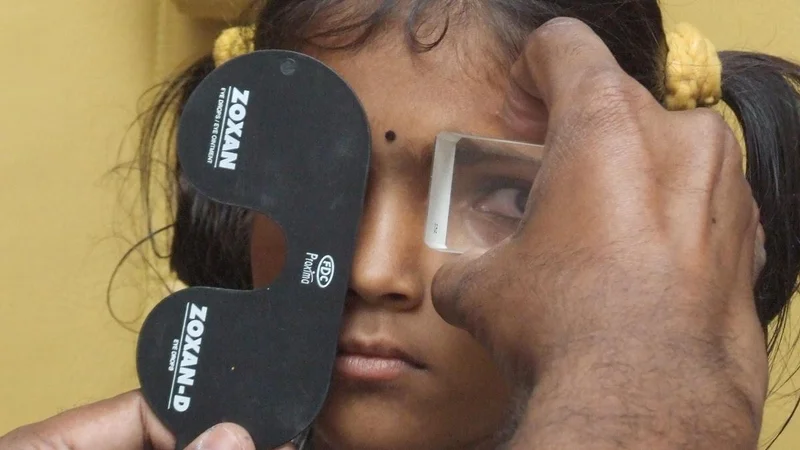
Squint, or strabismus, is a condition in which the eyes are not aligned and do not look in the same direction at the same time. One eye may turn inwards towards the nose (esotropia), outwards (exotropia), upwards or downwards, while the other eye remains focused on an object. This misalignment may be constant or may occur intermittently, such as when a person is tired.
A recent study estimated that horizontal strabismus affects 1.81% of the global population, or about 138.5 million people. Exotropia affects an estimated 1.14% (87.5 million), compared with 0.67% (60 million) for esotropia. The pattern has also shifted across generations, with exotropia now more common globally. The study found regional differences, but noted that parts of South Asia remain under-represented in research.
The World Health Organization (WHO) recognises strabismus as one of the eye conditions that can require long-term monitoring and treatment. WHO’s guidance on vision screening in preschool children notes that strabismus is one of the causes of amblyopia, or reduced vision resulting from abnormal visual development.
What are the signs and symptoms?
The most obvious sign is that the eyes appear to point in different directions. Some children may close one eye in bright light, tilt or turn their head to see, or have difficulty judging distances.
Children may not always complain about poor vision. When the eyes are misaligned, the brain can suppress the image from the affected eye to avoid double vision. If this happens during the period when vision is developing, the child can develop amblyopia, commonly called lazy eye.
Adults who develop a squint may experience double vision, blurred vision, eye strain, headaches or difficulty with depth perception. A new squint that appears suddenly in an adult should be assessed promptly because it can sometimes be associated with conditions affecting the eye muscles, nerves or brain.
Not every apparent squint is true strabismus. Some children appear to have crossed eyes because of the shape of the eyelids or the bridge of the nose. This is known as pseudostrabismus and can be distinguished from true strabismus through an eye examination.
What causes a squint?
Strabismus occurs when the systems that control eye movement and alignment do not work properly together. The problem may involve the eye muscles, the nerves that control them, or the parts of the brain that coordinate eye movements.
In many children, the exact cause is not known. Genetic factors can play a role, and children with a family history of strabismus are at higher risk.
Refractive errors can also contribute. Squint is also more common in children with certain neurological or developmental conditions. Being born prematurely or with low birth weight are recognised risk factors.
In adults, strabismus can develop due to conditions such as diabetes, thyroid eye disease, stroke, neurological disorders or trauma. Poor vision in one eye can also affect the alignment of the eyes.
How is a squint diagnosed?
An ophthalmologist usually examines how the eyes are aligned and how they move together. The assessment may include measuring visual acuity in each eye, checking for refractive errors and examining how the eyes respond when one eye is covered and uncovered.
In children, the examination is also aimed at identifying amblyopia and determining whether the child has developed binocular vision normally.
Further tests may be needed when the squint develops suddenly, is associated with double vision or is accompanied by other neurological or eye symptoms.
What are the treatment options?
Treatment depends on the type and cause of the squint, the age of the person, how frequently the eye turns and whether vision in either eye has been affected. Glasses are often the first treatment when a refractive error contributes to the misalignment. In accommodative esotropia, correcting long-sightedness can substantially reduce the inward turning of the eyes.
If a child has amblyopia, it may have to be treated as well.
Some types of strabismus may benefit from specific eye exercises, though these are not suitable for every type. Surgery may be needed when glasses and other treatments do not adequately correct the misalignment. It involves adjusting selected eye muscles to improve alignment.
Early treatment can reduce the impact of amblyopia and support binocular vision.
Early assessment, especially for persistent misalignment or squint in a young child, can identify refractive errors, amblyopia or other problems and help determine whether observation, glasses, amblyopia treatment or surgery is needed.
Published - August 22, 2026 08:58 pm IST