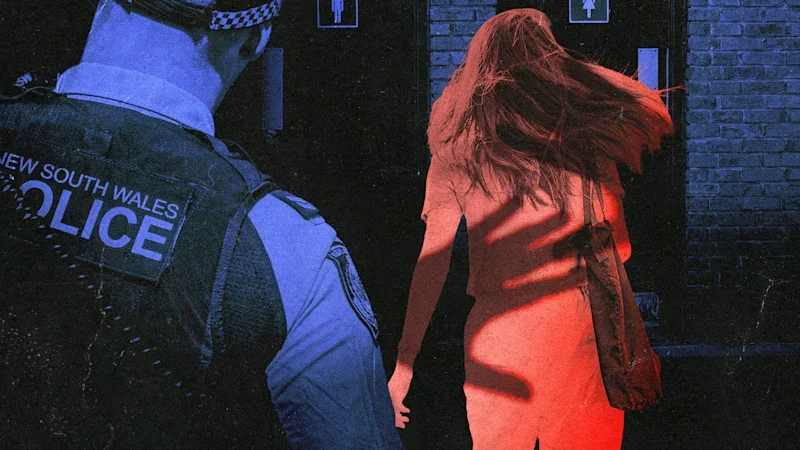
Olivia* was 22, an international student and working as a dancer at a men’s club in Sydney’s CBD when a police officer offered her a lift, drove her to a toilet block and had sex with her.
She was “uncomfortable” and stopped him several times, according to her police statement at the time, but ultimately believed the encounter was consensual.
Thirteen years later, having grappled for years with the trauma it caused, Olivia now believes she was coerced by an officer who was armed and in uniform.
“[I believe] the officer raped me as I did not have free choice in what happened and feared for my life,” she told the Herald.
In 2025 she lodged a new complaint with police. She has questions about how the incident was handled.
In September 2013, Olivia was an international student from Europe, supporting herself through erotic dancing. As she finished her shift one evening, she saw two officers in the reception area. Assuming they were on their regular patrol, Olivia told the club security guard she thought the officers were cute, according to her 2014 statement.
According to her 2014 police statement taken six months after the incident, the officers offered her a lift to Town Hall in their police car.
She chatted and flirted with the officers, according to her statement, noticing they weren’t heading in the direction of Town Hall.
“I didn’t know where we were going, and nobody had said anything,” her statement read.
The car pulled up to a park toilet block and one officer walked inside. “I think he wants you to follow him,” the second officer said, so Olivia obliged, and the pair had sexual contact in a toilet cubicle.
Though her original statement described the act as consensual, it noted she felt “uncomfortable”, found the officer “rough and insensitive”, and stopped him multiple times. Olivia said the officer also searched her bag and briefly confiscated her phone, details that were not recorded in her statement.
“I didn’t feel comfortable being in a dirty public bathroom,” her statement read, adding that she “changed her mind” during the encounter.
She said the officer told her to keep the incident secret while they waited for the second officer to bring the car around. The pair drove her towards Town Hall but forced her out early after spotting their superior’s car nearby.
A few months later, in 2014, police contacted her to take a statement after the second officer reported the incident. The incident was treated as misconduct, not sexual assault, as Olivia said the incident was consensual.
Olivia told the Herald that plain-clothes officers walked her from her accommodation to a cafe, where they asked intimate questions about the sexual contact, including details of the underwear she wore, as staff cleared tables nearby.
Two months later, officers asked her to meet a few blocks from the men’s club, after her shift, to get her signature.
Olivia called the signing of the statement inside the police car at 3.40am “humiliating” and “scary”, adding that officers warned she could face prosecution for providing false information.
Olivia said that the statement omitted details, including that the officer searched her bag in the toilet block, confiscated her phone and engaged in penetrative sex.
“I was a foreigner alone in Australia. I was scared of losing my job and visa, and felt pressure to do as the police told me,” she said.
She left her studies and returned home later that year.
When she discussed the incident with a trauma therapist in 2024 she started shaking and sweating so badly she “looked like [she’d] had a shower”.
“I no longer saw it as consensual after I realised how much it had traumatised me and how coercive and frightening the situation had been.”
Olivia said she has recurring nightmares about police and guns.
“I have been living in the past for years; I just went over and over it in my head,” she said.
In 2025, Olivia emailed NSW Police to complain about how the incident was handled and lodged a sexual assault report. She believes her statement wasn’t treated with the seriousness it deserved due to stigma towards sex workers.
Police confirmed the officer had been dismissed for neglect of duty and misuse of resources but maintained there was no evidence of misconduct by the second officer in the car.
Olivia still cannot understand the police response to the incident, including why the second officer avoided discipline and why interrogating a victim in a cafe and asking her to sign documents in a police car late at night was acceptable. She believes an officer engaging in sexual activity while on duty should automatically trigger a sexual assault investigation.
She hopes speaking out will raise awareness about consent under authority and support other survivors of police misconduct.
A spokesperson for NSW Police said in 2014, police launched an investigation after receiving an internal complaint about an officer’s misconduct.
“During the investigation no criminal offence was identified, and the officer was pursued departmentally,” the spokesperson said. The officer was dismissed in March 2015.
Police also investigated her new sexual assault report but said, despite extensive inquiries, there was insufficient evidence to proceed.
“Every report of sexual violence to police is taken seriously and police are trained to respond with sensitivity and confidentiality,” the spokesperson said.
“Anyone who believes they may have been a victim of sexual violence is urged to report the incident to police. The public is reminded that police will only ever investigate a sexual offence to the extent that the victim is comfortable.”
*Name changed for privacy reasons.
Support is available from the National Sexual Assault, Domestic Family Violence Counselling Service at 1800RESPECT (1800 737 732) or the Men’s Referral Service on 1300 766 491.