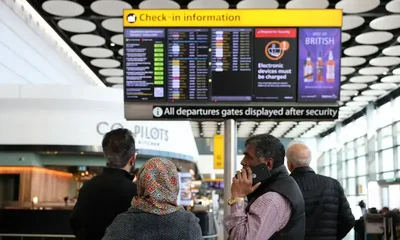
• London hub sees 10pc jump in rerouted transit passengers; Mideast routes plunge by half as Asia, Africa traffic soars• Spike in jet fuel prices triggers widespread fare, fee increases; airlines ground flights, overhaul schedules LONDON: Heathrow Airport in London saw a 10 per cent surge in transit passengers in March as a US-Iran war forced the closure of major Middle Eastern airspace, redirecting global air traffic through Europe, the airport announced on Monday. Total passenger numbers at Europe’s busiest airport climbed 6.9pc to 6.65 million last month compared with a year earlier. The spike in traffic came as airlines rerouted long-haul journeys away from the Persian Gulf following the outbreak of war on Feb 28, when Iran fired retaliatory missiles at US allies in the region after US-Israel launched war on Iran. The conflict has severely disrupted the business model of Gulf carriers like Emirates, Etihad Airways and Qatar Airways, which rely on connecting passengers through their hubs in Dubai, Abu Dhabi and Doha. While Iraq and Bahrain recently reopened their airspace amid a ceasefire, many restrictions remain in the United Arab Emirates and Qatar. “While Heathrow’s long-haul network absorbed demand in March, the outlook for the next few months remains uncertain,” Heathrow CEO Thomas Woldbye said in a statement. Despite the passenger boom, Heathrow said its growth lagged European competitors because its two runways are already at full capacity. The airport warned in February that Istanbul, with five runways, will likely overtake it as Europe’s busiest hub. The shift in global travel patterns was stark: Heathrow said routes to the Middle East plunged 51.1pc in March, while traffic to the Asia-Pacific region and Africa rose 31.1pc and 23.3pc, respectively. The rerouting through London is part of a massive, ongoing disruption to global aviation. The closure of key Middle Eastern hubs has forced carriers worldwide to suspend flights, alter schedules and cancel routes for months to come. Latvia’s airBaltic and Finland’s Finnair have canceled Dubai flights until October. Air Canada has suspended services to Tel Aviv and Dubai until September, while Lufthansa Group has halted most of its flights to the region until at least late May, with some suspensions running through October. In response, airlines are shifting capacity to meet demand on newly popular routes. IAG-owned British Airways said it would cut flights to the Middle East when services resume and add capacity to India and Africa. Hong Kong’s Cathay Pacific is operating extra flights to London and Paris, and Australia’s Qantas is adding flights to Rome to meet an upswing in demand for European travel. Beyond flight disruptions, the war has upended airline finances by causing jet fuel prices to soar from around $90 per barrel to as high as $200 in recent weeks. With fuel accounting for up to a quarter of an airline’s operating expenses, the spike is forcing carriers to pass costs onto consumers. Airlines have responded with a wave of fare hikes, new surcharges and increased fees for optional services. Air France-KLM plans to increase long-haul ticket prices by 50 euros per round trip, while Cathay Pacific hiked its fuel surcharge by 34pc. In India, major carriers like IndiGo and Akasa Air have introduced fuel surcharges on domestic and international flights. In the United States, major carriers have focused on raising fees for checked baggage. American Airlines, Delta Air Lines and United Airlines all announced they would increase checked bag fees by $10 or more. The financial pressure is also leading to capacity reductions. United is cutting unprofitable flights in preparation for oil prices remaining elevated until the end of 2027, while Scandinavian airline SAS said it would cancel 1,000 flights in April. Other measures include South Korean carrier T’way Air planning to furlough cabin crew. Some airlines, including Air New Zealand, have suspended their full-year earnings forecasts, citing the market’s volatility. For now, Heathrow said the conflict’s “knock-on impacts to global supply chains, including fuel, have not affected airport operations”, but the uncertainty for the entire aviation sector remains high. Published in Dawn, April 14th, 2026
Heathrow airport traffic surges as war diverts global flights