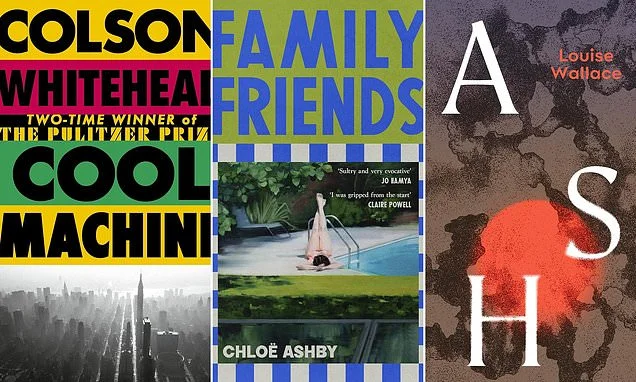
Ash is available now
Ash by Louise Wallace (Hutchinson Heinemann £14.99, 160pp)
Thea is a vet in a small New Zealand town, struggling to combine her job with looking after her two small children while her useless husband Nick drifts about pretending to be busy at work.
Then the mountain in whose shadow the family live erupts, cloaking the town in a persistent claggy film of ash.
Wallace, the author of four poetry books, draws on found texts in this structurally innovative novella. She allows snapshots of other female lives to interrupt Thea’s internal monologue as she deals with sexist work colleagues, domestic drudgery, her growing estrangement from her husband and screaming children, sometimes simultaneously.
Mainly, though, Wallace absolutely nail’s Thea’s voice – spiky, beleaguered and seething with rage. A brutal, invigorating two-hour read.
Family Friends by Chloe Ashby (Fig Tree £18.99, 320pp)
This is a good novel to take on a trip away – unless you are holidaying with family friends and two members of your party were once romantically involved.
For the past 20 years, Maggie and Will have stayed at Lydia and Roland’s French villa for a fortnight each summer. But Roland’s first wife has recently died, his daughter from that marriage is now in tow, and as Lydia struggles with the emotional disruption, long ago feelings are rekindled and buried secrets surface.
Ashby has effectively relocated the Hampstead novel to the South of France, loading it to often delicious effect with succulent descriptions of smouldering heat and sultry food.
In fact, she might have dialled up the heat still further in terms of plot, but this novel still sizzles, reminding the reader that even the most ordinary family is vulnerable to deceptions and betrayal.
Cool Machine by Colson Whitehead (Little, Brown £22, 368pp)
Whitehead tends to write two sorts of books – important Pulitzer Prize winners such as The Underground Railroad, and the crime capers that make up his 1970s-set Harlem Trilogy, which this excellent instalment brings to a close.
Yet in many respects, he is doing the same thing: writing into being America’s often forgotten history of race relations in order to document the changing face of America itself.
Cool Machine follows Ray Carney – respectable furniture salesman by day, veteran fence by night – into Reagan’s raging 1980s where a plan is afoot to reclaim Jesse Owens’ Olympic gold medal after he was forced to sell it.
The novel, a nostalgic trip through 1980s street culture, is full of juice, from the heist-driven plot to the pinballing dialogue to the indelible portrait of New York and of Carney too – surely one of the richest creations in crime fiction. Cracking.