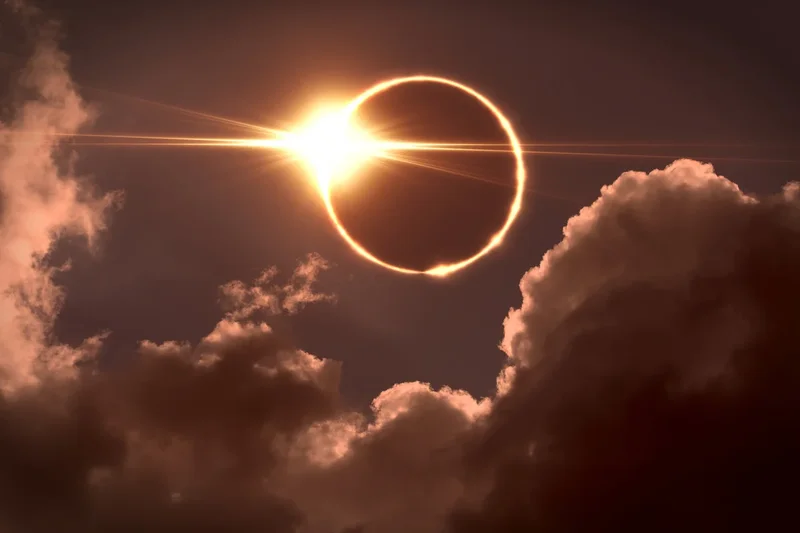
A city in New Zealand is selling out of hotel rooms, two years before the country’s first total solar eclipse since 1965.
Hotels in Dunedin have already announced that they are fully booked across the 2028 solar eclipse dates.
On 22 July 2028, a total solar eclipse will shadow southern New Zealand, with Dunedin at the centre of the line of totality.
At 4.17pm, the city will be plunged into darkness as the sun completely blocks the moon for 2 minutes and 51 seconds.
As the moon’s shadow crosses the sun, it will be one of the best destinations to witness the solar eclipse before sunset.
Dunedin Leisure Lodge’s solar eclipse package, which includes complimentary eclipse glasses, was fully booked by Thursday, 23 July.
Warren Hurley, Dunedin Astronomical Society member, said: “The path of the eclipse starts in the Indian Ocean and crosses through central Australia, just north of Alice Springs, then goes through Sydney, and then it goes through just north of Milford Sound and Queenstown, and on through Central Otago to Dunedin.”
The last time that a total solar eclipse occurred in this part of New Zealand was in 1163.
According to the Dunedin Astronomical Society, 50,000 people are expected to flood into the city to see the spectacular total solar eclipse.
A note on the Dunedin city website reads: “Occurring eight days after Matariki (Māori New Year), the eclipse creates a unique opportunity for a globally significant, culturally grounded celebration anchored in Indigenous knowledge systems and contemporary science.”
This summer, the best solar eclipse visible from the UK in almost 27 years is set to occur in our skies.
On Wednesday, 12 August, the moon will move to cover the sun in a total solar eclipse for people in Greenland, Iceland and Northern Spain.
However, viewers in the UK and Ireland won’t miss out entirely. Here, around 90 per cent of the sun will be covered by the moon in a partial solar eclipse – the most coverage since the last total solar eclipse in 1999.
Read more: Last-minute holidays to see the 2026 total solar eclipse