‘Too dangerous’: Family demands changes to fishing restrictions following deaths in Harbour Round
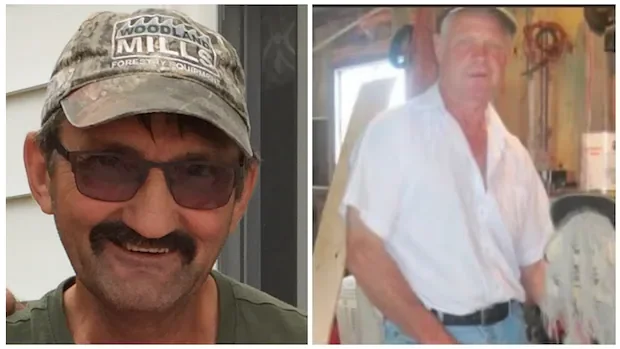
Stanley Giles and Michael Peter Seymour remembered with love
As the community of Harbour Round, N.L. mourns two fishermen who died at sea — and rallies around the survivor — family members are calling for changes to eliminate the pressure harvesters feel to fish in dangerous weather.
Stanley Giles and Michael Peter Seymour both died Tuesday, after their speedboat took on water while fishing cod commercially.
The lone survivor, Stanley’s brother, Junior Giles, says he managed to swim about 100 metres in the Atlantic Ocean before climbing up the rocks. He pulled Seymour in when he drifted to shore, and tried to perform CPR to save his friend.
Junior Giles said he waited hours on the rocks before another fishing boat found him. He then helped search for his brother’s body on the water.
The water was rough that day, he added, and said they might not have gone out if they didn't feel they had to. Their processor only buys fish on a few, select days each week — meaning if the weather’s bad, there’s still pressure to fish.
WATCH | ‘What do you do when you only got a couple of days to get your quota?’:“What do you do when you only got a couple of days to get your quota?" asked Giles’ sister, Roxanne Payne. "You take the risk, and you go."
If people were allowed to fish every day, she said, they could stay safely home when it’s too windy.
“They shouldn't have been out there,” she said.
'We gotta stay strong'
Three of Giles’ sisters and a niece spoke to CBC News on the Harbour Round wharf, remembering the men they lost.
Stanley Giles was a husband, father and grandfather who died at age 66.
His sisters described him as smart and funny and a man who’d do anything for anybody. One of 10 children, he was an excellent twine-mender and jack of all trades who fished most of his life with his brother.
“He went out there and he risked his life everyday on the water to provide for his family. But you know what, he didn't want to be anywhere else,” said his niece, Shania Payne.
“He passed doing what he loved.”
Michael Peter Seymour was described as a craftsman and jokester, full of humour, stories and generosity. The 66-year-old was also a father and grandfather.
Seymour collected beach wood to craft rocking chairs, ugly sticks and benches. He also constructed small boats.
“Always making something, always out catching something to eat,” said Roxanne Payne, whose family grew up with Seymour. “He was a very crafty and handy man.”
Evelyn Skinner says Seymour was the first man at her grocery store each morning, always coming in for his mango energy drink.
“And if you didn’t have the mango, he didn’t want no other kind,” she said, Seymour brought her a meal of fresh fish last week, and would bring in other meals and jam.
“He was really good to me.”
The family is grieving — but also trying to support their surviving brother, Junior, who was down at the wharf for much of the morning.
“We gotta stay strong for the one that survived,” said Roxanne Payne.
Boats continued to come in and out of the wharf on Thursday. Despite the grief, people still need to fish for their living.
But family and other fish harvesters want people to fish when it’s safe — not just on days the processor demands.
“Sometimes they’re going out there, it’s too dangerous. But they can’t give up everything,” said Roxanne Payne.
Local MHA Lin Paddock also came to the wharf Thursday. When asked about the calls for change, he acknowledged the need for improved safety — but said right now should be about supporting mourning families.
“I'll take that back to the Minister of Fisheries,” Paddock, the PC MHA for Baie Verte-Green Bay, said. “Hopefully we can have some discussions there for potential review and also looking at some of that federally as well.”
In an emailed statement to CBC News on Thursday, the federal Transportation Safety Board said occurrences like the one in Harbour Round do not result in investigation reports. However, information collected can be used for "possible future safety analysis."
But Roxanne Payne wants to see action now.
“One thing I'd like for to come out of this is that the government would make change,” she said.
“We have two more souls gone.”