WASHINGTON — The Commerce Department is moving ahead with plans to implement a voluntary mission authorization system for novel space activities that are not regulated by other agencies.
In a July 23 statement, the Office of Space Commerce, or OSC, said it was “taking the next step forward” on its plans to offer certification to companies proposing space activities not currently overseen by OSC, the Federal Aviation Administration or the Federal Communications Commission.
“After months of effort working with partners and stakeholders in industry, the U.S. federal government and the White House, OSC is making the next giant leap on mission authorization,” the office stated.
The office rolled out its mission authorization proposal, called Space Commerce Certification, in March. Under that voluntary scheme, companies would submit information about their proposed activities to OSC, which would then coordinate an interagency review. The system would operate under a “presumption of approval,” meaning that applications would be automatically granted in 120 days if the office took no action.
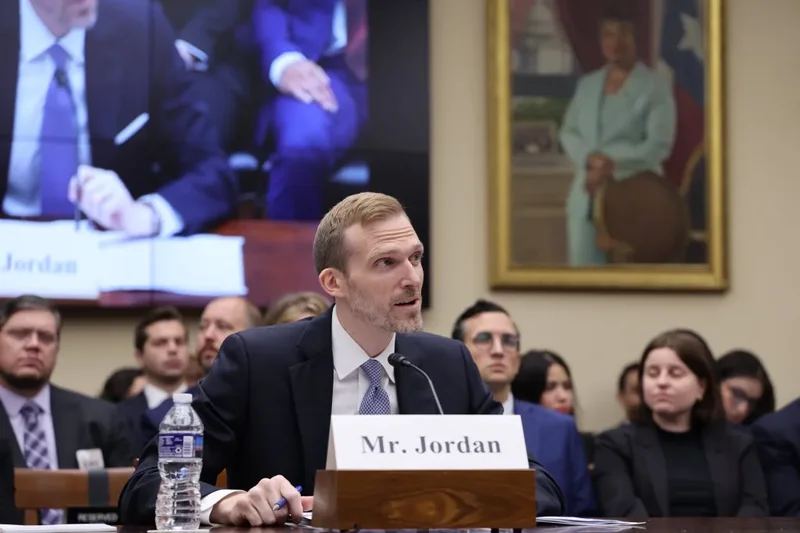
OSC did not disclose what prompted the agency to move ahead with Space Commerce Certification. However, at a July 15 hearing of the House Science Committee’s space subcommittee, Taylor Jordan, director of the office, said he was awaiting a White House decision on the proposal.
“We submitted our proposal to the White House. We anticipate and hope for our ability to move forward with that,” he said. He added that the submission meant the office “has the interagency in a good place” regarding other agencies’ support for the proposal.
“We are honored by President Trump’s trust in the Office of Space Commerce, and we look forward to building a quick path to ‘yes’ for U.S. industry,” Jordan said in the statement.
With that approval, OSC said it will soon issue a “call for interest” in the Federal Register seeking initial applications from companies interested in the certification.
At the hearing, Jordan suggested those initial companies would serve as a pilot for the certification, allowing the office to refine how the certification process will work.
The office, he said, would “tailor our application to, first, some basic questions around things like international obligations, national security, as well as basic business structure,” then go through an interagency review. “We will work with them on how we get to yes through that process. And then at the end of that, we anticipate being able to certify and authorize these missions.”
He said he had no preference on what specific kinds of novel space activities should be considered first under the new certification beyond those that would be operating in the near future. “We intend to look at mature technologies and mature missions, and really focus in on what is near to operations in space.”
While the certification system is intended to ensure the U.S. government’s compliance with the Outer Space Treaty, which requires signatories to authorize and supervise space activities by their nationals, the Space Commerce Certification will be voluntary because the office lacks statutory authority to require it.
Jordan said at the hearing that the office hopes to encourage companies to pursue certification by the promise that obtaining it could relieve them of some of the work needed for licensing by other agencies, such as the FAA’s requirement for a payload review for a launch license or an orbital debris mitigation plan for an FCC license.
“If we can provide the additional confidence and streamlined effort that industry is looking for, we are confident that they will use this voluntary system,” he said at the hearing.
The concept of mission authorization is intended to provide regulatory certainty for space activities not clearly overseen by other agencies, ranging from satellite servicing to commercial space stations. That regulatory gap was highlighted earlier this month when the FCC, in approving a satellite by Reflect Orbital designed to reflect sunlight to the ground, said that concerns about the impacts of such a satellite on the environment or on astronomy “fall outside our review and authorization.”
Some also argue that a mission authorization system would keep agencies from taking on regulatory responsibilities they are not explicitly authorized to perform under law. That has been a longstanding concern of the House Science Committee regarding FCC orbital debris mitigation requirements in its licensing processes.
In a July 21 letter to FCC Chairman Brendan Carr, the bipartisan leadership of the committee — Reps. Brian Babin, R-Texas, and Zoe Lofgren, D-Calif. — asked him to defer a vote on streamlined satellite licensing rules. They cited a letter they sent to the commission in February raising concerns about space safety provisions in the proposal “unrelated to spectrum management or the prevention of harmful radio-frequency interference.”
“The Communications Act of 1934 — enacted decades before the advent of spaceflight — contains no clear congressional authorization empowering the FCC to regulate space safety, space traffic management, or broader noncommunications space operations,” they wrote in the February letter, arguing those provisions “exceed the Commission’s statutory authority.”
FCC commissioners voted unanimously July 22 to adopt the new satellite licensing rules.