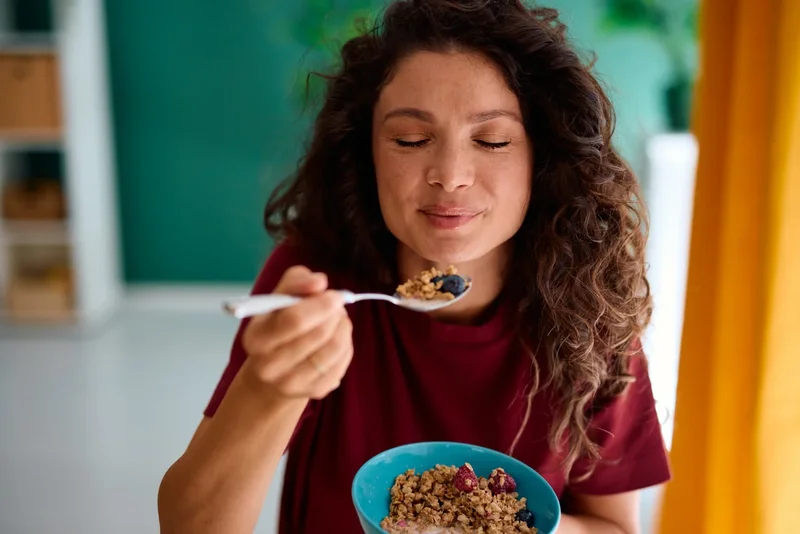
Many of us have grown up with the mantra that breakfast is the most important meal of the day.
But whether it’s snatching an extra half hour of sleep, or focusing on getting the kids out of the house, there are various reasons why assembling a healthy breakfast might slip down your list of priorities – especially on a weekday.
So, is it worse to eat unhealthy foods first thing, compared to later in the day? And what about skipping breakfast altogether?
It’s not just about calories
You probably know eating foods high in sugar, salt and saturated fats – especially when they’re highly processed – puts you at greater risk of a range of serious health conditions. These include diabetes, heart disease and some cancers.
Poor diet can also affect our gut health, mental health and reproductive health.
Eating a diet high in vegetables and fruit, lean meat and alternatives, such as chicken and lentils, wholegrains, and reduced-fat dairy and alternatives (such as plant-based yoghurt) will improve your overall health and wellbeing, and reduce the risk of serious health conditions.
For breakfast, aim to include a source of good-quality protein, wholegrains, fruit and/or vegetables and healthy fats.
This could look like: toasted wholegrain bread with avocado, a poached egg and sliced tomato. Or it might be wholegrain porridge oats, with yoghurt, seasonal fruit and some almonds.
What about when you eat unhealthy food?
Let’s look at an example. A big brekkie burger (think: bacon, hash brown, beef patty, cheese, bun, and BBQ sauce) contributes about 36% of an average adult’s daily recommended energy intake (8,700 kilojules).
You may be surprised to learn there’s more sugar in the burger (11.5 grams) than some sweet breakfast cereals (10g a serve) – largely thanks to the refined carbohydrate in the bun, and sugars in the sauce.
Eating the brekkie burger will make your blood sugar levels spike.
If you’re generally in good health, your body will respond by producing the hormone insulin. This moves the sugar out of the blood and into muscles, fat, and liver cells for energy production. Blood sugar will then return to a normal level.
But if your body is regularly exposed to high blood sugar levels, you can develop insulin resistance. This means your body pumps a lot of insulin to get the blood sugar into your cells, but the cells stop responding, and your blood sugar levels remain high.
This can lead to worse health, including type 2 diabetes.
Does when you eat matter?
The short answer is: yes.
Your body has a 24-hour circadian rhythm that regulates when you feel alert or tired (your sleep-wake cycle). Disruptions such as jet lag or shift work can affect this cycle and, if sustained long-term, can affect your health.
Eating late at night can disrupt the sleep-wake cycle, by signalling to your body it’s time to digest not sleep. This triggers insulin spikes, and delays the release of melatonin, the “sleep hormone”.
This is why it’s recommended to eat in time with your body’s natural sleep-wake cycle: eating most of your food early in the day – when your body can process it most efficiently – and reducing how much you eat across the day.
So it may be better to eat more of your calories early at breakfast. But it’s important to get this energy from high-quality protein – such as eggs, beans, nuts or fish – and wholegrains, such as high-fibre bread.
Refined sugars, salt and saturated fat are high in calories but low in nutrition.
But protein is digested slowly, and will help you feel full for longer and stop you craving unhealthy snacks later in the day.
When lunch rolls around, you may be less tempted to eat a large meal. While a big lunch won’t disrupt your sleep-wake cycle, it can still make you feel sluggish while you wait for your body to digest it.
What about skipping breakfast?
Some intermittent fasting regimes – which involve scheduled periods of eating and fasting – involve skipping breakfast altogether or limiting the time you eat to a small window. For example, some people may not eat their first meal until after 11am.
Advocates say these diets have a range of health benefits, including weight loss, blood sugar control, heart and brain health, and cellular repair. However, the evidence for these remains mixed.
It’s also important to consult with your health-care professional, as it’s not recommended for some people, including pregnant women, children or those on certain medications.
The takeaway
You need high-quality nourishment for your body to work properly and feel good.
In the morning, your body can process food more efficiently than later in the day. But if breakfast is high in refined carbohydrates, sugars and fat, you’re more likely to experience a blood sugar spike and feel hungry sooner. And it’s not recommended to skip breakfast.
If time is an issue, consider portable foods that are nutritious, and high in good-quality fibre and protein, such as yoghurt, a banana and a jar of muesli you can mix together at the office.