Mangroves Are Key to Coastal Ecosystems. See 20 Breathtaking Photos That Reveal How the Trees Support Wildlife and Face Threats
The Mangrove Photography Awards honor images that show off the beauty—and the fragility—of these valuable intertidal forests
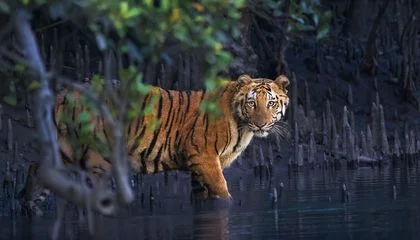
In the Sundarbans, the world's largest mangrove forest, a juvenile Bengal tiger steps from the shadows of mangroves into a tidal creek. This photo was highly commended in the mammals category.
Avijit Ghorai / Mangrove Photography Awards
Mangroves Are Key to Coastal Ecosystems. See 20 Breathtaking Photos That Reveal How the Trees Support Wildlife and Face Threats
The Mangrove Photography Awards honor images that show off the beauty—and the fragility—of these valuable intertidal forests
“They play a far more important role in our lives than you may think,” filmmaker Leo Thom says in a statement. With such a limited range, mangroves are out of reach to many people. But photography can bring them up close.
In 2015, Thom founded the Mangrove Photography Awards, a contest that celebrates mangrove ecosystems. The annual competition highlights the trees’ beauty, their importance to both animals and people and their vulnerability in a changing world. It’s run by the Mangrove Action Project, a nonprofit dedicated to the conservation, management and restoration of mangroves through partnerships with local communities.
The contest announced the winners of its 12th annual competition today, which rose to the top from a pool of 5,258 entries from 87 countries.
This year’s winning photograph tells a story of a largely hidden but virulent threat to mangrove forests and ocean ecosystems: lost and abandoned fishing equipment, known as “ghost gear.”
Photographer Gaurav Patil of India had noticed ghost nets ensnaring the roots of mangroves for several years. “I wanted to document it in an artistic manner to grab the attention of the viewers,” Patil says in a statement.
In the 13-second exposure, taken at Nandgaon village in Maharashtra, south of Mumbai, a fishing net tangled around a mangrove glows purple under ultraviolet light.
Between 500,000 and one million tons of fishing gear are estimated to be entering the oceans each year. These nets, traps and lines can entangle animals, choke coral reefs, break down into microplastics and damage mangrove ecosystems.
“Ghost nets are a real problem,” contest judge Dhritiman Mukherjee says in the statement. “This photographer has put life into a subject that normally looks dull but is deeply important for conservation.”
Raising awareness about existential threats to mangroves is one of the goals of the contest. Other winners and commended photos from this year feature negative human impacts on mangroves, including illegal harvesting and plastic waste. The winning series of images from the portfolio category, taken by Nicolò Brugnara, documents the toll of constructing a coastal road in Mumbai. The images show a mangrove forest being cleared with fire, the loss for the Indigenous Koli community and a protest against the road’s development.
The winners also show how humans live comfortably alongside these forests, from fishing sustainably to planting new trees. One highly commended image by photographer Mark Kevin Badayos of the Philippines captures children climbing and leaping from mangroves, smiles on their faces.
“Photography has the ability to help us receive and feel close to … stories, no matter our language,” contest judge Morgan Heim says in the statement. “And conservation is a story—a complicated one.”
The full list of winners can be seen on the Mangrove Action Project’s website. Here’s our selection of some of the shots that capture the beauty and biodiversity of these ecosystems.