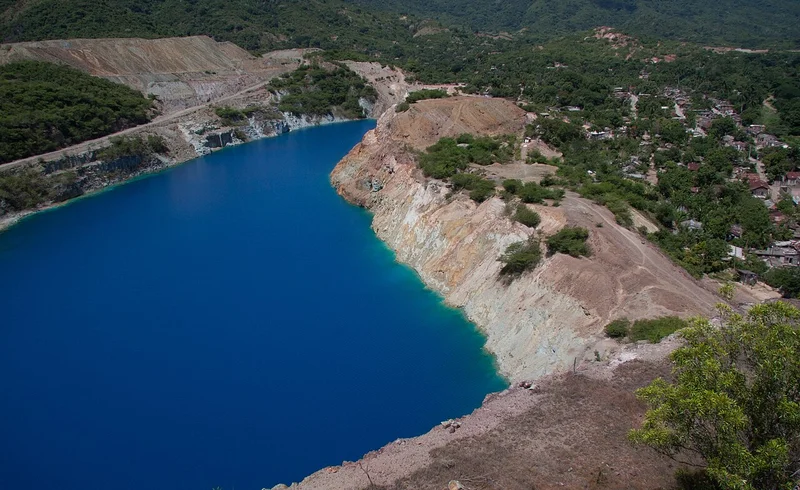
Panama Plans State-Owned Miner to Reopen Cobre Panama Copper Mine
Resource Nationalism & Investment Strategy
Panama is weighing the creation of a state-owned mining company to partner with Canada’s First Quantum Minerals and reopen the Cobre Panama mine, one of the world’s largest open-pit copper operations, with a decision expected before the end of 2026.
Why Panama Needs a New Model for the Cobre Panama Mine
The Cobre Panama mine has been idle since November 2023, when Panama’s Supreme Court unanimously ruled its concession law unconstitutional. Massive street protests had already forced the government to halt operations at the US$10 billion project.
That ruling left the mine with no valid operating contract. An indefinite moratorium on new mining concessions followed, making a conventional contract renewal legally and politically impossible.
President José Raúl Mulino has since insisted that “the mine belongs to Panama” and that any future operation must be a Panamanian operation with an outside partner handling only technical aspects. A state-owned entity holding the concession directly answers that sovereignty demand.
Two Models on the Table for the Cobre Panama Mine
Commerce and Industry Minister Julio Molto has outlined two main options under active consideration. Both aim to satisfy the Supreme Court ruling while bringing the Cobre Panama mine back into production.
The first is a joint-ownership public-private partnership. A newly created Panamanian state mining company would hold the concession, then partner with First Quantum under a PPP framework allowed by Panamanian law.
First Quantum would take a 60–65% stake and Panama 35–40%.
The second is a lease-plus-royalty model. Panama would retain full concession control and rent the operation to First Quantum, collecting royalty payments and tax revenue on mining income.
The Canadian firm would operate the mine but not own the underlying concession.
The Economic Stakes Behind Reopening
Cobre Panama is not just any mine. Before its shutdown it accounted for roughly 5% of Panama’s GDP and 75% of its goods exports, making it a cornerstone of the national economy.
Business leaders see reopening as critical to lifting Panama’s growth from around 4% to potentially 6% by 2027. Finance Minister Felipe Chapman has stated that any agreement must explicitly confirm that land and mineral resources belong to the Republic of Panama.
The economic pressure encourages a model where the state shares in ownership and decision-making, not just in royalties. For investors, the structure matters: a clear sovereign ownership framework could stabilise the legal risk that has hung over the project since 2023.
Legal Hurdles and the Association Route
Panama’s mining moratorium blocks new conventional concessions, but legal experts say the law is ambiguous on concessions granted to state-owned entities. Panamanian law does allow state entities to be created for PPPs, offering a potential legal route.
President Mulino has publicly floated reopening the mine “without a contract,” using an association framework to bypass the National Assembly. He has characterised the legislature as unwilling to approve a new mining contract, making the state-owned miner plus PPP structure politically expedient.
First Quantum has already met one key condition: it suspended its international arbitration case against Panama, which Mulino had set as a prerequisite for any reopening talks. Formal negotiations are expected to begin late this year or early 2027.
Public Opinion and the Environmental Audit
More than 60% of Panamanians oppose reactivating the mine, according to a recent national poll. The 2023 protests that forced the shutdown remain fresh in public memory, and civil society groups are strongly opposed to any reopening.
A state-owned structure is seen by some policymakers as a way to reinforce sovereignty, improve transparency, and redesign benefit-sharing terms to respond to those concerns. An independent environmental audit by SGS Panama gave the mine an overall compliance score of roughly 88%, while flagging deficiencies in biodiversity and ecological restoration.
Scotiabank described the audit outcome as favourable and suggested it could support a presidential recommendation to restart operations with First Quantum continuing as operator under new fiscal conditions. The audit has removed one major obstacle to a negotiated reopening.
What the Cobre Panama Mine Means for Investors
The ownership picture is already shifting. China’s Jiangxi Copper, a state-owned company, became the largest shareholder in First Quantum in 2023 by increasing its stake, adding geopolitical dimensions to how Panama restructures control.
In April 2026, the government approved processing and export of ore stockpiled before the suspension, explicitly stating this does not constitute a reopening. First Quantum estimates stockpile processing will start about three months after approval and last roughly one year.
For investors and expats watching Latin American resource plays, the Cobre Panama mine saga illustrates a broader regional trend: governments seeking greater direct stakes in strategic assets while still needing private operational expertise. The final model Panama chooses will signal how far resource nationalism is reshaping mining investment across the region.
Frequently Asked Questions
Why did the Cobre Panama mine shut down in 2023?
Panama’s Supreme Court unanimously ruled the mine’s concession law unconstitutional in November 2023, following massive street protests against the operation. The ruling left the mine with no valid operating contract, and the government subsequently enacted an indefinite moratorium on new mining concessions.
What stake would Panama hold in the reopened mine?
Under the joint-ownership proposal, a new state-owned mining company would hold the concession and partner with First Quantum, with Panama taking a 35–40% stake and First Quantum holding 60–65%. Under the alternative lease model, Panama would retain full concession control and collect royalties and taxes.
When will a final decision on reopening be made?
Commerce and Industry Minister Julio Molto has said the government expects to decide among the options by the end of 2026. Formal talks with First Quantum are expected to begin late this year or early 2027, following the completion of environmental and legal reviews.
LatAm Markets: Live Signals → — real-time movers, turnover leaders and FX across Latin America.