Clubbing to religious music? IRO Youth Wing members answer questions youth want to know about religion
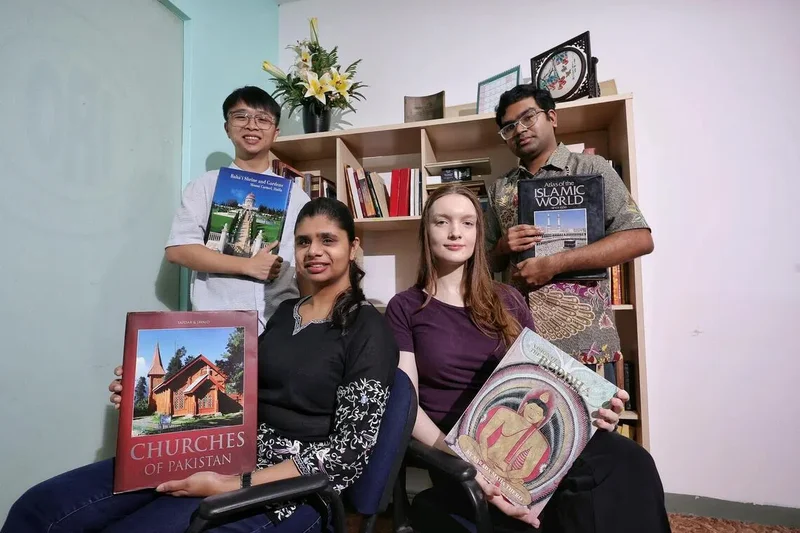
The TL;DR: This Racial Harmony Day, which is marked annually on July 21, TLDR sat down with four members of the Inter-Religious Organisation’s Youth Wing to ask them hard-hitting questions about clubbing in temples, inter-religious relationships and the work they do as young advocates championing inter-religious harmony in Singapore.
Dillon Loh
AI generated
SINGAPORE - Growing up as a practitioner of Zoroastrianism – an ancient religion from Persia that is the smallest of Singapore’s 10 officially recognised religions, Parinaz Bavaadam has grown up attending events organised by Singapore’s Inter-Religious Organisation (IRO).
“We only have 300 members in Singapore so our community has always worked closely with the IRO to educate the public about our religion,” said the 26-year-old, who works in wealth management.
In June 2021, Parinaz joined the IRO and its youth wing in order to share her religion with others.
“It was personally important for me to do my part to keep my religion alive and make it more accessible for people in Singapore.”
Since it was refreshed in 2019 for the IRO’s 70th anniversary, the IRO Youth Wing has sought to ensure that Singapore’s tradition of religious harmony continues to be carried forward by younger generations.
Comprising 214 members, the youth circle organises and participates in activities such as youth interfaith dialogues, including one that featured the late Pope Francis during his visit to Singapore in 2024, and visits to places of worship for its members and the public.
Youth members also support events such as Harmony Fest! and the IRO’s annual carnival to educate members of the public about interreligious harmony and the various religious communities in Singapore.
Shukul Raaj Kumar, chief coordinator of the IRO Youth Wing, said: “Ultimately, the Youth Wing seeks to nurture young people who are able to build bridges across communities, foster mutual understanding and contribute actively to Singapore’s social cohesion.”
This Racial Harmony Day, TLDR sat down with four IRO Youth Wing members to ask them some hard-hitting questions about youth, religion and the work they do as young advocates championing inter-religious harmony in Singapore.
Q: With religiosity on the decline in Singapore and around the world, some religious groups have employed novel methods, such as clubbing events and blind boxes, to attract young practitioners. How do you feel about such initiatives?
Nath Soham, 26, Hindu, third-year undergraduate in business analytics at Singapore University of Social Sciences:
“I think it’s about striking the right balance between the modern and the traditional. It’s important that these initiatives or events don’t dilute the essence of religious practices.
“In Singapore, some places ave been organising Bhajan clubbing events, which mix traditional devotional music with a clubbing-style experience. It’s a unique idea, but I think a line would be crossed if the atmosphere or behaviour at such events were to contradict the values associated with the devotional practice.
“These events, which are meant to attract a wider audience, also aren’t going to be for everyone. As a Hindu myself, I would never go to this kind of event because I associate Bhajan music with peace and calmness. Turning that music into something loud and vibrant, I think there may be people in Singapore who won’t be comfortable with (that approach).”
Q: Young people in interracial relationships often encounter issues in terms of religious differences, such as families that oppose dating outside of one’s religion or expectations that one party must change or adopt their partner’s religion. What advice do you have for young people navigating such relationships?
Maya Bessarab, 19, free thinker, incoming business undergraduate at Nanyang Technological University:
“I think most importantly, know exactly where you stand in regard to the boundaries you have concerning faith.
“Know what you can adapt to and what your hard boundaries are, and communicate your expectations early. It may be difficult, but it’s better to have those conversations sooner rather than later. If, for example, you are non-religious and don’t want to raise your children religiously, but your religious partner wants to raise them in their faith, it may be healthier to reconsider whether you are compatible in the long term.
“Also, be realistic about the future you’re planning with your partner. I’m a free thinker and my partner is Hindu, so I have no qualms about having two weddings – a traditional Hindu wedding and a Western-style wedding – if I get married in the future.
“Inter-religious relationships are one meaningful expression of religious harmony - it’s two people following their own beliefs while finding common ground. It can seem contradictory for a society that values religious harmony if interfaith relationships continue to face social resistance on an individual level.”
Q: Part of your work as IRO Youth Wing members includes outreach about religions and religious harmony to members of the public at events. What is the most difficult experience you have faced in your time doing so?
Taro Toh Yu Hao, 22, Taoist, Ngee Ann Polytechnic graduate currently awaiting National Service:
“The most difficult conversations we’ve had are those with people who have misconceptions about an entire religious group because of certain negative experiences they’ve had with a small number of people from that group in the past.
“For example, some members of the public perceive members of the Christian community as being very aggressive in their evangelism because of negative experiences they may have had with particular groups in the past.
“Trying to explain that this is a misconception, and that those experiences are not representative of Christians in Singapore at large, is very difficult because it challenges perceptions that have become deeply ingrained.
“When those situations grow heated, we’re taught to disengage and step away. Our purpose is to educate, not to debate.
“At the same time, where appropriate, we encourage such individuals to join our interfaith activities. It is often through meeting people from different faith communities, hearing their stories and interacting with them as individuals that perceptions begin to shift.”