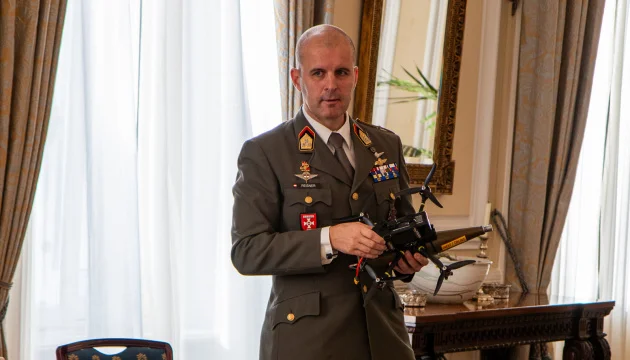
This view was expressed in an interview with Ukrinform by Colonel Markus Reisner of the Austrian Armed Forces, head of the Officer Training Institute at the Theresian Military Academy.
“Regarding the extent of the damage, I will cite a figure from the Ukrainian General Staff, which, in my opinion, is plausible. According to these data, between 43 and 45 percent of Russian oil refineries have been destroyed or damaged. This is a massive scale. Footage from social media also shows that Ukraine’s ‘long-range sanctions’—as the Ukrainians themselves call these strikes—are indeed yielding results,” Reisner said.
He emphasized the need to distinguish between strikes on facilities related to crude oil exports and damage to gasoline and diesel fuel production capacity.
“Crude oil continues to allow Russia to sell it on global markets. This is facilitated, among other things, by the crisis surrounding Iran, which has led to rising oil prices. Although Ukraine has focused on loading and unloading ports, such as Ust-Luga, and inflicted serious damage there, Russia is still able to export oil. “As long as this money flows into the Russian treasury, it remains available for the war economy,” the expert noted.
According to him, shortages of gasoline and diesel fuel are already being felt in everyday life in Russia, but have not yet sparked a widespread protest movement.
“Therefore, in my opinion, the decisive lever is not so much pressure on fuel supplies to the population as pressure on the flow of resources and money to the war economy. To achieve this, first and foremost, we need to restrict the activities of the shadow fleet and block exports, particularly of crude oil,” Reisner said.
He noted that Russia is attempting to revive old, decentralized production sites, which provides Ukrainian forces with more targets and forces Russian air defenses to protect a greater number of facilities.
Read also:Ukraine aims to isolate Crimea and create “logistical nightmare” for Russia —
Austrian expert
Reisner also linked the effectiveness of Ukrainian strikes to the use of intelligence and artificial intelligence technologies.
“Another important factor is the impact of U.S. intelligence and artificial intelligence, specifically Palantir’s MAVEN. This allows Ukraine to use its limited resources in a highly targeted manner, selecting new attack corridors and new targets. This is precisely what makes the success we are currently witnessing possible,” he emphasized.
As reported by Ukrinform, President Volodymyr Zelensky previously stated that Ukraine’s plan for “long-range sanctions” is being implemented quite steadily.
Photo: UK in Austria