- Hidden Creatures Dino Martins (William Collins £22, 336pp)
Of all the creepy crawlies that Dino Martins describes in this thrilling book, the most gruesome has to be the eye worm. The Kenyan biologist explains how this hideous critter lives in the eye socket of horses, sheep and, yes, cats and dogs.
Entomologist, Dino Martins
The female lays eggs which duly hatch, whereupon the larvae swim out into the tears. Flies that are attracted to this ‘weeping of worms’ lap up the larvae, which then burrow into their host’s sexual organs before slowly making their way up to its head.
When the fly touches down on another animal’s eye for a drink, the larvae burst out, burrow down, and the whole gruesome cycle starts over.
You certainly need a strong stomach to get through Hidden Creatures. But you also need a capacity for wonder. Dr Martins shares with David Attenborough the capacity to push beyond the scientific data to reveal the harmonious complexity of the natural world.
At first Martins’ description of coming across the rotting carcass of an elephant seems gross and deeply sad.
But in lyrical prose he shows us how the ‘boiling cauldron of maggot stew’ is performing an important piece of biological housekeeping. The maggots serve as ‘decomposers and recyclers’, ensuring that all the nutrients and goodness gathered by the huge beast in its lifetime will not go to waste.
Within minutes, mongooses, civet cats, leopards and even insects start to feast on the maggots, taking advantage of these handy parcels of protein (you could think of it as the creaturely equivalent of opting for a ready meal).
Indeed, maggots turn out to be so helpful that doctors in the US are now using them in the treatment of seriously ill patients. The therapy involves placing the sterilised larvae of the greenbottle fly on to infected flesh. The maggots effectively remove dying tissue and, in the process, prevent gangrene from setting in.
Always the optimist, Martins shares how secretions of the maggots may even offer the possibility of new drugs, including some to help fight antibiotic-resistant strains of bacteria.
Just when you’re starting to feel positive about parasites, Martins reminds us of their darker side. Mosquitoes, which carry the malaria parasite, are responsible for more than half a million deaths each year.
At one point Martins even contracts the disease himself and ends up in a Nairobi hospital. True to form, the moment he starts to feel better, he insists on visiting the hospital lab to peer at his infected blood.
Imagine the surge of perverse pride when he sees that he has been infected with Plasmodium falciparum, the deadliest of all the malaria parasites.
Hidden Creatures is a fabulous piece of popular science writing. While there’s no denying the cruelty revealed – forget about dog eat dog, in this world parasites eat parasites – it is the sense of enchantment that keeps the reader hooked.
Dino Martins’ great skill is to use his lyrical style – rain clouds over the Serengeti are ‘purple, blue-black water wagons’ – to point out the perverse beauty of nature’s darker side.
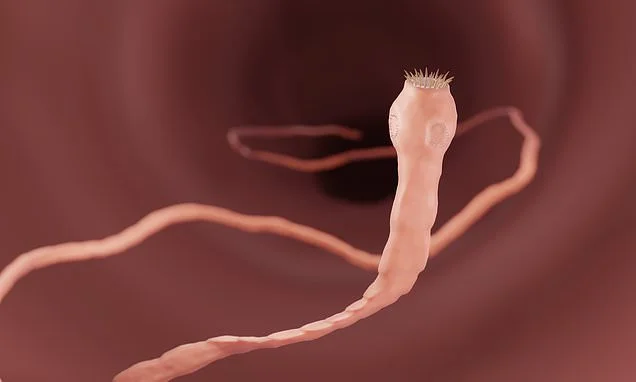
By the end, I promise, you will be able to look at leeches, maggots and even tapeworms with something approaching awe.