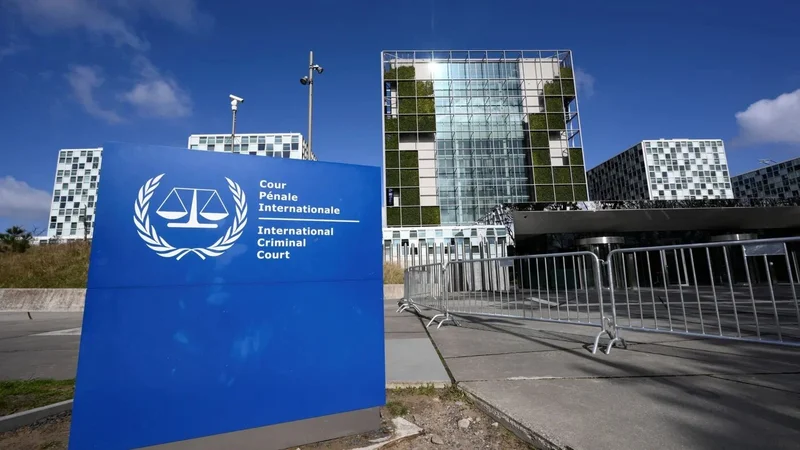
US says 'it is time to dismantle' ICC after Venezuela announces withdrawal
The US has welcomed a decision by the new Venezuelan government to withdraw the country from the International Criminal Court (ICC).
In a post on X, the US State Department hailed the move as marking a "partnership on American-led efforts to dismantle the corrupt and worthless ICC".
It pointed to an investigation by the court into former Venezuelan president Nicolas Maduro, who was abducted from the South American country during a US military assault in January 2026, saying it had produced "no result".
"The ICC has instead wasted its resources on investigating and charging persons from countries that have competent, independent judicial systems and which never submitted to the jurisdiction of the court," the statement read.
"This is blatant overreach, political bias and selective enforcement," it said, adding that the court is "neither credible, independent, nor legitimate".
"It is time to dismantle the ICC," it said, calling for all its members to "withdraw from the Rome Statute".
The development comes after ICC member states voted on Friday to remove chief prosecutor Karim Khan over misconduct claims.
On Friday, Venezuelan Foreign Minister Felix Plasencia announced that the government had informed the UN of its "irrevocable" decision to quit the court, citing the body's "geographical bias" against countries in the global south.
The move signals a greater alignment by Venezuela with US policies, a week after US Secretary of State Marco Rubio vowed “a whole-of-government response to systematically disable” the tribunal.
The Trump administration has repeatedly sought to undermine the international court, levelling sanctions against prosecutors involved in investigating the actions of US and Israeli militaries.
In an executive order signed last year, Trump wrote that the ICC "has engaged in illegitimate and baseless actions targeting America and our close ally Israel", citing the arrest warrants issued in November for Netanyahu and his then defence minister, Yoav Gallant.