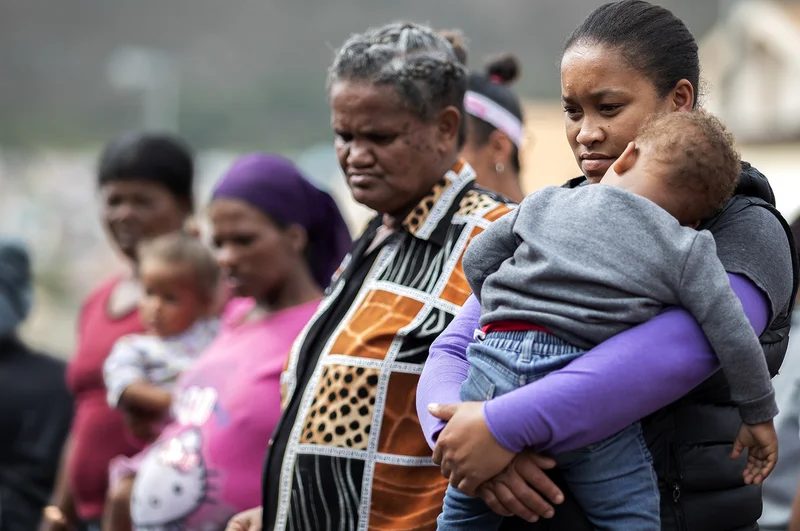
Every year, approximately 260,000 women die during or following pregnancy and childbirth. Nearly five million children never reach their fifth birthday. Millions of adolescents lack access to health services that could transform their lives. These are the predictable consequences of political and fiscal choices. And right now, those choices are moving in the wrong direction.
Global health financing is in crisis. Official development assistance is projected to fall by a further 5.8% in 2026 alone, according to the Organisation for Economic Co-operation and Development (OECD), following a 23.1% drop, the largest ever, in 2025. For health, the OECD projects a 19â33% fall.
These cuts have hit low-income and fragile country health systems particularly hard, given their reliance on external aid. Total global health investment could drop by up to 40%, a loss of roughly $10-billion. The services cut first are those already chronically underfunded: maternal care, newborn health, sexual and reproductive health, and adolescent services.
Why this matters beyond health
Financing for maternal and child health is not only a humanitarian appeal. It is one of the highest-return investments any government can make.
Healthy women are productive workers and caregivers; adolescents who survive and thrive become tomorrowâs workforce. When girls can access contraception and stay in school, fertility rates fall and economies grow. When mothers and newborns survive, families are spared the cascading costs of preventable death.
Finance ministries rarely treat womenâs, childrenâs and adolescentsâ health (WCAH) as core economic policy. They should: fiscal choices on taxation, debt and budget allocation determine whether a rural midwife has supplies, or a girl can access contraception without catastrophic cost to her family.
A broken financing system
The current financing landscape for WCAH is fragmented, underfunded, and increasingly at risk. In many low-income and fragile settings, progress achieved over decades is now stalling. Since 2015, rates of maternal and neonatal mortality, preterm birth complications, and adolescent pregnancy have barely shifted. In humanitarian settings, which now account for 61% of all maternal deaths globally, the situation is deteriorating.
Several structural failures are driving this. First, health budgets overall remain too small and too poorly protected. Debt servicing is crowding out social spending in dozens of countries. Inflation erodes the real value of health allocations. Budget execution is weak, meaning even allocated funds often fail to reach frontline services.
Second, external financing, while critical in low-income contexts, has historically been fragmented and donor-driven, creating programmatic dependencies that undermine sustainability. As that external funding now contracts sharply, the systems built around it are exposed.
The pattern is visible across many donors. The Global Fundâs eighth replenishment closed 37% short of its target, forcing reduced country allocations that will affect maternal health alongside HIV, tuberculosis and malaria programming.
Domestic responses have varied. Nigeria added $200-million to its health budget within a month of losing US support, while a review of 18 sub-Saharan African countriesâ 2025 budgets found most made no comparable move, absorbing the loss through reduced services instead.
New bilateral arrangements are adding further strain: under the America First Global Health Strategy, dozens of countries have signed cofinancing agreements that require new domestic health spending precisely as fiscal space is shrinking, with frontline workers and commodities, the areas where maternal, newborn, and child health services are most exposed, named as shared obligations.
Third, WCAH is routinely deprioritised when budgets tighten because they lack visible, organised, politically connected constituencies at the tables where financing decisions are made. The consequences of this de-prioritisation need to be made explicit and exposed to public debate around how budgets are allocated.
What needs to change
The recently launched Partnership for Maternal, Newborn and Child Health financing campaign calls for action on two connected fronts.
Domestically, countries must raise and deploy more resources for health, with stronger budget advocacy, expenditure tracking, health taxes, and explicit protection of WCAH within national benefit packages and insurance schemes.
Globally, donors and multilateral institutions must hold their commitments and ensure just transitions; domestic financing cannot fill the gap alone yet. Debt relief should be advanced where debt servicing is crowding out health spending, and the Global Fund, Gavi and World Bank must protect WCAH within broader health investments.
For Africa specifically, the African Union has a critical role to play. The AUâs own frameworks, Agenda 2063, the Abuja Declaration, and Carmma Plus, enshrine commitments to maternal and child health and sexual and reproductive health and rights. Regional platforms can amplify country voices, enable peer learning, and build the collective political pressure that no single country can generate alone.
In a promising sign that these commitments are being translated into action, the 8th Session of the AU Specialized Technical Committee on Finance adopted a Ministerial Declaration in October 2025 calling on member states to increase budget allocations to health toward the 15% Abuja Declaration target and to prioritise primary health care â commitments that must now be matched by verifiable spending on WCAH. The declaration also requested the African Union Commission to monitor member statesâ progress in this area, through the African Domestic Health Financing Scorecard.
The push for health sovereignty that Africa is rightly championing must explicitly include WCAH, or the most vulnerable will be left behind. Self-reliance needs to mean additional public budget allocations, not just rhetoric. Yet analysis of 2025 budget data finds limited new domestic revenue raised to offset aid cuts in most sub-Saharan African countries. There are encouraging exceptions: in May 2026, eight countries pledged more than $175-million in domestic investment for womenâs health supplies at the World Health Assembly, showing what accountability in action can look like.
A question of political choices
There is an uncomfortable truth at the centre of this debate. The services that save womenâs lives and protect childrenâs health â antenatal care, skilled birth attendance, postnatal care, family planning, emergency obstetric care, adolescent-responsive services â are not adequately financed anywhere simply by accident. They reflect persistent choices about how health is prioritised, whose needs are addressed first, and which rights are upheld in practice.
When global health reformers talk about efficiency, coherence and sustainability, those are important goals. But efficiency achieved by cutting the services that protect women in childbirth or girls seeking contraception is not progress. It is a different kind of failure.
The global health community must not allow that failure to proceed in silence. Financing for womenâs, childrenâs and adolescentsâ health must be named, protected, measured and fought for; at every budget cycle, in every ministry of finance, and at every table where the global health architecture is being reshaped. That means demanding accountability â using expenditure data, budget analysis and public debate to highlight when commitments made in ministerial declarations are not reflected in actual allocations.
The question before governments and donors is simple: will you make the choices that save the lives and protect the health of women and children? The answer, ultimately, will be written in budgets. DM
Rajat Khosla is the executive director of the Partnership for Maternal, Newborn and Child Health (PMNCH); Dr Kalipso Chalkidou is the director of performance for financing and delivery at the World Health Organization; and Dr Patrick Ndzana Olomo is the acting director of economic development, integration and trade at the African Union Commission.