Sign in. It’s quick, free and it’s up to you.
An account is an optional way to support the work we do. Find out more.
THE SECOND WORLD War D-Day landing beaches in northern France and Mount Olympus in Greece are among the sites added to the United Nation’s committee meeting in South Korea, which reviewed dozens of nominations.
The Unesco committee, which is meeting in Busan until Wednesday, also added the ancient Japanese capitals of Asuka and Fujiwara, along with Boma-Badingilo Migratory Landscape in South Sudan, which is host of one of the world’s largest land mammal migrations.
The French designation covers the five Normandy landing beaches, Omaha, Utah, Sword, Gold and Juno, where more than 150,000 Allied troops went ashore on 6 June 1944, and the Pointe du Hoc assault site, all central to the campaign to liberate Western Europe from Nazi occupation.
The international council on monuments and sites, which evaluates submissions to the heritage committee, said the sites contain extensive remnants from German fortifications and bomb-scarred landscapes to Allied harbour structures and sunken vessels.
It said that the beaches mark an “event widely perceived as having enabled the return of freedom and heralded a lasting peace on the European continent”.
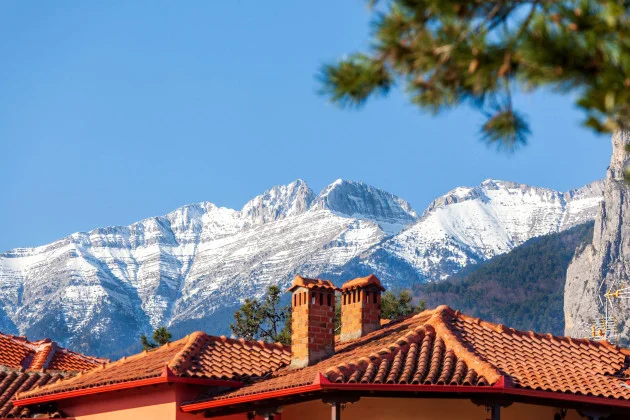
The World Heritage inscription of Mount Olympus, the mythical home of the 12 Olympian gods, rewarded a 12-year effort by Greece to secure recognition for its tallest mountain as a mixed cultural and natural heritage site.
Rising 9,573ft from a base near sea level, the mountain was believed to be the throne of Zeus, king of the gods, while also harbouring rich biodiversity.
Evangelos Geroliolios, mayor of Dion-Olympus, a municipality at the foot of the mountain, said in a recent interview with The Associated Press that inclusion on the World Heritage List “places greater obligations on our part to protect this environment”, citing the potential impact of increased tourism.
“We reaffirm our unwavering commitment to safeguarding Mount Olympus for the benefit of present and future generations,” said Georgios Koumoutsakos, Greece’s delegate to Unesco.
“As Greek mythology wisely reminds us, it is always best to remain on good terms with gods.”
The designated Japanese locations in the western prefecture of Nara cover 19 archaeological sites from the 6th to 8th-century capitals of Asuka and Fujiwara, where Japan established its first centralised state modelled after Chinese systems.
The sites preserve the largely buried remains of royal palaces, government offices, Buddhist temples and tombs from capitals that influenced the later capitals of Nara and Kyoto.
Japanese culture minister Kobayashi Shigeki thanked the committee for inscribing the Asuka-Fujiwara sites and said Japan reaffirms its commitment to “transmitting this valuable property to the future generations”.
Japanese Prime Minister Sanae Takaichi, who is from Nara, wrote on X that she hoped the World Heritage designation would boost tourism there.
South Sudan’s Boma-Badingilo site encompasses vast wetlands, flood plains and savannas shaped by seasonal rainfall and flood dynamics, with an estimated six million white-eared kob, tiang and Mongalla gazelles moving across the landscape in response to changing environmental conditions.
It also provides habitat for elephants, lions, cheetahs and other wildlife while supporting various ethnic communities that have lived by herding, farming and fishing for centuries, according to Unesco.
It is the country’s first addition to the world heritage list.
To embed this post, copy the code below on your site