“Ageing is often presented as an accumulation of disease, of discomforts, of wrinkles, but it is really a process of dispossession, of rights, of respect, of desire, of all those things you once so casually owned and enjoyed.”
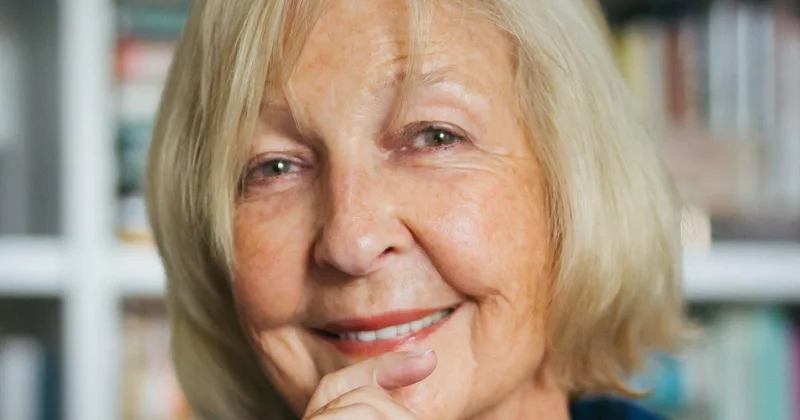
Jane Campbell’s debut book, a collection of 13 short stories called * Cat Brushing*, was published in 2022, the year she turned 80. Two years later, she published her debut novel,
Interpretations of Love. There’s a lesson here about it never being too late to do what you love, but instead, I would like to reflect on the book’s tremendous literary merit. Campbell only
happensto be an octogenarian debut author, but what is more remarkable is her voice – sharp, witty, and unforgettable.
The lucky thirteen
Perhaps because of her own age, the protagonists of the 13 stories are also elderly women. Unlike most stories about the elderly that unfold in the past, those in Cat Brushing take stock of the present and anticipate the future. The narrative voices are in the first and third persons. The characters belong to the English upper class and are financially independent. At the heart of each of the 13 stories is an older woman. In some of these stories, the women have had to give up the comfort of their homes and move into unknown environments such as retirement homes or hospitals. While those who have managed to stay at home continue to fend off concerned children and relatives, holding on dearly to their independence.
It is easier to tell a woman’s story in relation to others – as the wife/mother/grandmother, the glue that holds the family together. Campbell, very refreshingly, treats women as individuals fiercely protective of their autonomy. This, of course, from the wisdom of age. Elderly women are rarely of use to their families and when they have no reproductively value, they become redundant to mankind. There is a special kind of freedom in being useless; it allows for complete agency to be seen and exist for who you are – your passions are at the forefront of your existence. The women in Campbell’s are free from these filial ties; their husbands being long dead or gone and the children have grown up. Whatever little concern she might still harbour for the children is completely missing for the husband. Marriage is treated like what it is – a social obligation – and at this stage of their lives, the women are quite sure that they have gained little from it.
In the stories “Le Mot Perdu” and “The Kiskadee”, the women reflect on their childhoods, now so far in the past. In the hazy blur of her aged brain, the protagonist in in “Le Mot Perdu” still remembers her mother’s striking beauty and complete love. Meanwhile, in “The Kiskadee”, the elderly protagonist is still enthralled by her father and his all-consuming love for her. She remembers that her mother thought of it as unnatural, but the daughter has simply never been able to bring herself to see her father for who he is.
A rich life
The themes in this collection naturally focus on ageing, dependency, and loss – especially of the faculties and beauty that we are so sure will last us forever. Nevertheless, it is of no benefit to dwell on the inevitable. Instead, as Campbell’s women show, it is possible to live exciting lives if you know how to manipulate these “disadvantages” just so. The women are cunning, ingenious, and proud and there’s much for younger women to learn from them.
The titular story “Cat Brushing” was first published in the * London Review of Books* in 2017 (and is available to read online). Campbell was encouraged by LRB editors Mary-Kay Wilmers and Alice Spawls to consider writing a collection of short stories. In “Cat Brushing”, an elderly woman who has recently moved in with her son and daughter-in-law shares a spiritual bond with her Siamese cat. Even though age has slowed them down, they are still feisty and self-dependent. However, when her son begins to indicate that the cat’s time is up, the woman wonders if it’s a sign to her own usefulness too.
In “Susan and Miffy” and “Lamia”, the older women are reborn when they realise they’re still sexual creatures. This is the purest that they have felt sexually, free from the burdens of beauty and fertility. In “The Scratch”, Campbell gives us a morally ambiguous story on abuse, control, and self-harm. In “183 Minutes”, an elderly woman remembers meeting a man on the train (who’d eventually become her husband) and the utterly drab life she led with him, never daring to contradict or pick a fight. In “Lacrimae Rerum”, an elderly woman stumbles into the wrong funeral and realises it is in honour of her college boyfriend. Grief crashes against her jet-lagged brain, evoking cherished memories of young love. “Kindness”, the most startling story in the collection, is a superb takedown of presumptions that the elderly are helpless creatures.
The Covid-19 pandemic also makes an appearance. “Lockdown Fantasms” reminds the reader how the pandemic further infantilised the elderly – they were either kept hidden or forgotten entirely. The only place that an older woman could be herself was online. The story “Schopenhauer and I” presents the other side. Saddled with a robot for company, an elderly woman is stripped of all privacy by being watched and monitored around the clock by her family and the manufacturers.
The final story ”On Being Alone”, is a deeply moving story of a woman who has accepted solitude as her permanent state. She was told she would die alone (won’t we all?) and despite going through the predictable motions of life – marriage, motherhood – she finds herself alone in her old age. It is more out of choice than circumstances; however, an unexpected friendship with another woman blossoms into the truest love and companionship of her life. Yet again, the reader is reminded of the value of friendships and families where the foundation is love, not obligation.
Cat Brushing dismisses ageing as taboo, especially for women but it is also not interested in blunting its brunt. The physical and mental limitations are real but it does not automatically mean that an older woman cannot have a vibrant inner life. The inconveniences are minor in comparison to the great privilege of being alive – after all, life only ends in the grave, not the retirement home.
Cat Brushing, Jane Campbell, Riverrun.
We welcome your comments at letters@scroll.in.