UK's Burnham would call out Trump if in Britain's interest, he tells BBC
Burnham pledges to spend 3.5% of GDP on defence by 2035, in line with new NATO target
Britain's new Prime Minister Andy Burnham "will always put Britain's interests first", he told the BBC in an interview when asked whether he was willing to call out US President Donald Trump.
Burnham's predecessor Keir Starmer, who announced he was stepping down last month, had a fraught relationship with Trump due to differences over the US-Israeli war on Iran, immigration, energy and tech regulation.
While Trump initially described Starmer's successor as "extremely liberal", he said this week he had a "very good conversation" with Burnham, who became Britain's seventh prime minister in a decade on Monday.
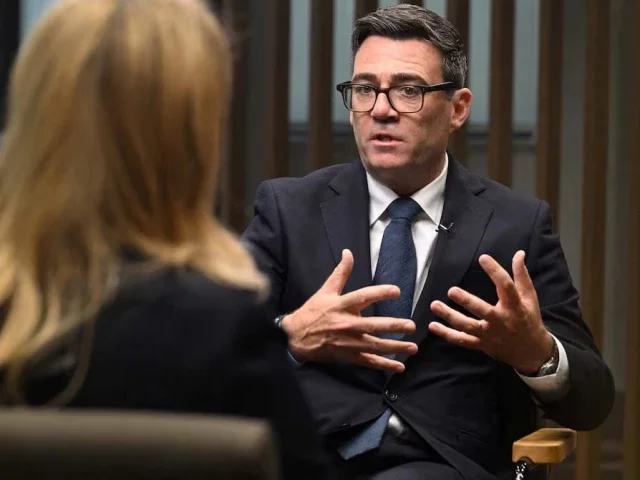
In his first major interview since taking office, parts of which were released on Sunday, BBC journalist Laura Kuenssberg asked Burnham if he was willing to call out Trump if he thought it was the right thing to do.
"All leaders have to do that. You have to defend your own national interest before anything else. That's what you're required to do if you're to do this job properly," he said.
🚨 WATCH: Andy Burnham says he's prepared to call out Donald Trump if it's "right for Britain" pic.twitter.com/0kEs6h3B2z
— Politics UK (@PolitlcsUK) July 26, 2026
The prime minister also said he would not call a general election before 2029.
"I'm going to rule it out. Yeah, there's no early general election. I don't think people want it," he said.
“I’m going to rule it out”
— BBC Politics (@BBCPolitics) July 26, 2026
Speaking to Laura Kuenssberg in his first major interview as prime minister, Andy Burnham rules out calling an early general election and says “I don't think people want it”#BBCLauraKhttps://t.co/kIb5RbA0VB pic.twitter.com/yMYt8p2UzU
UK will honour NATO promises, ramp up defence spending
On Britain's national defence, Burnham said he was "absolutely committed" to what was promised to NATO partners. London has pledged to spend 3.5% of GDP on defence by 2035, in line with a new NATO target.
"We've got to work out the way of doing that," he said.
“We’ve got to work out the way of [spending more money on defence]”
“We’ve got to work out the way of [spending more money on defence]”
— BBC Politics (@BBCPolitics) July 26, 2026
Speaking to Laura Kuenssberg in his first major interview as prime minister, Andy Burnham wouldn’t commit to spending 3% of GDP on defence by 2030#BBCLauraK https://t.co/ZgBt9jlXJk pic.twitter.com/1ea4cfworM
"The first challenge ... is to ensure that the defence investment plan is fully funded, and that's the thing that's right in front of us, and we need to work that through as we go towards the budget later this year," he said.
Burnham's newly appointed chancellor (finance minister) John Healey resigned as defence minister in the previous government after saying that, unless a commitment was made to spend 3% of GDP on defence by 2030, Britain would not be safe.
Burnham did not commit to the 2030 target in the interview.
When asked on Sunday, Wes Streeting, who was appointed defence secretary by Burnham last week, said any timetable for increasing defence spending was the decision of the finance minister.
"It's for the chancellor to set out, both at the budget and future spending reviews, how we will achieve 3.5% by 2035," he told Sky News.
The full interview with Burnham will air on the BBC's Panorama programme on Monday.