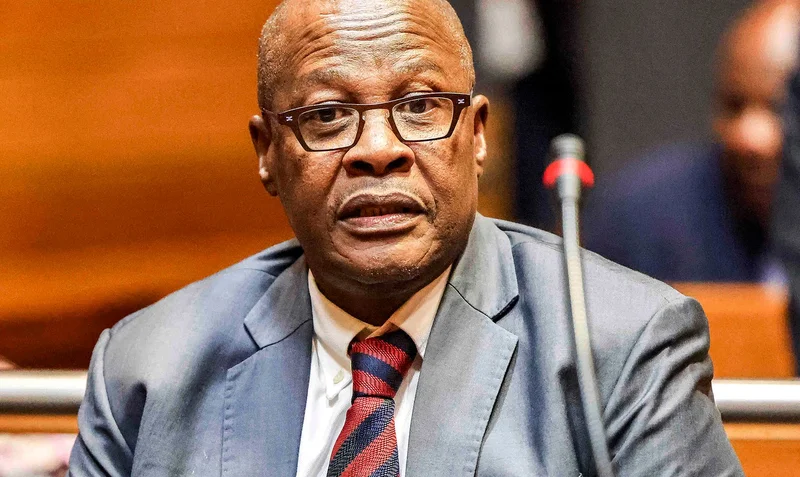
Eskomâs Pension and Provident Fund has challenged a full bench ruling by the high court, which it says leads to âabsurd outcomesâ in the ongoing battle over Brian Molefeâs pension payout refund.
The fund has now appealed to the Constitutional Court, contending that both the high court and the Supreme Court of Appeal ignored key factual and legal arguments when mandating oral evidence to decide his repayment amount. Molefe, on the other hand, contends that oral testimony is necessary to clear up the confusion caused by the fundâs constantly shifting claims.
**Irregular payout **
The pension payout dispute goes back almost a decade, beginning at the height of the State Capture period.
After serving as Transnet CEO, Molefe was appointed as CEO of Eskom on 1 October 2015 and given a five-year contract. However, he resigned in November 2016 after being implicated in State Capture by the then Public Protector, Thuli Madonsela.
It was later revealed that Molefe was due to receive a R30-million âearly retirementâ payout from Eskom, a move criticised by opposition political parties and civil society organisations.
After a brief stint in Parliament as an MP for the ANC, Molefe was reinstated as Eskom CEO, with Eskom changing its tune several times about whether he had resigned, been retrenched or was on leave. In June 2017, his reinstatement was rescinded by the Eskom board.
At the time of Molefeâs departure, questions were raised about how someone who had worked at Eskom for just 15 months qualified for such a substantial payout. Of the R30-million Molefe was promised, Eskomâs pension fund says he received close to R10-million.
The Democratic Alliance (DA) challenged the payout, calling it fraud, and Molefe was ordered to pay back the money.
**How much? **
Papers submitted to the Constitutional Court highlight an ongoing dispute over the precise sum Molefe must return. According to Jeshurun Johaar, an attorney at Deneys representing Eskomâs pension fund, the issue arose in August 2019 following the court ruling in favour of the DA, when the fund issued a formal letter of demand to Molefe.
In response, Molefe disputed the figure, requesting a detailed breakdown of contributions made by Eskom as well as the exact payout from the Transnet Retirement Fund on his behalf. He argued that his liability should be calculated by offsetting these combined amounts against the R9.9-million demanded â a formula that would reduce his total repayment by R2-million.
However, Johaarâs affidavit rejects this argument, contending that Molefe cannot offset any funds because he was never legally eligible to participate in Eskomâs pension scheme in the first place.
âThe fund received incorrect information from Eskom that Mr Molefe was a permanent employee in the executive band and relied on Eskomâs representations in this regard as it was not privy to Molefeâs executive employment contract at the time,â said Johaar in an affidavit filed before the ConCourt in April.
âFollowing the purported admission into the fund, Mr Molefe, on the incorrect assumption that he was eligible to be a member of the fund, elected to transfer his pension lump sum from TRF [Transnet Retirement Fund] to the [Eskom] fund. This too was irregular, unlawful and void ab initio [void from the beginning].â
The fund and Molefe have previously battled over the final figure in the high court. Judge N Davis initially ordered Molefe to repay R9.9-million, while ruling that he was still entitled to receive R727,545 in pension contributions transferred from Transnet, along with a R123,332 performance bonus plus interest. However, Molefe successfully challenged the decision. A subsequent ruling determined that oral evidence must be heard, with the court pointing out that actuarial experts had reached âvastly different conclusionsâ.
âThe amount ultimately awarded by the [previous] court ... is at odds with the calculations of the actuaries and the amount claimed by the fund. For all the above reasons, I conclude that the court ... erred when it proceeded to do the calculation.
âAble as a judge may be, judges should proceed with caution when experts disagree, especially when the supporting evidence indicates that there are facts that need clarification. In such instances, evidence is required to determine the issue. Only if this is done will the court be able to execute its function as arbiter of the dispute properly,â Judge Ronel Tolmay wrote for the full bench in a July 2025 judgment.
The court ruled that the case should be referred to oral evidence to determine how much Molefe should repay. The fund then approached the Supreme Court of Appeal (SCA) to appeal this ruling, but was denied.
**âBad-faith litigationâ **
Responding to the fundâs latest court application, Molefe accused the entity of litigating in bad faith. Molefe â who joined the MK party and was appointed its treasurer-general in January 2026 â argued in court papers that the fund originally supported hearing expert testimony, but was now backpedalling simply because it dislikes the courtâs finding.
âIt was the applicant [the fund] which pleaded, in its replying affidavit, that âit is in the interests of justice that this specific issue be referred to oral evidence, for Mr Molefeâs actuary (including the fundâs experts) to be given an opportunity to be cross-examined under oathâ. Now that the full court has granted the order that the applicant sought, it is not open to the applicant now to appeal against that order. This is litigation in bad faith and an abuse of court process,â Molefe says in an affidavit before the ConCourt.
Molefe also questions the amount being demanded by the fund, which initially requested he repay R10,327,074.53.
âI pointed out that the applicant was aware that the amount that they are demanding from me is incorrect and that they could not demand from me an amount that they knew was patently wrong and which no court has ordered me to pay,â he said. Molefe says the fund had claimed he had been paid different amounts â ranging from R4-million to R10.37-million â at different stages in the litigation.
âIt is of critical essence that I point out that the application sought repayment from me of an amount of R4,060,739. 37. This amount was labelled as an âindicative amountâ. It was then revised to R4,156,230.82. This second amount was amended to R4,315,874.87, and once again described as an âindicative figureâ. The applicant then said that the amount that I had to pay was R8,230,632.49. The figures that the applicant has given are in stark contrast to the amount that the Matojane full court has that I was paid, being R10,327,074.53,â he says.
Molefe also questions why the fundâs founding papers were submitted by Johaar instead of the fundâs chief executive and principal officer, as it did in previous cases.
âIf the applicant decided to use an associate at its attorney of record â where it has previously (and not so long ago) used its own principal officer by virtue of his position â that decision needs to be explained and written authority must be produced. The defendant does neither. This leaves me (and perhaps this court) reasonably to wonder whether there may have been disagreement between the principal officer (and therefore the applicant) and its external lawyers about the launching of this application, and whether the lawyers have offered to shoulder the costs risk if this application were to suffer the same fate as the SCA special leave and reconsideration applications,â he said.
Molefe called on the ConCourt to dismiss the fundâs application. The court is yet to confirm whether it will hear oral argument in the case. DM