Often, it starts when people come together.
Branded Content
When ‘better’ means safety, support – and feeling less alone
Drawing on her work with more than 60 households, a family coach shares how some Singapore families experience “better”
The last time her husband hit her elder son in early 2022, the mother, in her 40s, had no one to turn to. When it happened again in mid-2025, she did.
She called a person she knew well.
That person is Janice Ang, who had been supporting her and her family for more than two years – checking in through text messages to follow up as and when needed, and meeting them every three months since late 2023.
Ang, 36, works as a family coach at the Ministry of Social and Family Development (MSF) Social Service Office (SSO) at Toa Payoh, which connects residents with financial assistance and social support services.
She went over to their home after the call and supported the mother in filing a police report, Ang recalls. The priority was ensuring the child’s safety.
When domestic violence occurs, protecting victims and linking them with resources and professional help take priority. PHOTO: GETTY IMAGES
What followed was a coordinated response across MSF – including the National Anti-Violence and Sexual Harassment Helpline, a 24-hour helpline to report violence – and its community partners.
Today, father and child attend separate counselling sessions at a Family Service Centre (FSC). They may consider attending counselling sessions together at a later stage, depending on the family’s circumstances. FSCs are community-based social services that support vulnerable individuals and families with social and emotional issues.
“Intervention can be a turning point, an opportunity for families to work through their issues (with) professional support,” says Ang. That support extends beyond family coaches.
Since 2023, family coach Janice Ang, 36, has connected nearly 60 families with financial assistance and social support services. PHOTO: DESMOND WEE
“It has to be the bigger community – the partners, organisations and volunteers,” says Ang, whether it is keeping families safe from violence, helping them find stable work and housing, supporting caregivers, or building strong family bonds.
"Together, we are able to offer families more holistic support… (and) address the different dimensions of a family’s needs.”
Working towards “better”
Much of Ang’s work is focused on helping lower-income families move towards steadier ground, whether it is finding a stable job or owning a home. Family coaches typically stay with households through the move from public rental flats to home ownership, and until their youngest child turns 21.
She draws up action plans with them based on their goals, and supports them in navigating a network of resources.
Ang, who has two sons aged seven and five, has worked with nearly 60 families since joining MSF in 2023.
One example is Norasitah Mohd Tahir, 41, and her 2½-year-old daughter. Norasitah once juggled managing a home-based catering business and caring for her infant daughter on her own. Income was unstable, she says, and she often worried about having enough money for food and diapers.
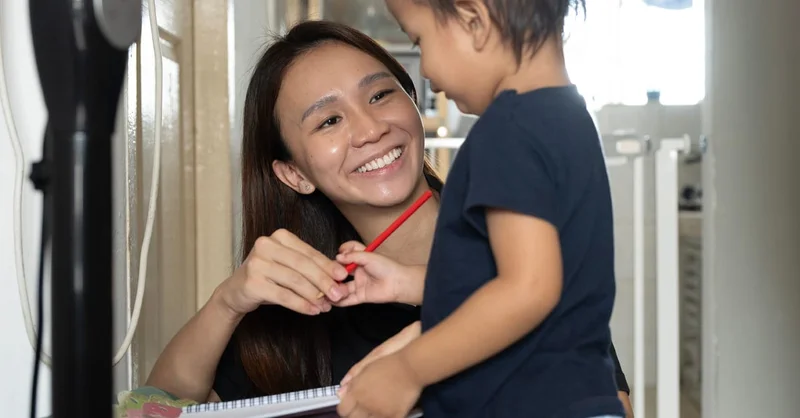
Family coach Janice Ang (left), engages with Norasitah Mohd Tahrir, 41, and her 2½-year-old daughter Zahra, as part of her regular visits to their home. PHOTO: DESMOND WEE
“Together, we are able to offer families more holistic support… (and) address the different dimensions of a family’s needs.”
— Janice Ang, a family coach at the Ministry of Social and Family Development (MSF) Social Service Office (SSO) at Toa Payoh
What does “better” look and feel like? MSF family coach Ang shares examples and resources across five focus areas:
Steadier
Empowering lower-income households
The goal is to help families move towards the “3S”: stability, self-reliance and social mobility. Initiatives that support them in this journey includes:
- Dedicated family coaches and Family Service Centre (FSC) caseworkers who guide families towards their goals;
-
ComLink+ Progress Packages, or financial top-ups for families making progress in key areas, such as sustained pre-school attendance.
-
__KidSTART__supports families from pregnancy through age six, equipping parents and caregivers with the knowledge and skills to build nurturing relationships and support their child’s early childhood development.
Safer
Protecting the vulnerable from domestic violence
When violence occurs, the priority is protecting victims and linking them with resources and professional help.
This may include referrals to FSCs for support on managing family, emotional or economic stress, or to specialist agencies such as Protection Specialist Centres for more targeted intervention and therapy. Cases where safety and risk concerns are high will involve MSF’s Protective Services for more direct intervention.
FSCs are community-based social services that support vulnerable individuals and families with social and emotional issues.
Key resources to take the first step include:
National Anti-Violence and Sexual Harassment Helpline, a 24-hour hotline to report domestic violence or neglect, including sexual violence and sexual harassment.
Connected
Supporting families with persons with disabilities
For these families, Ang says help could mean timely interventions for the persons with disabilities and ensuring caregivers do not have to navigate the journey alone.
The Taskforce on Assurance for Families with Persons with Disabilities, launched in 2025, is developing recommendations to provide greater opportunities and assurance for persons with disabilities and their families. These will be made public by end-2026.
Among the resources available are:
SG Enable
__,__Singapore’s focal agency for disability and inclusion, enables persons with disabilities to live, learn, work and play in an inclusive society. It provides support for persons with disabilities in employment, through community initiatives, sustainable social innovation and administers grants and schemes.
SG Enable’s Enabling Guide, a first-stop resource portal which provides information on disability schemes and services.
Stronger
Building more resilient families
Financial difficulty is common among families Ang works with, but rarely the only pressure. Emotional strain, health issues, language barriers can compound and tip families into marital strife.
Resilience, she says, is not about avoiding hardship; it is about going through difficult times and emerging stronger as a family. Building that resilience could take support
__Strengthening Families Programme (FAM)__supports families facing challenges in marriage, parenting and other family relationships through self-help resources on
__Family Assist__portal and services such as family counselling.
__Families for Life__runs programmes for families across all life stages from marriage and parenting to grandparenting, as well as parent-peer support groups.
Engaged
Mobilising partners, community organisations and volunteers
Corporate partners, community organisations, and volunteers all play a part, from extending practical help like grocery giveaways to providing emotional support through counselling.
- __MSFCare Network__volunteers are part of a broader ecosystem of support for families in need, contributing through mentoring, tuition and help with daily needs.
- For partners and community organisations: MSF- __partners__government agencies, social service agencies, corporates, and institutes of higher learning to better support lower-income families and improve social mobility.
Better Starts With Us
Better Starts with Us is the Ministry of Social and Family Development's (MSF) multi-year effort to build a more caring and inclusive Singapore through the shared "We First" spirit.
MSF works with social service agencies, corporates, institutes of higher learning, volunteers, and the community to pool collective expertise and resources, with the aim of building strong families and resilient individuals.
Find out how MSF, its partners, and you can play a part at: